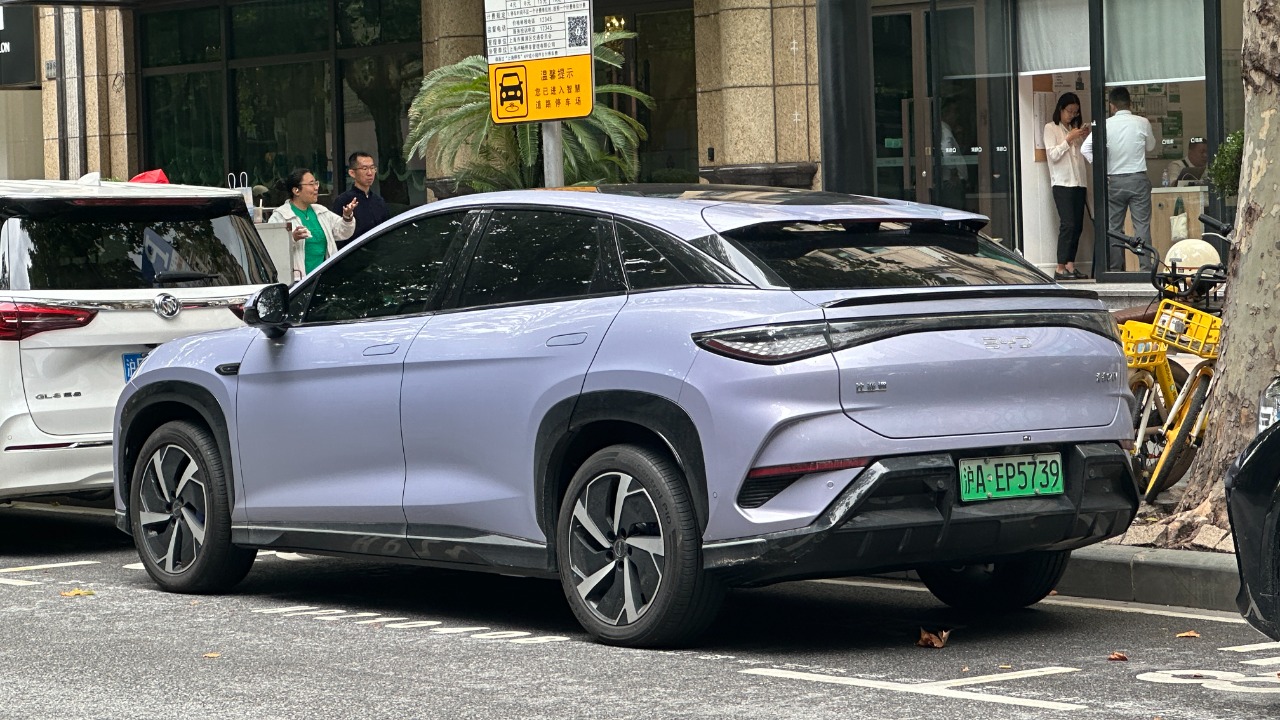
China has spent the past decade turning electric vehicle batteries into a strategic industry, and the payoff is now impossible to ignore. From raw materials to finished packs, Chinese champions dominate global market share, set price benchmarks, and increasingly dictate where the next wave of auto jobs will land. If that trajectory holds, rivals will not just lose EV sales, they will lose control over the core technology that powers the future car.
What looks from afar like a simple cost advantage is in fact a carefully built industrial system that stretches from African mines to European gigafactories and dense charging networks at home. As Western automakers slow their electric plans and President Donald Trump backs oil, Beijing’s battery ecosystem is quietly locking in scale, know‑how, and geopolitical leverage that will be very hard to unwind.
From domestic champion to global battery superpower
China’s rise in batteries starts with the sheer weight of its home market. Forecasts for new‑energy vehicles this year point to 28.5 m units worldwide, with 19.8 m in China alone, and global volumes expected to climb to 42.7 m in the coming years. That kind of demand gives Chinese cell makers a testing ground and a guaranteed base load that competitors in Europe or the United States can only envy. It also explains why Chinese policymakers treated batteries as a national priority rather than a niche green technology.
On the ground, that strategy has translated into a dense industrial cluster. Analysts tracking China point to a web of suppliers, research institutes, and logistics hubs that feed the big cell makers. A recent value‑chain study notes that, despite global competition, the Chinese domestic market is still powered by strong local demand and vertical integration that is unlikely to be matched elsewhere. Put simply, the country built an ecosystem where batteries are not an add‑on, they are the centerpiece.
CATL, BYD and the numbers behind dominance
The clearest sign of that ecosystem’s power is the scoreboard. From January to November last year, From January through late autumn, CATL and BYD together installed 575.2 GWh of EV batteries worldwide, accounting for 54 percent of the global market. Separate tallies show CATL with a 38.2% share and BYD with 16.7% of Global EV battery installations through Nov, a concentration that would be unthinkable in most other industrial sectors. In their home market, the grip is even tighter, with Top battery makers in China led by CATL at 43.42% and BYD at 21.58% as installations rose 40.4% in 2025.
Those shares are not just the result of cheap labor. Analysts tracking China’s battery manufacturers highlight cost advantages built on vertical integration, massive production scale, and optimized processes that international rivals struggle to match. That industrial muscle is now spilling into partnerships: in November, BYD’s LFP battery installations reached 19.04 GWh, giving it a 25.28% share of the LFP segment, and the company is in talks with Ford over a hybrid battery tie‑up that would bring BYD chemistry directly into Western drivetrains.
Factories, chargers and the quiet global build‑out
Scale at home is only half the story. Chinese battery giants have spent the past decade planting manufacturing flags around the world, often with little fanfare. Industry tallies show Chinese battery companies have built or announced 68 factories outside China, with CATL, BYD, and Gotion leading the charge. These plants, from Europe to Southeast Asia, are designed to sidestep tariffs, lock in local customers, and spread state‑of‑the‑art production techniques far beyond China’s borders.
Back home, the infrastructure that makes EVs practical is expanding just as aggressively. Data compiled by Benchmark Mineral Intelligence on charger density and next‑generation chemistries shows China’s continued dominance in both public charging and emerging sodium‑ion capacity. That network effect feeds straight back into battery demand. One recent report on Lithium iron phosphate technology notes that LFP chemistry has become the standard in China’s EV sector, with Some manufacturers now optimizing entire platforms around these cheaper, durable packs.
Export shock: Europe’s streets, Western boardrooms
As the battery base has solidified, Chinese automakers have turned that advantage into a wave of exports. Chinese‑brand manufacturers, backed by robust demand for their electrified products at home and abroad, have grabbed more market share at the expense of international rivals, with Chinese auto exports hitting record levels. In Europe, sales of Chinese EVs have outpaced expectations, helped by a 43.2% rebound in Germany and growth of more than 30% in the UK to over 700,000 units, according to a report on how In Europe the market is shifting.
Specific brands are already reshaping the competitive map. BYD, which has overtaken Tesla as the world’s top EV seller, is rolling out its Seal U DM‑i plug‑in hybrid SUV in the United Kingdom, using aggressive pricing and in‑house batteries to undercut incumbents. A separate analysis of how After almost a decade of Tesla dominance, BYD, a Chinese automaker, seized the global crown at the end of 2025, underscores how quickly the balance has shifted. Western executives are taking notice: one assessment of China’s EV surge quotes Ford boss Jim Fa warning that the scale and speed of this rollout pose an “existential threat” to Western incumbents.
Geopolitics, demand swings and the next phase of the contest
For all the momentum, China’s battery empire is not invulnerable. Industry groups and officials are already warning that demand for lithium batteries will slump in early 2026 as domestic EV sales cool, with the head of the CPCA saying battery makers are expected to cut production and take holidays after a hot final quarter of 2025. One forecast suggests China’s lithium battery demand could drop by about 30% in early 2026, a contraction that another analysis of Global supply chains warns will cause unprecedented disruption. Social media posts amplifying that outlook, including one widely shared note that Demand for Chinese lithium batteries will likely slump, underline how sensitive the sector is to policy and consumer sentiment.
Rivals are also starting to treat battery metals as a strategic front. In a move framed as The Great Mineral Pivot, the United States and the DRC have moved to Finalize the Washington Accords to Break China’s battery metal monopoly, seeking alternative supplies of cobalt and manganese. At the same time, Western automakers are hesitating on EV rollouts, with Western groups like Ford and GM slowing plans just as Chinese rivals accelerate. Commentators in a widely viewed video on Dec have gone so far as to call this retreat one of the most consequential strategic blunders in industrial history.
Even with those headwinds, the structural advantages remain formidable. Analysts of Photo‑illustrated reports on China’s lithium sector point out that any demand dip is likely to be temporary, given the country’s entrenched supply chains. A separate overview of how Jan forecasts show the global market shifting decisively toward China reinforces that view. And as BYD builds plants in Hungary and other parts of Europe, with one report noting that Now another great power, China, is putting down stakes in the heart of Europe, the quiet battery empire described at the outset looks less like a temporary surge and more like a new industrial order.
More from Fast Lane Only