The 1960 Chrysler New Yorker did not try to slip quietly into a crowded market. It arrived as a full-size statement car, with extravagant proportions, a dramatic face and one of the most theatrical dashboards Detroit ever put into production. Rather than chasing restraint, it leaned into visual drama and mechanical muscle, turning presence into its main selling point.
That strategy produced a car that still feels outsized in photographs and in person. From the sweeping bodywork to the glowing instrument pod, the New Yorker of 1960 captured an American moment when confidence, size and spectacle were considered virtues, not excess.
The big Chrysler that wanted to be noticed
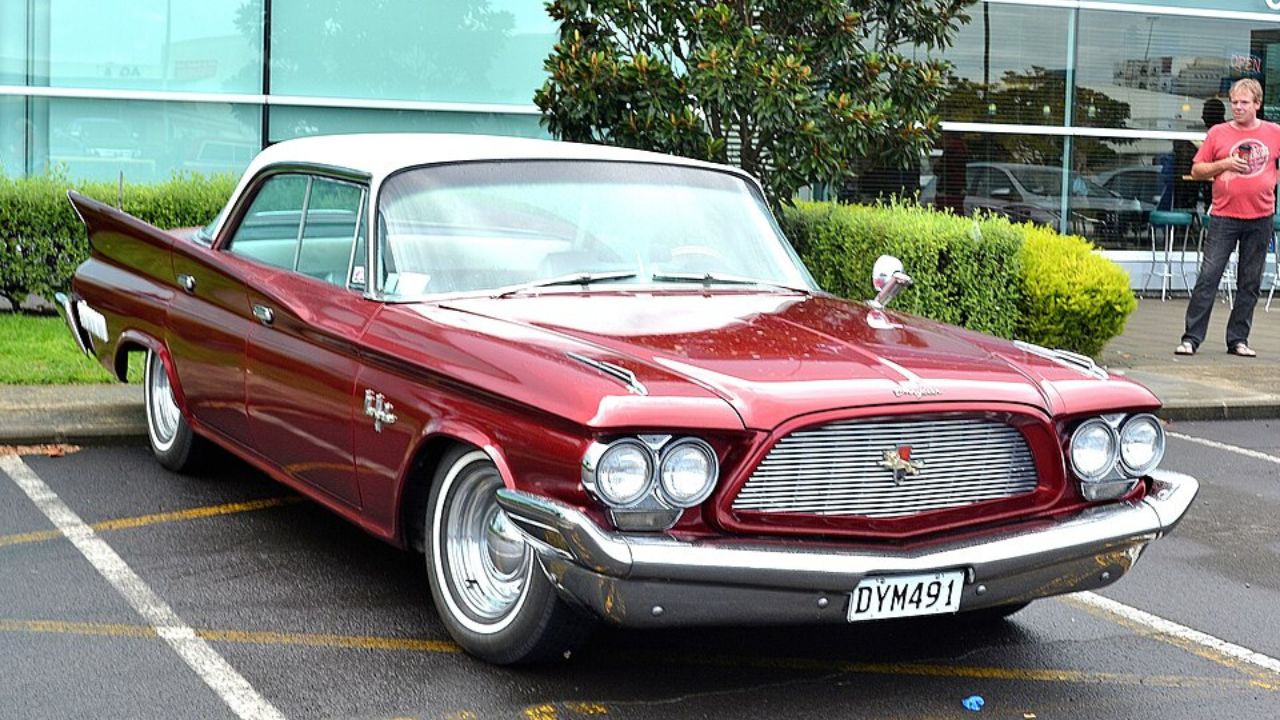
Chrysler Motors positioned the New Yorker at the top of its mainstream range, and in 1960 that meant size, chrome and a very deliberate sense of occasion. Period descriptions of the front end point to a bumper that dipped in the center to follow the grille opening, with brightwork that framed the entire face and continued into the side trim. The rear carried a full-width bar along the fenders, a detail that helped link the car visually to earlier finned models while smoothing the transition to a slightly cleaner look, as seen in contemporary coverage of the 1960 New Yorker.
Even at rest, the car read as substantial. Long quarter panels stretched behind the rear doors, the hood sat broad and flat, and the greenhouse appeared almost delicate on top of the body. The proportions were classic late fifties and early sixties Detroit, but Chrysler’s design team added enough sculpting along the flanks to keep the surfaces from looking slab sided. The result was a car that dominated a driveway or a city street simply by occupying so much visual and physical space.
Inside, the New Yorker continued the theme. Wide bench seats, generous door panels and a broad dash created a cabin that felt more like a lounge than a simple passenger compartment. Period test data grouped the model’s strengths under categories such as Engine and Drive Train, Interior Room, Maneuverability Factors, Test Car and Performance, and those headings underline how seriously Chrysler treated both space and power in its flagship.
Power to match the attitude
Presence without performance would have undermined Chrysler’s pitch, so the New Yorker arrived with serious hardware under the hood. Factory information and later guides list the primary Engine Specifications as a big block V8, identified simply as Engine, with displacement of 413 cubic inches. The figure appears in multiple references, which describe the New Yorker’s Engine Specifications with the key number given as 413.
Technical summaries of Chrysler’s 1960 full size cars describe this RB series V8 with a bore of 4.1875 inches and a stroke of 3.75 inches, figures that produced strong breathing and a relatively short piston travel for such a large engine. Output for the New Yorker version is given at 350 horsepower, a number that aligned with the car’s status at the top of the lineup and appears in period fact sheets that list the New Yorker specifically, with the engine’s 4.1875 bore, 3.75 stroke and 350 horsepower rating presented together.
That combination of displacement and tuning meant the New Yorker was not just about smooth cruising. Contemporary road tests measured brisk acceleration for a car of its size, and the big V8’s torque gave the model relaxed highway manners. In an era when the Chrysler 300 nameplate was associated with performance, the New Yorker shared much of that mechanical DNA, and earlier in the decade Chrysler had already shown a willingness to pair luxury with serious power in cars that shared platforms with the Chrysler 300 and the DeSoto Firedome. Reference material on the mid fifties New Yorker notes that those models shared their basic architecture with the Chrysler 300 and the Firedome, and that the V8 in those cars developed 250 horsepower, which helped establish the New Yorker as a performance capable luxury car long before 1960.
A dashboard that looked like the future
If the exterior projected authority and the engine supplied muscle, the dashboard provided the drama. For 1960, Chrysler Motors introduced a new instrument cluster called the AstraDome, a domed unit that wrapped the gauges in a futuristic housing. The AstraDome was described as a unique instrument cluster that appeared across Chrysler Motors products from 1960 through 1962, and it combined functional instrumentation with a very deliberate sense of theater.
In the New Yorker, the AstraDome sat directly in front of the driver, a bubble that seemed to float above the steering column. Promotional material and later retrospectives describe the way the cluster projected toward the driver while adding a futuristic appearance, and enthusiasts have since linked its look to the kind of mid century science fiction that would later appear in shows like The Jetsons. Coverage of the AstraDome notes that this spectacular dashboard made its debut in the 1960 Chryslers, and that its glowing controls and deep set gauges awaited the driver’s twists and pokes, turning even simple tasks into a small performance.
Period advertising leaned into this effect. One factory commercial for the 1960 Chrysler line described the immediate center of attention inside the car as the strikingly different Astrodome instrument cluster, a feature that projected toward the driver and dominated the dash. The script emphasized how the Astrodome, a term used interchangeably with AstraDome in some coverage, made the driver feel like a pilot more than a motorist, and the commercial’s camera work lingered on the lit instruments and sculpted housing.
Later enthusiasts have echoed that fascination. A modern video walkaround of a 1960 Chrysler New Yorker convertible, filmed by Lou for his series My Car Story in Iola Wisconsin, spends considerable time on the dashboard, with the presenter calling out the Astrodome cluster as a highlight of the interior. Another clip focused on a 1960 Chrysler New Yorker in a garage in Abington, hosted by John of Orphan Car Garage, similarly treats the AstraDome as a defining feature, with close up shots that show how the dome, the steering wheel and the surrounding controls form a single visual composition.
Living large from the driver’s seat
Beyond the spectacle of the dashboard, the 1960 New Yorker delivered a driving experience that matched its size. Road test summaries from the period evaluated the car across categories labeled Engine and Drive Train, Interior Room, Maneuverability Factors, Test Car and Performance, and the language used in those tests suggests a car that prioritized comfort and straight line stability over tight cornering.
Interior Room was a particular strength. The long wheelbase and wide body allowed Chrysler to fit broad bench seats front and rear, with generous legroom and headroom. Reviewers noted the ease with which six adults could ride in comfort, and the car’s low transmission tunnel helped keep the floor flat for middle passengers. Upholstery and trim varied by body style, but New Yorker models generally featured more ornate fabrics and additional brightwork compared with lower Chrysler lines, reinforcing the sense that buyers were getting the top of the range.
Maneuverability Factors were more mixed. The New Yorker’s length and weight made tight parking a chore, and while power steering reduced effort, the car still required attention in crowded urban settings. On the open road, however, the same mass that complicated low speed maneuvers contributed to a planted, unruffled ride. Test Car Performance figures showed the 413 engine providing ample passing power, and the automatic transmission’s smooth shifts suited the car’s luxury mission.
Modern owners often remark on the same qualities. An enthusiast write up on a semi survivor 1960 New Yorker described the car as lion hearted, highlighting how the big Chrysler still felt eager and capable decades later. The author noted that the Astrodome instrument cluster remained quirky but functional, and that the cabin’s materials, including the headliner and seats, had held up surprisingly well. That combination of durability and character helps explain why the model retains a dedicated following.
Styling that bridged two eras
The 1960 New Yorker occupied an interesting moment in Chrysler design. The wildest fins of the late fifties were starting to recede, but the company had not yet embraced the fully slab sided look that would define some mid sixties models. As a result, the car blended vestigial fins and sculpted rear quarters with a cleaner front end and a more integrated bumper and grille.
Descriptions of the car’s exterior highlight how the front bumper dipped in the center to follow the grille opening, a detail that gave the face more depth and avoided the flat, straight bar look of some rivals. The rear fender trim bar continued to appear, tying the car visually to earlier Chrysler designs and giving the tail a sense of width. Side trim lines ran the length of the car, visually stretching the already long body and accentuating the slightly canted tail lamps.
Inside, the AstraDome cluster and matching controls pulled the cabin firmly into the space age. Later enthusiasts have compared the effect to early sixties concept art, and coverage of the AstraDome has suggested that the design could easily have influenced the animators behind The Jetsons at Hanna Barbera. Whether or not that influence ran directly, the visual rhyme between the cartoon’s flying cars and the glowing domes in the Chrysler dash is hard to ignore.
The New Yorker’s styling also reflected its place within the broader Chrysler New Yorker lineage. Reference material on the nameplate traces it back through multiple Series designations, including Series C 19, C 23, C 26, C 30 and C 36 in the prewar period, and that long history gave the 1960 car a sense of inherited prestige. By 1960, the New Yorker badge signaled a certain expectation of size, comfort and status, and the car’s styling delivered on that promise.
How the 1960 New Yorker is remembered now
Today, the 1960 Chrysler New Yorker occupies a distinctive niche among collectors. It is not as widely known as the letter series Chrysler 300 models, yet it shares much of their mechanical specification and offers an even more dramatic interior. The presence of the AstraDome cluster, combined with the big 413 V8 and the car’s generous dimensions, gives it a personality that enthusiasts find hard to duplicate with other period cars.
Survivor examples continue to surface, sometimes with remarkably original interiors. One recent feature on a lion hearted semi survivor New Yorker emphasized that, surprisingly, there was not much weathering on the seats and that the headliner remained in tip top condition. The writer singled out the Astrodome instrument cluster as quirky but charming, proof that Chrysler’s experiment in futuristic design still resonates with modern eyes.
More from Fast Lane Only