

Engine overheating is rarely the result of a single failure. It usually happens when several small weaknesses in the cooling system line up, from low coolant to a stuck thermostat or a failing fan. To understand how modern vehicles avoid that scenario, I look at the specific components that quietly manage heat every time a driver turns the key.
Each part, from the radiator to the coolant reservoir, plays a defined role in moving, storing, and shedding heat so the engine can operate in a narrow temperature window. When those parts are healthy and working together, even a compact SUV idling in summer traffic can stay stable instead of boiling over on the shoulder.
The radiator and coolant flow path
The radiator is the centerpiece of the cooling system, and its job is simple in concept: transfer heat from hot coolant to the outside air before that coolant returns to the engine. In a typical sedan like a 2018 Toyota Camry, coolant leaves the engine hot, enters the radiator’s thin tubes, and spreads across a wide finned surface that exposes it to airflow from the grille. Reporting on How Does The Radiator Work In Your Car explains that the radiator in a vehicle’s Cooling System is designed to keep the engine from getting too hot or too cold, which means it is just as important on a winter highway as it is in August stop‑and‑go traffic.
That same reporting, dated Jan 26, 2024, notes that the cooling process depends on a continuous loop of coolant moving between engine and radiator, not a one‑time dump of heat. A separate breakdown of the Basic Components of a Cooling System reinforces that the cooling process begins with coolant absorbing heat in the engine, then releasing it as it passes through the radiator’s core. When that flow is restricted by internal corrosion, external debris, or a damaged cap that cannot hold pressure, the system loses its ability to shed heat efficiently and the temperature gauge starts to climb.
Water pump and thermostat: the system’s traffic controllers
While the radiator is the main heat exchanger, the water pump and thermostat control how coolant moves through the system and when it reaches that radiator. The pump is essentially the heart of the circuit, pushing coolant through passages in the block, cylinder head, and heater core before it returns to the radiator. Technical guidance on What Does The Water Pump Do describes how the pump pushes coolant from the radiator through the coolant system, into the engine and back again, which keeps temperatures even across all cylinders instead of letting hot spots form near exhaust valves or turbochargers.
More detailed coverage in Introduction To Water Pumps, published on Sep 1, 2024, notes that Water pumps circulate coolant throughout the engine and radiator and that They maintain optimal engine temperature by dissipating heat generated during combustion. In practical terms, that means a failing pump on a 2015 Honda Civic can quickly turn a routine commute into an overheating incident, even if the radiator and coolant level look fine from the outside.
Working alongside the pump, the thermostat acts like a temperature‑sensitive valve that decides when coolant is allowed to reach the radiator. A community post on Nov 9, 2025, outlining the main parts of a car cooling system highlights the THERMOSTAT as the component that controls the minimum operating temperature of the engine, staying closed while the engine warms up and opening once that threshold is reached. A separate explainer titled Thermostat in My Car, Why Temperature Matters describes it as An Integral Part of the Cooling System and details How It Works by regulating coolant flow so the engine operates at an optimal temperature. When that thermostat sticks closed, the radiator never sees hot coolant, and the engine overheats even though the fan may be spinning at full speed.
Cooling fans and airflow at low speeds
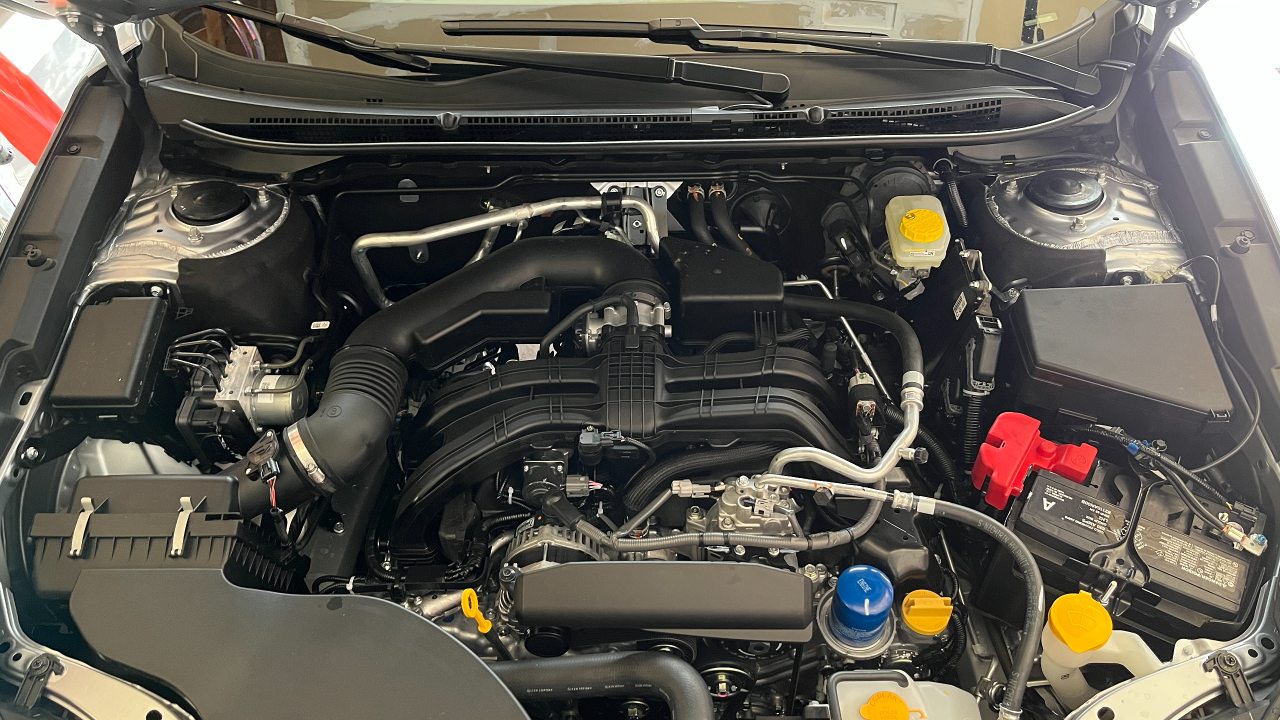
Even the best radiator cannot shed heat without air moving across its fins, which is where cooling fans come in. At highway speeds, a 2022 Subaru Outback relies mostly on the natural airflow created by its forward motion, but in city traffic or while parked with the air conditioning running, electric fans behind the radiator have to pull air through the grille. Reporting on How Do Cooling Fans Help Prevent Engine Overheating, dated Jun 26, 2025, explains that the cooling fan is typically mounted between the radiator and the engine and that When the engine reaches a certain temperature, the fan engages to draw more air through the radiator, which in turn reduces the engine’s temperature.
That same analysis of fan operation underscores how critical these components are in modern vehicles that spend long stretches idling in dense traffic or creeping through drive‑through lanes. Electric fans are often controlled by the engine computer, which monitors coolant temperature and, in some models, air conditioning pressure to decide when to switch them on. If a fan relay fails or a motor burns out, the radiator can no longer move enough air at low speeds, and the temperature needle climbs even though everything looks normal once the car is back at highway pace. That pattern, overheating in slow conditions but not on the open road, is a classic sign that the fan system is no longer providing the airflow described in the Jun coverage of How Do Cooling Fans Help Prevent Engine Overheating.
Coolant reservoir and overflow management
Preventing overheating is not only about moving coolant, it is also about managing how that coolant expands and contracts as temperatures change. The coolant reservoir, sometimes called an expansion tank, gives the system a place to send excess fluid when it heats up and expands under pressure. A technical overview of the Coolant Reservoir explains that a coolant tank acts as a regulating component for excess coolant produced by engine heat and that this regulation helps stop the engine from overheating by keeping the system properly filled as temperatures fluctuate.
Older vehicles, such as a mid‑1990s Ford Ranger, often rely on a simple overflow bottle connected to the radiator neck, and the logic is similar. A widely shared answer on Aug 15, 2015, to the question What is the purpose of a radiator overflow tank, written by Daniel Wallander and labeled Author with 17.4K answers and 154.7M answer views, notes that the overflow tank captures coolant that is pushed out of the radiator as it heats up and then returns that coolant as the system cools. That cycle keeps air from entering the system and reduces the need to constantly top off the coolant, which in turn helps maintain the pressure and volume needed to keep temperatures stable.
How the system works together to prevent overheating
Viewed as a whole, the cooling system is a coordinated network that has to manage heat from the moment the engine fires. A detailed guide on Cooling System operation, dated Jan 26, 2024, describes how the cooling process begins with coolant absorbing heat in the engine, then moving through passages and into the radiator where that heat is released, all while maintaining an optimal operating temperature. A separate overview of Understanding Your Vehicle Cooling System and Preventing Overheating, published May 26, 2025, reinforces that nothing can ruin a drive faster than seeing the temperature gauge spike and that common causes of overheating often trace back to neglected components rather than sudden catastrophic failures.
In practical terms, that means a 2020 Hyundai Elantra that overheats on a steep grade may be dealing with a marginal water pump, a partially clogged radiator, a sticky thermostat, or a low coolant level caused by a cracked reservoir, not just one obvious broken part. When I look at the system through that lens, the preventive steps become clearer: regular inspections of hoses and clamps, timely replacement of coolant according to the owner’s manual, and attention to early warning signs like a slowly rising temperature gauge or a fan that seems unusually loud or quiet. The Jan and May reporting on Cooling System fundamentals and Preventing Overheating both point to the same conclusion, that understanding how each component contributes to heat control is the most reliable way to keep an engine from crossing the line into true overheating.




Leave a Reply