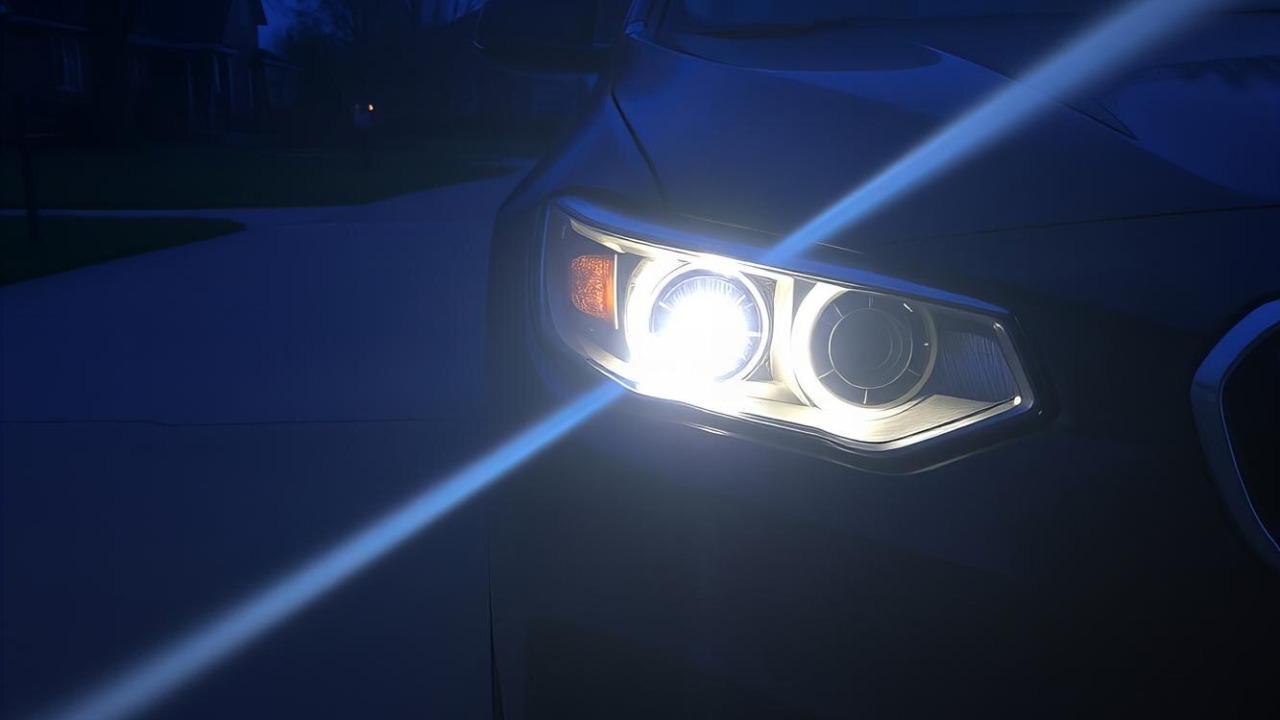
Across the country, you are driving into a wall of white light more often, as modern LED headlamps turn routine commutes into eye‑strain tests. Complaints about glare are climbing even as regulators and automakers insist the technology is making roads safer overall. To make sense of that tension, you need to understand how LEDs ended up on nearly every new vehicle, why they feel harsher than old halogens, and what, realistically, you can do about it.
The backlash is not just about comfort. It is about whether the rules that govern headlight brightness, color and aim have kept pace with a rapid technological shift, and whether vulnerable drivers are being left behind. The debate now stretches from federal safety engineers to personal injury lawyers and grassroots campaigners, all arguing over the same beams that hit your eyes every night.
How LED headlights took over your commute
When you buy a new car today, you are almost certain to get LED headlights, whether you asked for them or not. Automakers have embraced the technology because it draws less power, lasts longer and can be shaped into sharp, distinctive signatures that help sell vehicles. Safety ratings have also nudged the market, as groups such as the IIHS test how far headlights illuminate the road and reward models that light up more pavement. Manufacturers eager to climb those scorecards have leaned into LEDs and refined their aim to stretch visibility down dark highways.
That push has spilled into the aftermarket, where LED lighting is marketed as an easy upgrade for older vehicles. Retailers describe LED products as a popular and profitable segment that now represents the bulk of their lighting sales, from replacement bulbs to full assemblies. Guides that promise better visibility talk up “Nighttime Driving Safety Tips Upgrading” to 7440 or 7443 LED bulbs, while warning that they must be properly aligned to avoid blinding oncoming drivers. The result is a road network where factory LEDs, retrofits and sometimes illegal conversions all mix in the same traffic stream.
Why the light feels harsher than old halogens
If you feel like modern headlights stab your eyes rather than gently lighting the road, you are not imagining it. The problem, critics argue, is not just brightness but the way LED light interacts with dark‑adapted human vision. Campaigners at LightAware say the LED spectrum is uniquely unsuitable for vehicle headlights, especially for older drivers whose eyes recover more slowly from glare. Instead of a warm, diffuse glow, LEDs often produce highly focused, blue‑rich beams that your pupils struggle to handle after minutes in near‑darkness.
Those complaints are echoed in personal accounts gathered by advocacy groups. In one set of LED incident reports, one driver describes how “But the blinding glare from LED lights feels like a stab to my retinas,” and says the high intensity, highly focused, blue‑rich beams are too much to bear. Across the Atlantic, winter surveys have found that “Headlight glare, particularly from modern LED lights and taller SUVs, is affecting drivers’ vision,” as Denise Voon from The Co puts it, reinforcing what you may already feel every time a lifted pickup swings around a bend toward you.
Glare, crashes and what the data actually shows
Despite the surge in complaints, crash data paints a more complicated picture. Analyses of police reports suggest that headlight glare is cited in relatively few collisions, even as drivers say it is getting harder to see at night. One review found that Manufacturers eager to earn higher safety ratings have adopted LED technology and adjusted headlight aim to balance illumination with glare control, particularly on two lane roads in wet conditions. In other words, the same design choices that make oncoming lights feel intense may also be helping the people behind those lights avoid obstacles and pedestrians.
On the ground, though, troopers and cyclists describe a very real hazard. In Utah, officers with the Utah Highway Patrol have warned that overly bright lamps can make driving at night less safe, particularly for people on two wheels. Coverage of those concerns has highlighted topics such as Bicycle Lighting, Glare, Headlamp design, Light‑emitting Diode technology and the way a high beam left on by mistake can wash out a cyclist’s tiny tail light. You are left with a paradox: statistically rare crash factors that still feel like a nightly threat when you are the one squinting through the dazzle.
The regulatory gray zone around LED glare
Part of the frustration you may feel comes from a sense that the rules have not caught up. On paper, LED headlights are legal across the United States, but only when they meet federal safety standards and come installed on the car from the factory. Guidance for consumers stresses that LED headlights are legal across the US only when they comply with those federal rules, and that simple bulb swaps into old housings can fall outside the law unless you replace the whole assembly. Yet the aftermarket is full of plug‑in kits that promise instant upgrades with little mention of compliance.
Inside the federal government, there is open acknowledgment of the gap. LeRoy Angeles, a Senior Compliance Engineer at NHTSA, wrote in 2021 that not a single aftermarket LED bulb had been shown to meet the agency’s requirements, raising the question of why so many are still on sale. Separately, a federal lawsuit filed in California argues that the FDA has failed to set performance standards for LED lighting, with plaintiffs asking what, exactly, the lawsuit claims about the health and safety implications of intense blue‑rich light. Together, those fights suggest that the regulatory map for LEDs is still being drawn while you are already sharing the road with them.
What safety testers, industry and drivers are doing now
While regulators argue, safety testers and industry groups are trying to shape the next generation of headlights. Video explainers on whether America’s LED headlight regulations are broken point out that the IHS has specific tests that boil down to how far down the road a vehicle’s headlights can reach, rewarding long, even beams rather than short, bright hotspots. Automakers are also coordinating through trade bodies, with The Alliance telling senators that it intends to use an industry‑wide initiative model, previously applied to SUV rollover, to tackle emerging safety issues. If that approach is extended to glare, you could see more consistent designs and voluntary limits before formal rules catch up.
For now, though, the burden of coping falls on you behind the wheel. Eye specialists and driving coaches advise simple tactics: Look slightly to the right edge of your lane instead of staring into oncoming beams, and, When possible, keep your windshield clean inside and out to reduce scatter. They also suggest you Wear prescription lenses that are optimized for night driving rather than relying on dark tints that can make things worse. If you are upgrading your own car, follow the “Nighttime Driving Safety Tips Upgrading” guidance to ensure any new bulbs are correctly aimed and do not turn you into the glare source everyone else is complaining about.More from Fast Lane Only