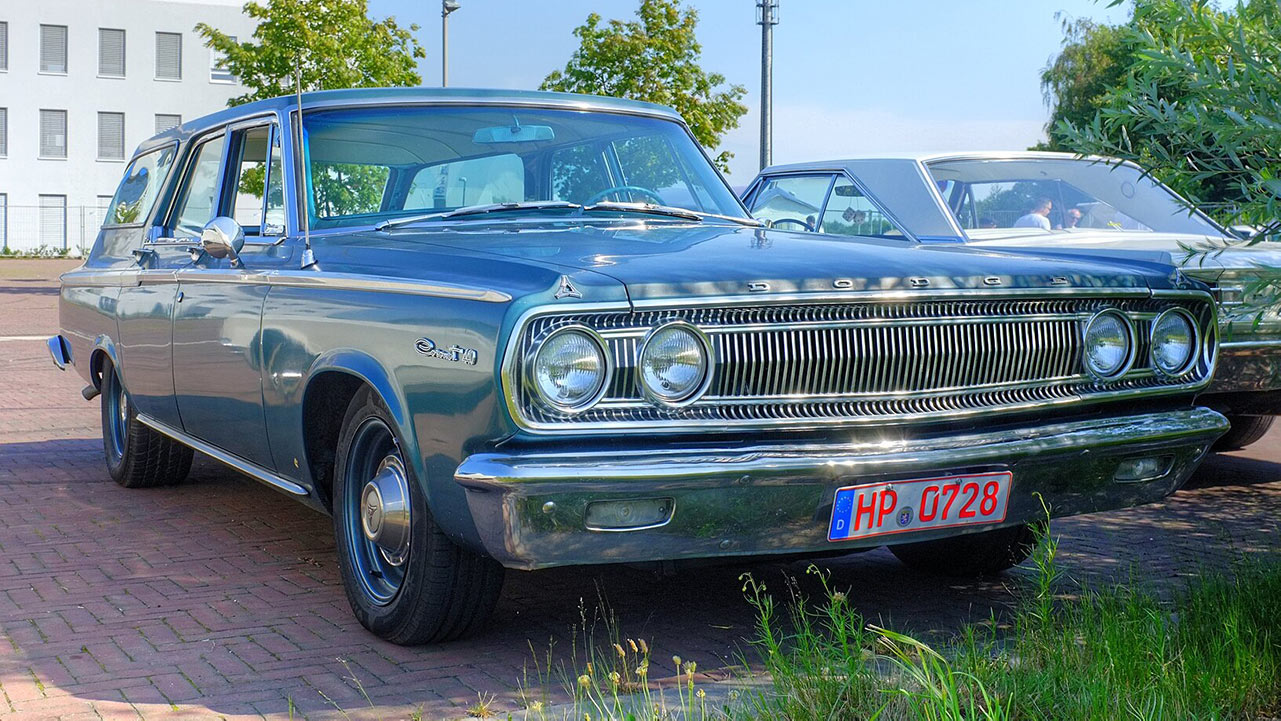
The 1965 Dodge Coronet 500 arrived at a moment when American buyers wanted something smaller than a land yacht but more stylish than a bare-bones compact. It packed big-car presence into a mid-size footprint, then layered on just enough luxury and performance hardware to feel special without tipping into excess. Six decades later, that balance of size, style, and power still explains why enthusiasts gravitate to this particular Coronet.
A mid-size that finally fit the brief
The Coronet nameplate had already seen several lives by 1965, but this fifth-generation car finally hit the market as a true mid-size. It shared Chrysler’s B-Body platform with other corporate siblings yet avoided the bulk that had made some earlier full-size products feel unwieldy. At 204.3 inches long, the Coronet 500 hardtop was eight inches shorter than the contemporary Polara and sat squarely in the same arena as GM’s A-Bodies, a proportion that gave it a more manageable footprint in traffic while preserving generous cabin space and trunk capacity, as described in period coverage of the 204.3 inch hardtop.
That size choice mattered. Buyers in the mid 1960s were beginning to shift from massive sedans to cars that felt easier to park and more responsive on the road, without giving up comfort. The Coronet 500’s dimensions placed it in the sweet spot between compact and full-size, especially for families who wanted a single car that could commute during the week and handle highway trips on the weekend.
Clean, squared-off styling with just enough flash
Visually, the 1965 Coronet family leaned into straight lines and crisp edges. The Coronet 440, which sat just below the 500 in the hierarchy, wore a clean, angular body with a long hood and short rear deck, along with a distinctive front grille and taillight treatment. Enthusiasts still praise that Coronet 440 design for its balance of form and function, and the 500 built directly on that foundation.
The Coronet 500 added more visual drama without tipping into garish territory. Straight-edge, squared-off bodywork remained the core theme, but the top trim received additional brightwork, badges, and unique trim that signaled its status. Contemporary descriptions of Coronet 500 models highlight the minimal use of extra chrome and ornamentation, which kept the car looking modern rather than fussy even as other Detroit rivals piled on decorative flourishes.
Top of the Coronet Series and proud of it
Within the Coronet Series, the 500 sat at the top of the ladder. Factory documentation notes that The Cornet 500 was the top trim level of the Coronet Series and included all the 440 features plus a padded instrument panel, a console with bucket seats, and wheel covers, among other upgrades. Those Coronet Series and details made the 500 feel more upscale without requiring a jump to a full-size model.
Collectors and dealers still describe The Coronet 500 as the premium or top-of-the-line choice among Coronets. One detailed walkaround of a surviving example notes that Just over 33,000 Coronet 500s were sold, with unique interior and exterior trim, a chrome console, and specific badging that separated these cars from lower trims and from other Coronets in the showroom. That Just over 33,000 figure underlines how the 500 combined relative rarity with enough production volume that parts and survivors are still accessible for enthusiasts today.
Bucket Seats and a sports console that felt genuinely sporty
Inside, the Coronet 500 pushed hard on the idea that a mid-size could still feel like a personal luxury car. Bucket seats and a handsome sports console were standard equipment, and factory brochures describe those Bucket seats as upholstered in rich, supple saddle grain and tallow calf vinyl, with matching door panels and fully carpeted floors that gave the cabin an upscale impression. Those Bucket Seats details show how much attention Chrysler paid to tactile quality at a time when many mid-size interiors still felt spartan.
Later commentary on surviving cars echoes that impression. Enthusiasts reviewing the Coronet 500 describe a cabin that mixes comfort and function, with various upholstery options and a console-mounted shifter that reinforces the sporty character. The combination of individual front buckets, a center console, and a padded dash gave the 500 an environment that felt closer to a personal coupe than a family sedan, especially when paired with the two-door hardtop or Convertible body styles.
Engines from practical to potent
Under the hood, the 1965 Coronet range offered a broad menu of engines that allowed buyers to tailor the car to their needs. A detailed mid-size fact sheet lists the small-block 273 CID V-8 as one of the core powerplants, with Horsepower rated at 145 at 4000 RPM, using Overhead valves and a Cast iron block. Those 273 CID V-8 specifications positioned the base V8 as a sensible, efficient choice for everyday driving.
Another engine listing from the same documentation cites Horsepower of 180 at 4200 RPM and Torque of 260 at 1600 RPM, figures that reflect a higher output version within the Coronet lineup. Those 180 Horsepower and numbers helped move the Coronet 500 beyond basic transportation and into the realm of genuinely brisk mid-size performance for the era.
At the top of the regular production range, New Dodge Coronets could be ordered with 365-horsepower 426 Street wedge engines, and a total of 2,100 Coronets with 426 Street wedge engines were built for the 1965 model year. Those 365-horsepower 426 Street configurations turned the mid-size Coronet into a serious straight-line machine that could run with contemporary muscle from other brands.
Transmissions that finally matched the engines
Powertrain hardware only tells part of the story, and Chrysler’s four-speed manual finally caught up to the engines by the mid 1960s. Enthusiast coverage points out that Chrysler finally had a solid four-speed manual available in the new A833, which had been released the previous model year. That Chrysler four-speed gearbox gave high-output Coronet 500 models a durable, precise transmission that could handle both street use and occasional drag strip duty.
Convertible buyers also benefitted from this hardware. Documentation on the Dodge Coronet 500 Convertible notes that the car cost just $2894 when coupled to a four-speed with a Hurst shifter, and that Transmissions included 3 and 4 speed manuals along with automatic options. The combination of a mid-size Convertible body, a performance-oriented Hurst shifter, and a relatively attainable $2894 Convertible price tag helped cement the Coronet 500 as a versatile platform that could be configured as anything from a cruiser to a weekend racer.
Pricing that hit a family-friendly middle ground
Pricing placed the Coronet 500 within reach of middle class buyers while still signaling that it was more than an entry-level car. Coverage of the hardtop notes a base price of $2,637 for the 500, and records indicate that Dodge sold 33,300 Coronet 500s in hardtop and Convertible bodystyles, with a large share of them equipped with V8 power. Those $2,637 and 33,300 figures underline how effectively the 500 bridged the gap between budget and premium.
Even the Convertible variant, with its $2894 sticker when paired with a Hurst-shifted four-speed, slotted below many full-size drop-tops while offering similar open-air appeal. That pricing strategy gave buyers the option to enjoy bucket seats, a sports console, and serious V8 performance without stepping into the cost and bulk of a larger flagship model.
Styling that aged better than many rivals
Period and modern commentary often compare This Coronet 500 to the Malibu SS, noting that the Dodge played in the same sporty mid-size space as Chevrolet’s popular coupe. These B-Bodies were direct descendants of earlier full-size designs, but the 1965 iteration avoided the bloated look that had made some prior models seem dated. Analysts of Coronet and Malibu often argue that the restrained, squared-off styling helped the Coronet 500 age more gracefully than some contemporaries that leaned heavily on chrome or extreme curves.
Owners who share their unrestored cars today tend to emphasize how the fifth-generation Coronet captures a particular period when many autos could be had with power ranging from mild to wild, and the fifth-generation Coronet was no exception. That flexibility, combined with clean lines and relatively compact dimensions, gives the 1965 Coronet 500 a timeless quality that resonates with both muscle car fans and those who simply appreciate mid-century industrial design.
Color choices and visual personality
Paint records from the period reveal that Dodge offered the Coronet in a range of distinctive finishes. Documentation of factory paint codes lists shades such as Pink Silver identified by specific codes and Pale Gold tied to another set of codes, both associated with Dodge and Chrysler for the 1965 model year. These Pink Silver and Pale Gold options, among others, added personality that went beyond the usual whites and dark blues of the era.
Those color choices allowed buyers to tailor the car’s look to their tastes, whether they wanted something understated or a hue that stood out on the street and in dealership rows. Combined with the crisp body lines, these paints helped the Coronet 500 project a confident, modern image that still looks sharp in contemporary photos.
Ride, handling, and the mid-size compromise
Suspension and chassis details for the 1965 Coronet 500 reflect its mid-size mission. While specific spring rates and geometry emerge from technical documentation that spans multiple models, application guides for the Dodge-Coronet in the 1965 model year show how suppliers tailored components to balance ride comfort with sharper handling than heavier full-size cars. One such guide, linked through a Dodge Mid Size citation trail, underscores how chassis tuning for the Coronet aimed to support both everyday driving and higher performance configurations.
Enthusiasts who drive these cars today often describe the Coronet 500 as delivering big car comfort in one sleek package, an impression echoed in sales listings that highlight the right combination of originality, performance, and attitude that makes mid 60s Mopars so special. One detailed listing for a 1965 Dodge Coronet Mopars example specifically calls out this blend of comfort and agility as a key part of the car’s appeal.
Why the Coronet 500 still resonates
Looking back, the 1965 Coronet 500 hit a rare equilibrium. It occupied a mid-size footprint that felt right for daily use, delivered styling that was crisp without being faddish, and offered interiors with Bucket seats and a sports console that made even a family hardtop feel special. Engine choices ranged from the practical 273 CID V-8 with Horsepower of 145 at 4000 RPM to the ferocious 365-horsepower 426 Street wedge, backed by Chrysler’s A833 four-speed and Hurst shifters in the Convertible and hardtop models.
Production numbers in the tens of thousands, pricing around $2,637 for the hardtop and $2894 for a well equipped Convertible, and a design that shared DNA with respected B-Bodies and rivals like the Malibu SS all contributed to a car that felt aspirational yet attainable. For many buyers in the mid 1960s, that combination of size and style made the Coronet 500 the ideal middle ground. For enthusiasts today, it remains a clear snapshot of when Detroit briefly aligned practicality, performance, and design in one well judged package.
More from Fast Lane Only