
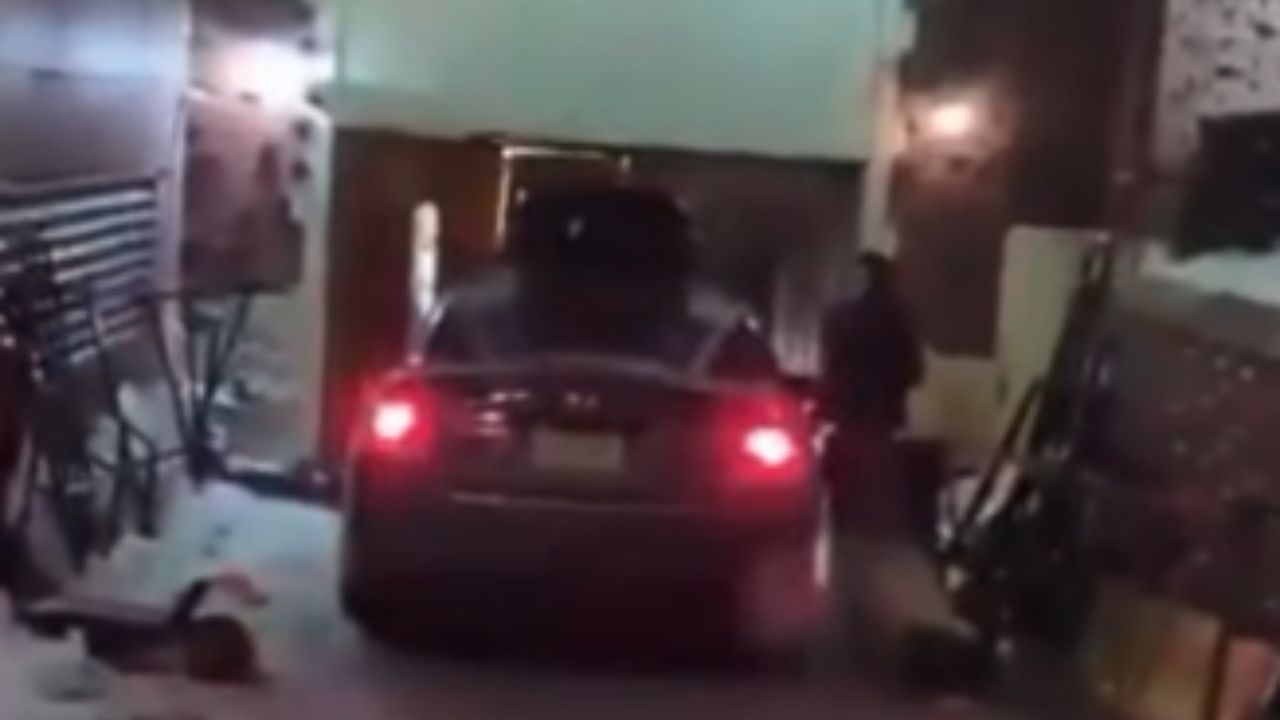
You watched another video of a car being used as a weapon, but this time the target was not a random sidewalk or crowded plaza. It was the front entrance of one of the most recognizable synagogues in NYC, the Chabad Lubavitch World Headquarters in Brooklyn, where a driver allegedly rammed his vehicle into the doorway again and again before officers pulled him out and arrested him. No one inside was physically hurt, yet the images of a car battering a house of worship have already deepened a sense of vulnerability in a Jewish community that treats this building as a global nerve center.
As you try to make sense of what happened, you are confronted with overlapping narratives: a potential hate crime, a man from New Jersey whose family describes mental health struggles, and a landmark religious site that has long been both a symbol of resilience and a magnet for attention. Understanding how those threads fit together helps you see why this incident is resonating far beyond Crown Heights.
The ramming at 770 Eastern Parkway
To understand the stakes, you first need to picture the setting. The crash unfolded at 770 Eastern Parkway in Crown Heights, the brick-fronted address known simply as “770” that serves as the spiritual and administrative hub of Chabad in NYC and far beyond. According to detailed accounts, a driver steered his car directly toward the synagogue’s main entrance and then reversed and surged forward multiple times, turning the iconic doorway into a battering ram target while worshippers and staff were still inside the building. That repeated impact, focused on a single religious site, is what pushed investigators to treat the case as more than a routine collision and to look closely at whether the synagogue itself was the intended victim, as described in reports on What happened at Chabad headquarters in NYC.
Video that you may have seen online captures the car slamming into the entrance of the Chabad Lubavitch World Headquarters in Brooklyn, then backing up and striking again, a pattern that witnesses say continued until Police officers converged on the scene. The building at 770 Eastern Parkway was quickly evacuated as a precaution, and emergency responders searched the vehicle for explosive devices, a step that reflects how seriously authorities now treat any deliberate attack on a Jewish institution. Reports from the scene emphasize that there were no injuries, but they also underscore how the driver’s actions, in the heart of Crown Heights, rattled a community that has long viewed this address as a sanctuary, a concern echoed in coverage of the Police probe into the NYC synagogue attack.
A suspect from New Jersey and early hate crime charges
As you follow the investigation, you see that attention has quickly shifted from the crash itself to the man behind the wheel. Authorities have identified the driver as a 36-year-old from New Jersey, a detail that matters because it suggests he traveled into Brooklyn rather than stumbling onto the building by chance. Law enforcement officials say he is facing hate crime charges after allegedly targeting the Chabad Lubavitch World Headquarters, a decision that reflects their view that the synagogue, not just the structure, was the focus of his aggression. That framing is central to the way the case is being described in early charging documents and in accounts of the Driver accused of ramming the Brooklyn headquarters.
You also see a more complicated portrait emerging from those who know him. Relatives in New Jersey have described a troubled history that includes mental health struggles and an intense, sometimes erratic interest in Judaism, details that complicate any simple narrative about motive. Some accounts say he had spoken about spiritual searching and conversion, while others stress that his behavior had become increasingly unstable in the months leading up to the crash. Those threads, including references to his background in New Jersey, are now part of what prosecutors and defense attorneys will have to untangle as the case moves forward.
Inside the chaotic moments at Chabad World Headquarters
If you place yourself inside the building, the incident reads less like a distant headline and more like a narrowly averted disaster. Witnesses at Chabad World Headquarters in Brooklyn describe hearing a thunderous crash at the front entrance, followed by the sickening repetition of metal hitting masonry as the car surged forward again. Some people ran toward interior stairwells, others grabbed children and moved deeper into the complex, while security staff rushed to understand whether this was an accident or an attack. The sense of confusion was heightened by the building’s status as a global hub, with visitors from around the world often present at any given moment, a reality that is reflected in coverage of the Suspect facing hate crime charges after the ramming.
Outside, you can see from the footage how quickly the scene escalated. A driver was taken into custody after crashing his car into the Chabad Lubavitch World Headquarters in Brooklyn on Wednesday night, with officers surrounding the vehicle, shouting commands, and pulling the man out as bystanders recorded on their phones. Within minutes, the area around 770 Eastern Parkway was flooded with emergency vehicles, and the building was evacuated as a precaution while bomb squad technicians checked the car for any additional threats. Those rapid steps, captured in video shared by local outlets and on Wednesday night clips, underline how seriously first responders now treat any deliberate impact at a religious site.
A landmark Orthodox institution under strain
To grasp why this incident resonates so widely, you need to understand what 770 represents. The building is not just a neighborhood synagogue, it is the headquarters of the Chabad Hasidic movement in New York, a place where worship, study, and global outreach all converge. For decades, the address has drawn visitors from across the world who come to pray, seek guidance, or simply stand in a space they have seen in countless photos and videos. That symbolic weight is part of why a car repeatedly driving into its entrance is being treated as an attack on an ultra-Orthodox synagogue, a framing reflected in descriptions of the Man arrested after the car repeatedly hit the New York site.
For you, as a reader watching antisemitic incidents rise across New York and other cities, the idea that a driver could weaponize a car against such a central Orthodox institution is especially chilling. Community leaders have stressed that no injuries were reported, but they also note that the psychological impact is significant, particularly for children and older worshippers who now associate the familiar front steps with the sound of a crash. The building’s role as a global symbol of Jewish life means that images of the damaged entrance travel quickly, amplifying fear and anger far beyond Crown Heights, a dynamic that is evident in coverage of the Driver Rams Car in New York.
A suspect’s spiritual search and a community’s questions
As more details surface, you are confronted with a paradox that makes this case harder to categorize. Reports indicate that the Chabad headquarters attack suspect had previously sought spiritual guidance from a rabbi connected to Chabad, suggesting that his relationship with the movement was not purely adversarial. Some accounts say he had shown up at events, asked questions about Jewish practice, and even expressed a desire to convert, behavior that community members now look back on with unease. That history, described in coverage of the Chabad headquarters suspect’s past, complicates any simple story about an outsider targeting a faith he despised.
More from Fast Lane Only






Leave a Reply