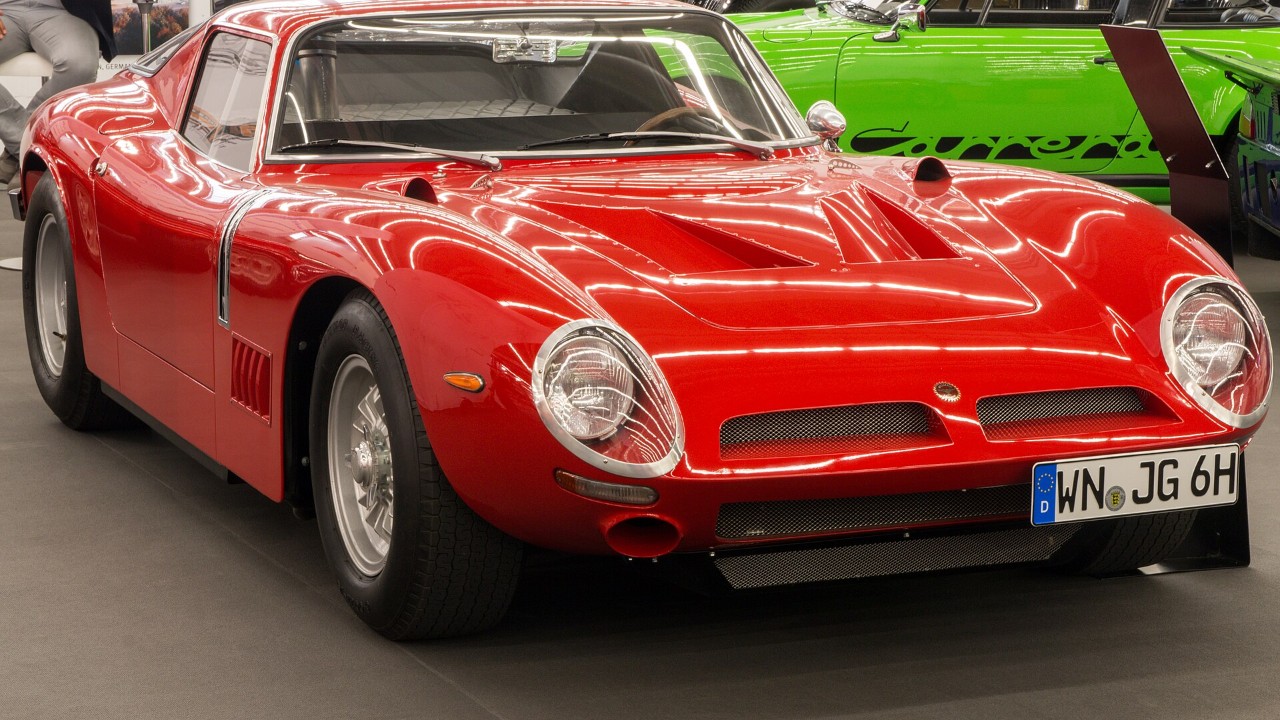
Several European GT cars of the 1960s ran on engines from Detroit. British, Italian and Swiss builders paired their own chassis and bodies with Ford, Chevrolet and Chrysler V8s.
These six run from the AC Cobra to the Swiss-built Monteverdi 375. Each entry carries its engine and a build figure from a museum, an auction catalog or a marque history.
1. 1962–1967 AC Cobra

The Cobra started as the AC Ace, a sports car AC Cars of Thames Ditton built from 1954. When Bristol stopped supplying its six-cylinder engines in 1959, the Ace needed a new heart.
Carroll Shelby, the 1959 Le Mans winner for Aston Martin, arranged chassis supply from AC and turned to Ford for the engine, Conceptcarz’s Cobra history explains. The first 75 cars used Ford’s 260-cubic-inch V8. Then the 289 arrived in 1963, and the 427 version, unveiled near the end of 1964, made 425 hp. For scale, Shelby car CSX2044 carried a base price of $5,995.
2. 1964–1967 Sunbeam Tiger

Rootes built the Sunbeam Alpine from 1959, and the V8 Tiger followed in 1964. Ian Garrad, Rootes’ West Coast sales manager, gets credit for the idea, while Carroll Shelby did much of the engineering and built the prototype.
Early cars used Ford’s 260 V8 at 164 hp, and the Mark II got the 289 at 210 hp, RM Sotheby’s catalog says. Fewer than 7,100 were built, including just 633 Mark IIs. However, Chrysler later bought Rootes and dropped the Ford-powered car.
3. 1965–1974 Iso Grifo
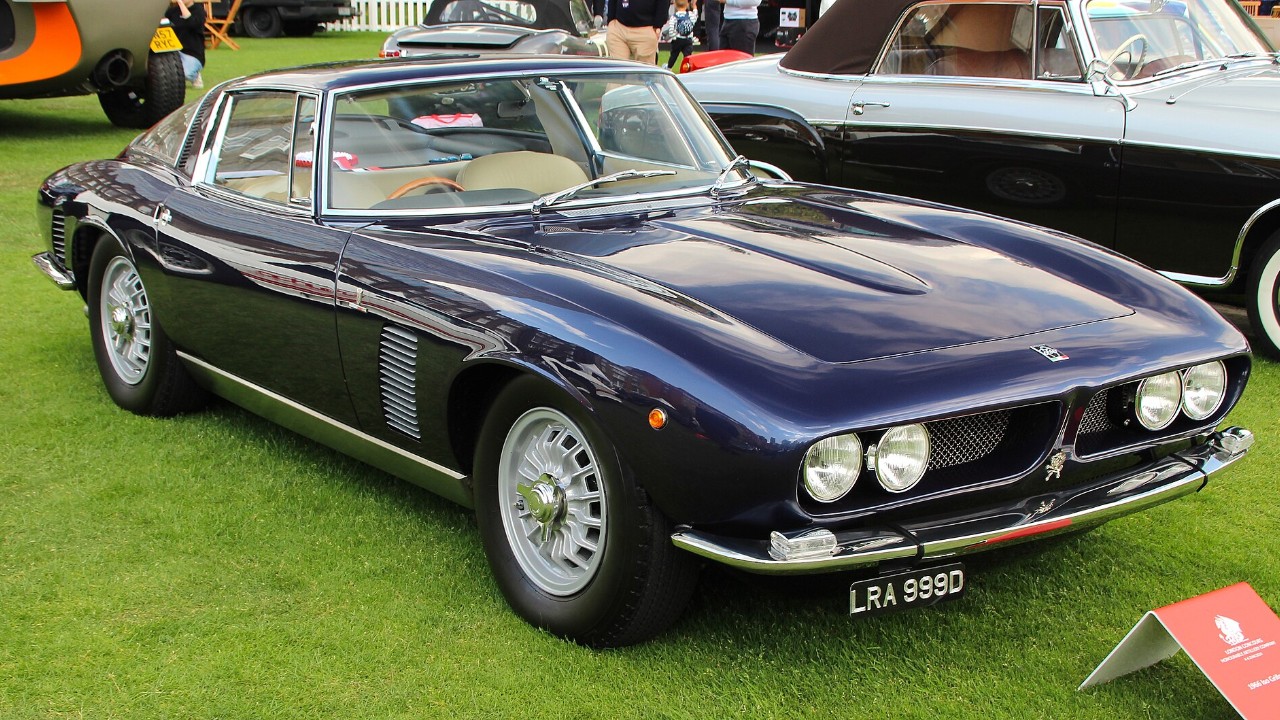
Iso’s Grifo paired Italian design with Chevrolet power. Iso chief executive Renzo Rivolta oversaw the project. Giorgetto Giugiaro styled it at Bertone, and Giotto Bizzarrini handled the engineering.
Most examples used Chevrolet’s 327-cubic-inch V8, and a 7 Litri option added an uprated Chevrolet 427, RM Sotheby’s notes. Series II cars from 1970 added pop-up headlights. Later, the final IR8 switched to a Ford 351, and Iso built 413 Grifos in all, Silodrome reports. Production ended when Iso went bankrupt in 1974.
4. 1965–1968 Bizzarrini 5300 GT Strada
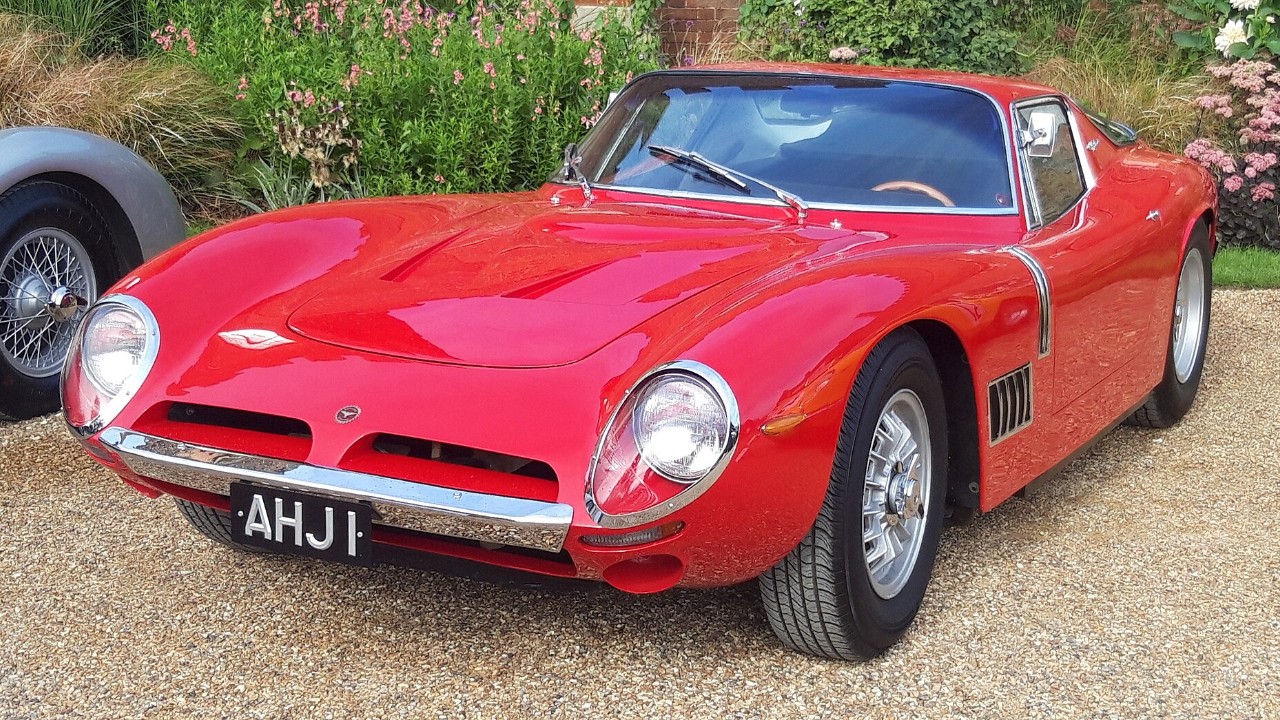
Giotto Bizzarrini joined Ferrari in 1957 and rose to chief development engineer. In 1960 he worked on the development of the 250 GTO. Later, the 5300 GT carried his own name.
His 5300 GT Strada used a Chevrolet 327 small-block with a single four-barrel, rated at 365 hp at 5,800 rpm, the Audrain Automobile Museum says. Underneath sat a welded sheet-steel tub. According to the museum, Bizzarrini built just 133 5300 GTs, and 86 Stradas wore aluminum bodies.
5. 1966–1976 Jensen Interceptor
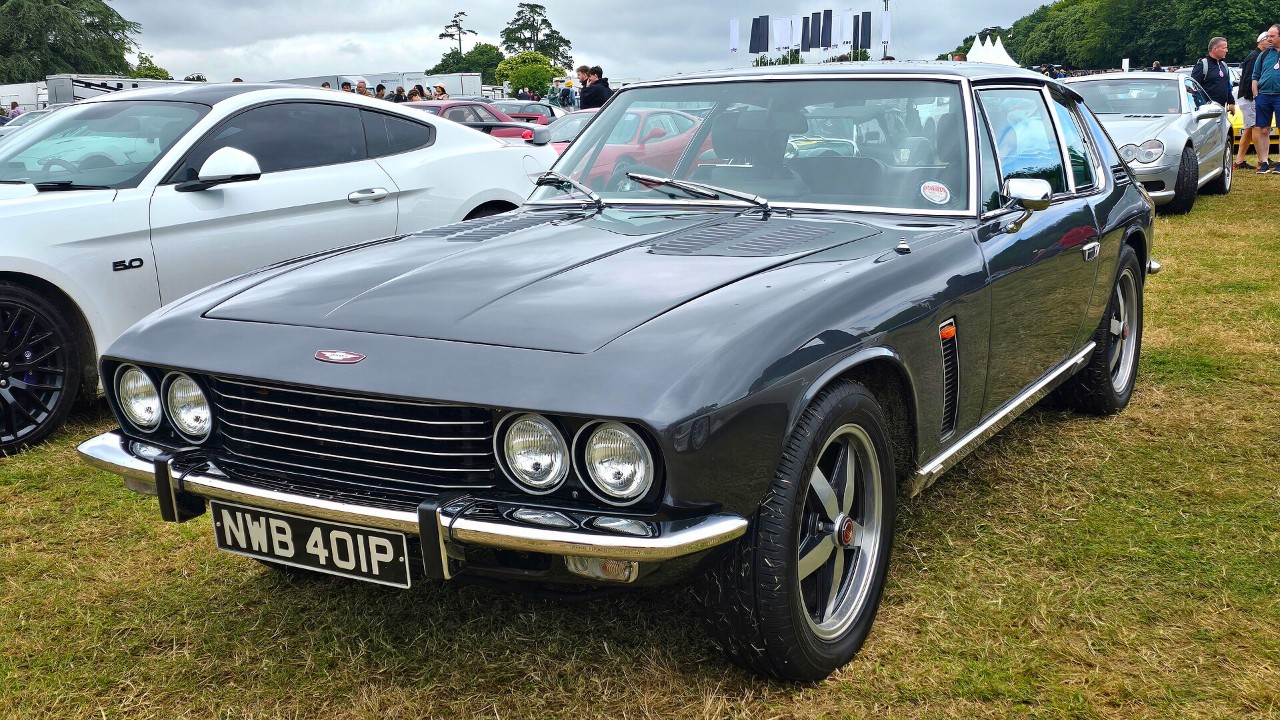
Jensen’s Interceptor mixed Italian styling with British assembly and Chrysler power. Touring of Milan drew the original design, while Vignale of Italy built the bodyshells. Later, Jensen produced the cars itself at its West Bromwich factory.
Early cars used a 383-cubic-inch Chrysler V8 rated at 330 hp, My Car Quest reports. In 1971, the engine grew to 440 cubic inches. Jensen also offered the four-wheel-drive FF version. In the end, Jensen built about 6,400 Interceptors from 1966 to 1976, Conceptcarz and My Car Quest agree.
6. 1967–1975 Monteverdi High Speed 375, the last of these European GT cars

Peter Monteverdi of Basel showed the two-seat 375 S at the Frankfurt motor show in September 1967. Pietro Frua built the first dozen bodies before Fissore took over production in 1969 at its Savigliano factory. That autumn, the four-seat 375 L replaced the 375 S.
Power came from a 7,206 cc Chrysler V8 rated at 380 bhp at 4,600 rpm, Below the Radar lists. Its data puts the total at about 100, a figure it marks as claimed. Likewise, the factory claimed over 30 of the 375/4 sedan, yet only eight are known. Finally, the last 375 L was delivered in 1975.
More from Fast Lane Only
- Unboxing the WWII Jeep in a Crate
- 15 rare Chevys collectors are quietly buying
- 10 underrated V8s still worth hunting down
- Police notice this before you even roll window down
This article was created with the help of AI and was reviewed and edited by Fast Lane Only editors before publication.