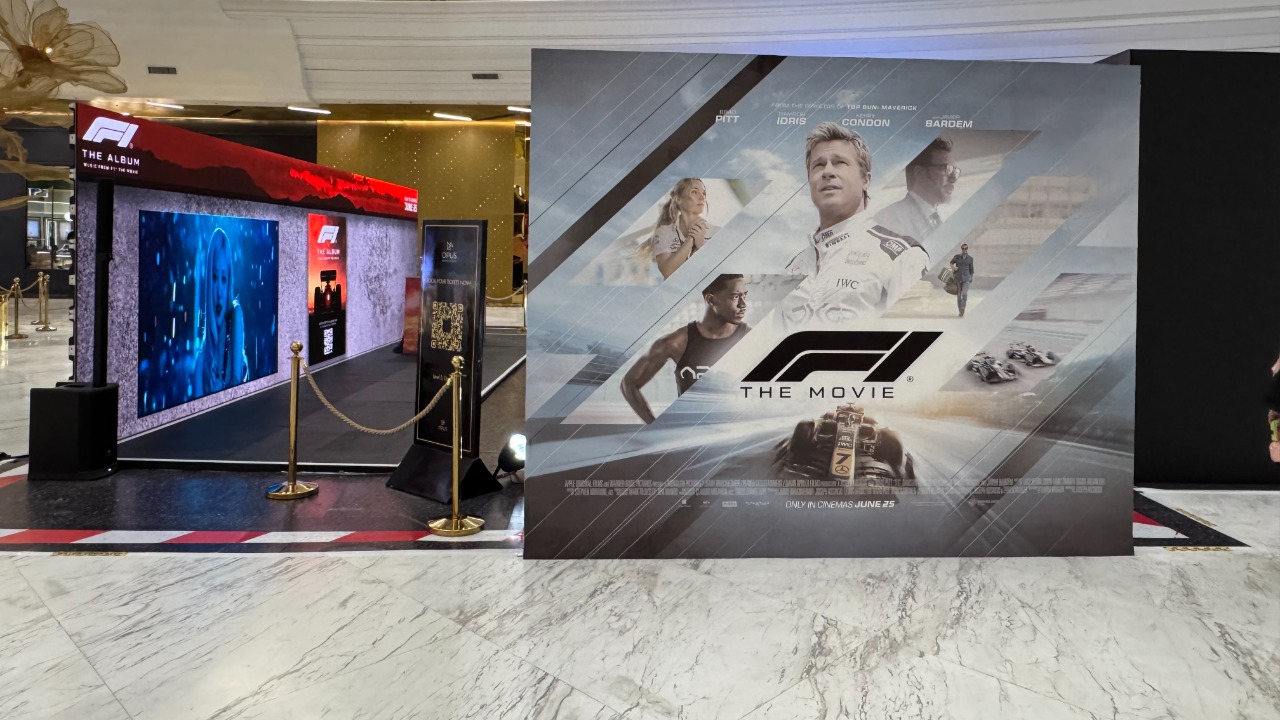
The race from summer blockbuster to awards-season heavyweight is complete for F1: The Movie. After roaring past a $630 million global box office haul, the Brad Pitt racing drama has converted commercial heat into prestige, landing four Oscar nominations and a coveted Best Picture slot. It is a rare crossover moment where a high-octane motorsport film is suddenly part of Hollywood’s most rarefied conversation.
What makes this leap so striking is how deliberately the filmmakers fused real Formula 1 grit with classic movie-star spectacle. The result is a film that satisfies hardcore race fans and casual viewers alike, while quietly rewriting what a sports movie can look and feel like at the Academy Awards.
From paddock curiosity to Oscar-night contender
When the project was first announced, it sounded like a stylish curiosity: Brad Pitt in a fictional team, set inside the real world of F1, with cameras embedded in the traveling circus of the world championship. The finished film has gone far beyond that, turning into a box office juggernaut that has reportedly cleared $630 million worldwide and now sits among the year’s top earners. That financial muscle matters in awards season, because it signals to Academy voters that this is not just a niche racing story but a genuine cultural event that audiences have already endorsed.
The Academy has responded in kind. F1: The Movie has secured four nominations, including a place among the ten films vying for Best Picture, a category that has historically been wary of pure sports dramas. The film’s producers now have an evening in Hollywood ahead of them at the 98th Academy Awards, where the movie will also be in the hunt in key craft races such as cinematography and film editing. For a story built around pit stops and tire strategies, that is a remarkably smooth run through awards season traffic.
How Brad Pitt and a Daytona backdrop sold the fantasy
At the center of the film’s appeal is Brad Pitt, whose presence gives the story a grounded charisma that keeps the technical jargon from feeling remote. He plays a veteran driver coaxed back into the cockpit, a role that lets him lean into both movie-star swagger and the vulnerability of an athlete facing the limits of age. That character arc is staged against real racing backdrops, including sequences shot in the Daytona area, where the production captured the scale and spectacle of a race weekend at Daytona International Speedway. That choice roots the film in recognizable American motorsport geography even as it tells a story set inside a global series.
The casting around Pitt is just as deliberate. The film pairs him with Brad Pitt and Damson Idris in a mentor–protégé dynamic that mirrors the generational churn of real Formula 1, where rookies arrive with data-driven confidence and veterans rely on racecraft earned over years. The story is not a straight retelling of any one driver’s life, but it borrows liberally from the sport’s history of champions who walked away and then felt the pull to return. By stitching together those familiar beats, the film gives fans a sense of recognition while still offering newcomers a clean, character-driven entry point.
Lewis Hamilton’s fingerprints on the film’s authenticity
One of the reasons the movie has resonated so strongly with fans is that it feels like the paddock, not a studio backlot. That is not an accident. Seven-time world champion Lewis Hamilton signed on as a co-producer, working closely with Brad Pitt to shape the racing culture on screen and to ensure that the dialogue, team dynamics and even the way drivers carry themselves felt true to life. Hamilton has spoken about wanting the movie’s final cut to be a cinematic masterpiece that still passes muster with the people who live this world every weekend, and his involvement has given the project instant credibility among drivers and team personnel who might otherwise have been skeptical of a Hollywood incursion.
Hamilton’s role also helped open doors inside the sport. Teams and organizers were more willing to accommodate cameras in sensitive areas, from engineering briefings to grid preparations, because one of their own was vouching for the project. That trust shows up on screen in the way the film captures the quiet, anxious moments before a race start and the controlled chaos of a pit stop. The collaboration between Hamilton and Pitt, highlighted in Lewis Hamilton’s own reflections on the project, has effectively turned the film into a bridge between the insular world of the paddock and the global moviegoing audience.
Filming at real Grand Prix weekends and in the “fast lane”
Beyond the casting and consulting, the production made a bold technical choice: it embedded itself inside actual Grand Prix weekends. Rather than recreating races on closed sets, the filmmakers ran their fictional team on track alongside the real titans of the sport, capturing footage at racing speeds with live crowds in the grandstands. That decision gives the film a texture that is almost impossible to fake, from the rubber marbles on the racing line to the way mechanics move around the car in cramped garages. It also meant the crew had to work at the relentless pace of a real race weekend, with no chance to reset the entire circus if a shot was missed.
To keep up, cinematographer Claudio Miranda ASC ACC and his team developed camera rigs and shooting strategies built specifically for the “fast lane” of modern single-seaters. The need for speed and authenticity shaped everything from lens choices to mounting points on the chassis, as Miranda implemented techniques that could withstand the brutal vibrations and G-forces of a full lap while still delivering clean, cinematic images. That technical ingenuity, detailed in accounts of how the crew operated in the fast lane, is a major reason the film now finds itself in the conversation for cinematography and editing awards alongside more traditional prestige fare.
Critical reception and what the Oscar nods really mean
Commercial success and technical bravado do not automatically translate into awards recognition, so the reaction from critics has been a crucial part of F1: The Movie’s trajectory. On aggregate sites, the film has drawn praise for its muscular storytelling and its focus on the human cost of chasing perfection at 300 km/h. Under the watchful eye of producer Jerry Bruckheimer, reviewers have noted that the movie is indeed a very masculine venture, centered on excellence and the effort it takes to get there, but they have also highlighted the emotional beats that keep it from feeling like a two-hour highlight reel. That balance is reflected in the film’s Metacritic profile, where the commentary often circles back to how surprisingly character-driven the story is.
The four Oscar nominations, including the Best Picture slot and recognition in categories such as film editing, are a formal acknowledgment of that critical respect. For the producers, an evening in Hollywood at the 98th Academy Awards is more than a victory lap after a lucrative theatrical run. It is a signal that the Academy is increasingly open to genre films that marry technical innovation with emotional clarity, whether they are set in trenches, on alien planets or, in this case, on a starting grid. For fans of racing cinema, it raises the bar for what future projects will need to deliver if they hope to keep pace with this one.
More from Fast Lane Only