
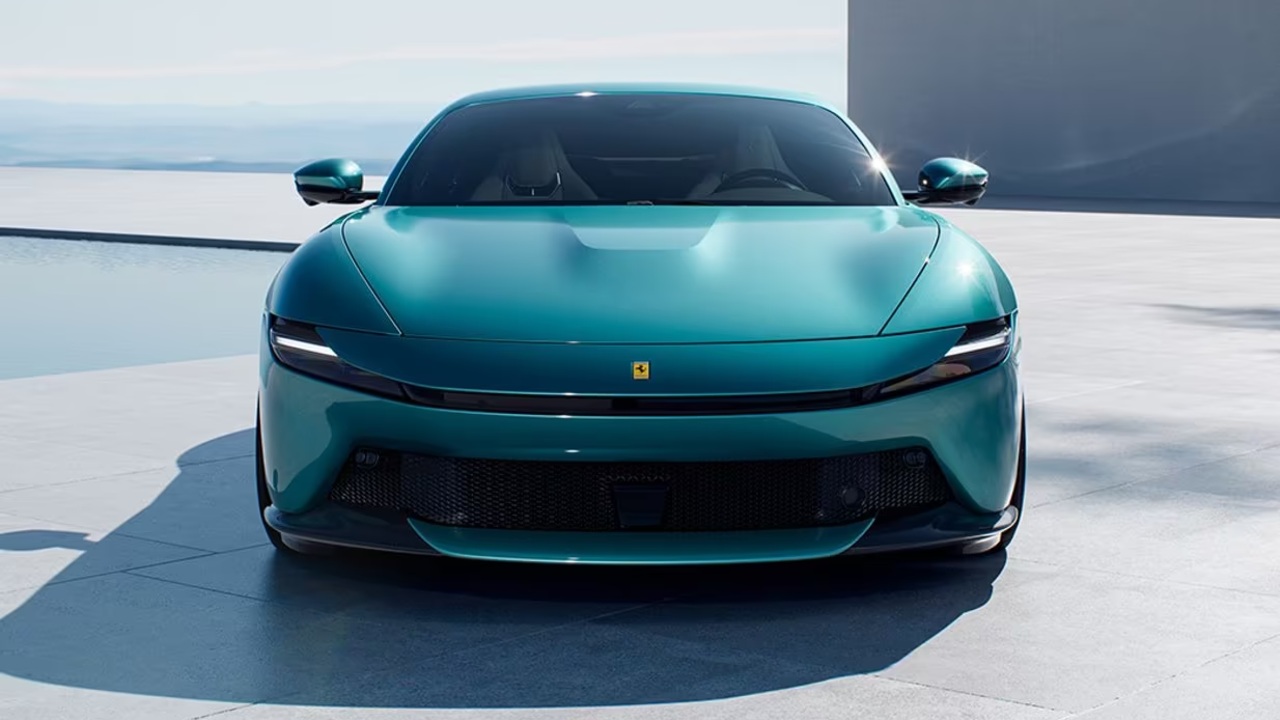
The Ferrari Amalfi arrives with the kind of power, polish, and price tag that make its “entry-level” label feel more like internal accounting than an honest description. It replaces the Roma on paper, but on the road and in the cabin it behaves like a full-blooded modern Ferrari grand tourer, not a junior partner. I found that the more closely I looked at its performance, design, and technology, the clearer it became that this car is only “entry-level” in the narrowest sense of Ferrari’s own hierarchy.
More power and performance than an ‘entry’ badge suggests
Ferrari positions the Amalfi as the first rung on its GT ladder, yet the hardware reads like something from much higher up the range. The car uses a revised version of a 3.9-liter twin-turbocharged V8, part of the F154 family, tuned to deliver around 631 hp and a top speed reported at 208 mph. That output is explicitly framed as an upgrade over the Roma it replaces, with Ferrari itself describing the Amalfi as sharper and more powerful than the earlier car it is built upon, a point underscored in detailed performance comparisons that set the two side by side.
That output also makes a mockery of the “starter Ferrari” idea when you remember that not long ago, halo models like the Enzo were the benchmark for this kind of power. Contemporary road tests describe the Amalfi as having “more than 600 hp” and stress that calling it entry level is misleading for a car that accelerates from 0 to 62 mph in about 3.3 seconds and feels “cracking to drive” on challenging roads in Portugal’s Algarve. When a so-called base model is almost as powerful as Ferrari’s past icons and delivers this level of pace, the badge on the brochure starts to look like semantics.
From Roma facelift to fully fledged grand tourer
On first glance, it is tempting to dismiss the Amalfi as a lightly reworked Roma, but the design and engineering changes run deeper than a simple facelift. Detailed walkarounds describe how the front end has been rethought, with a more assertive stance, a different treatment of the nose, and a cleaner, more “techno chic” surfacing that Ferrari’s chief designer Flavio Manzoni explicitly characterizes as a new direction. One of the most visible differences from the Roma is the loss of a traditional grille, replaced by a smoother, more integrated front fascia that helps the car look both more modern and more planted on the road, a shift highlighted in early design breakdowns.
Underneath, the Amalfi continues the Roma’s front‑engine, rear‑drive GT template but layers in meaningful aerodynamic and chassis updates. Reports on the car’s underside detail new fins and aero elements that increase stability at speed, while Ferrari itself says the Amalfi will be sharper to drive than the Roma it effectively rebirths, a point echoed in analyses that describe the Roma’s transformation into the Amalfi. The result is a car that may share a silhouette with its predecessor but behaves like a more focused, more mature GT, which again undercuts the notion that this is simply an entry point rather than a fully realized model in its own right.
A cabin that balances analog charm and digital control
Inside, the Amalfi tackles one of the trickiest jobs in modern car design, blending the analog tactility enthusiasts crave with the digital interfaces buyers now expect. Ferrari has been wrestling with this transition for years, and the Amalfi is presented as a key step in that evolution, with reviewers noting that it “feels special like a Ferrari should” despite the march toward screens and software. The cockpit wraps driver and passenger in a low, enveloping dash, while the steering wheel and primary controls are packed with touch surfaces and haptic switches that reflect the brand’s current philosophy, a balance explored in depth in long-form driving impressions.
Crucially, the Amalfi does not feel stripped back or simplified compared with pricier Ferraris. The materials, seating, and layout are described as every bit as luxurious as you would expect from a six‑figure Maranello GT, with the option to tailor colors and trims so extensively that the “entry-level” tag becomes almost meaningless once the car is specced. Some testers even highlight how the Amalfi’s interior, with its mix of physical buttons and digital displays, improves on the Roma’s ergonomics and usability, reinforcing the sense that this is a step forward for Ferrari’s 2+ grand tourer Berlinett rather than a cost‑cutting exercise.
Chassis tech that belongs with Ferrari’s heavy hitters
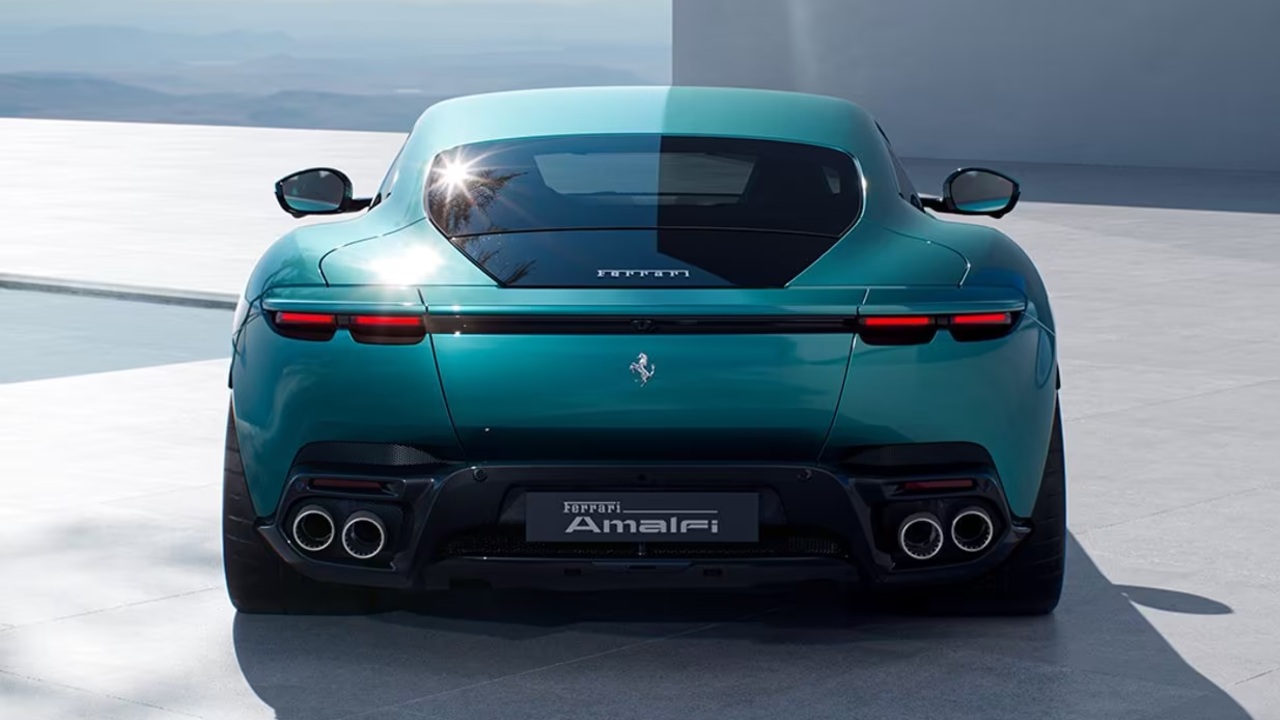
The way the Amalfi deploys its performance is where the “entry” narrative really falls apart. Ferrari has equipped the car with a sophisticated suite of chassis electronics, including brake‑by‑wire and the latest ABS Evo system, technology that has filtered down from the brand’s more extreme models. Reports on the car’s dynamics explain how this setup works with an updated Side Slip Control system to manage traction and stability, allowing the driver to lean on the car’s grip and power with confidence even on challenging roads, a combination detailed in technical breakdowns of the Amalfi’s hardware.
On the road, that technology translates into a car that feels composed and agile rather than soft or compromised. Testers note that while there might be slightly less pedal feel compared with the Roma, the Amalfi’s brake‑by‑wire system delivers strong, consistent stopping power at speed, and the chassis feels more tied down thanks to revised suspension tuning and aero work under the floor. Detailed road tests describe how the V8’s soundtrack remains characterful while the car’s body control and stability are enhanced by those new underside fins, again aligning the Amalfi more closely with Ferrari’s higher‑tier GTs than with any notion of a basic model.
Pricing, positioning, and the reality of ‘entry-level’ Ferrari ownership
Even before you consider options, the Amalfi’s price and specification place it firmly in rarefied territory. Early guidance points to an estimated starting figure in the region of $283,000, with some analyses framing it as a roughly $300,000 grand tourer once buyers add the usual extras, a range reflected in detailed pricing breakdowns. Social media reveals similar expectations in Europe, where one widely shared post highlights prices from €240,000 and calls out “631hp from its 3.9L twin-turbocharged V8” and “760Nm of torque” as headline figures, with the message framed as a big REVEALED moment for the “New” Ferrari Amalfi.
Ferrari itself is clear that this is its latest “entry-level” twin‑turbo V8 2+ grand tourer, yet the specification sheet reads like a greatest hits list. Official data lists the Amalfi’s Engine as a 3,855cc V8 twin‑turbo with an 8‑speed twin‑clutch automatic Transmission, and supporting technical notes quote torque figures of 759 Nm delivered between 3,000 rpm and 5,750 rpm. When a car with this level of power, torque, and technology is described as the starting point, it says less about the Amalfi being modest and more about how far upmarket the entire Ferrari range now sits.
Why the Amalfi still feels every inch a ‘real’ Ferrari
Labels aside, what ultimately matters is whether the Amalfi delivers the emotional hit that buyers expect when they sign up for a Ferrari. On that front, the feedback is strikingly consistent. Long, in‑depth drives describe how the car “feels special like a Ferrari should,” with the V8’s response, the steering’s precision, and the chassis balance all combining to create the sense of occasion that defines the brand. One detailed review even concedes that while “entry level” might be the internal shorthand, it is the wrong expression for a car with more than 600 hp and a six‑figure, optioned price that can climb rapidly once buyers start ticking boxes.
Out on real roads, from the quiet villages to the faster stretches of the Algarve, reviewers report that the Amalfi feels alive and engaging, yet also comfortable enough to justify its grand tourer brief. One account of Ferrari’s designated test route in Portugal notes how the car copes with everything from tight town streets to open coastal roads, always retaining a sense of composure and fun. When a model that is supposed to be the gateway to the brand can do all of that while packing a 631 hp V8, advanced chassis electronics, and a cabin that feels every bit as crafted as its stablemates, the “entry-level” tag starts to look less like a warning of compromise and more like a quiet understatement.

Leave a Reply