
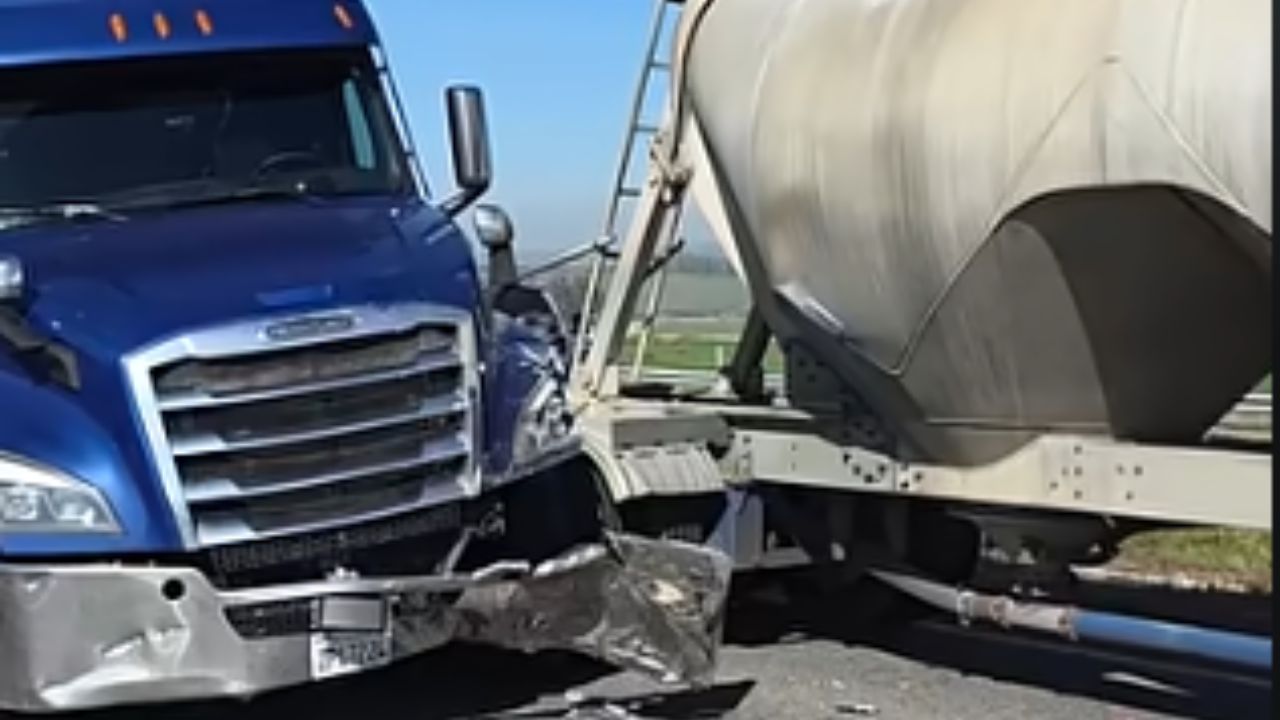
When tule fog rolled across a key freight corridor in California, visibility collapsed so quickly that drivers had little chance to react before a chain reaction of collisions began. Within minutes, a stretch of Highway 58 near Bakersfield turned into a tangle of twisted metal involving 43 vehicles, leaving nine people hospitalized and traffic frozen for hours. For you as a driver, commuter, or logistics planner, the crash is a stark reminder that in dense fog, routine habits are not enough to keep you safe.
The pileup, which unfolded in the morning rush, did not happen in isolation. It followed a pattern of recent fog related crashes on California highways that have killed and injured dozens of people earlier this year. Understanding how this particular disaster developed, how responders worked through the chaos, and what you can do differently in similar conditions is no longer a theoretical exercise, it is a practical necessity.
How a wall of fog turned Highway 58 into a crash zone
You can picture the scene starting as an ordinary winter morning drive, with traffic moving steadily along Highway 58 as it approaches Bakersfield. According to state traffic officers, the trouble began when extremely dense tule fog settled over the roadway, cutting visibility to a matter of yards and leaving drivers with almost no time to react to slowing vehicles ahead. Within that opaque gray curtain, more than 40 cars and trucks became entangled in a cascading series of rear end and side impact collisions, a sequence that investigators later described as an extremely dense fog event that overwhelmed normal defensive driving.
By the time the chain reaction stopped, officers counted a total of 43 vehicles involved along the eastbound lanes of the corridor, a figure that matches the 43-vehicle description used by local broadcasters and underscores just how quickly a single low visibility incident can escalate. The crash unfolded near Bakersfield in a region that is notorious for tule fog, a ground hugging phenomenon that forms in the Central Valley when cool, moist air becomes trapped under a layer of warmer air aloft. In this case, the fog bank was so thick that even seasoned drivers on Highway 58 struggled to see brake lights until it was too late, a reality that you can see reflected in the way investigators have linked the pileup to tule fog blamed the collisions.
Inside the response: from first 911 calls to highway shutdown
For you, the scale of the emergency response is a measure of how quickly a fog related crash can strain local resources. On Tuesday, January 27, 2026, at approximately 8:07 a.m., dispatchers at the California Highway Patrol office in Bakersfield began receiving reports of a multi vehicle traffic disaster, with callers describing multiple impacts and vehicles scattered across the lanes. Units from the CHP Bakersfield area office were dispatched immediately, and as they arrived, they requested additional ambulances and tow trucks to deal with the sheer number of damaged cars and injured occupants.
Investigators later explained that the first collisions likely involved only a handful of vehicles, but as traffic continued to enter the fog bank at highway speeds, more drivers plowed into the growing wreckage. In the end, nine people were transported to hospitals with injuries ranging from minor to major, a tally that matches the Nine hospitalized figure cited in early summaries of the crash. To secure the scene and allow paramedics to work safely, officers closed Highway 58 for hours, a shutdown that extended into the late evening as crews used heavy California Highway Patrol wreckers and flatbeds to clear the debris.
What the crash reveals about driving in tule fog
If you regularly drive in the Central Valley, you already know that tule fog is not a gentle mist but a hazard that can erase the road in front of you. In this case, witnesses described visibility dropping so suddenly that drivers had almost no warning before encountering stopped traffic, a pattern that aligns with the “extremely dense” conditions cited by officers. The California Highway Patrol has stressed that unsafe speed for conditions, even when you are technically below the posted limit, can be deadly in such weather, a point reinforced when officials contrasted the Highway 58 pileup with another fog related crash on Highway 99 that they referenced as Yesterday’s crash to underline the recurring risk.
For you behind the wheel, the lesson is that in tule fog, your usual margin for error disappears. You cannot rely on adaptive cruise control or lane keeping systems in a 2024 Toyota RAV4 or a 2023 Tesla Model 3 to save you if you are overdriving your visibility, because those systems still need time and distance to react. Instead, officers urge you to slow well below the limit, increase following distance dramatically, and use low beam headlights rather than high beams, which reflect off the moisture droplets and make the whiteout worse. The Highway 58 crash, which unfolded in the same Bakersfield region where earlier advisories had warned of dense fog on 58, shows how quickly conditions can deteriorate even when the sky is otherwise calm.
Lives disrupted: injuries, images, and a community on edge
Even if you were not on the road that morning, the human impact of the pileup is hard to ignore. Nine people ended up in local hospitals, and dozens more were left shaken as they waited on the shoulder for tow trucks and rides home. Photo galleries from the scene show sedans, pickups, and big rigs crumpled together, some with their rear axles lifted off the ground, others with shattered windshields and deployed airbags, all under a sky that had turned clear by midday. One local outlet noted that the temperature in Bakersfield was 53 degrees and Clear with Areas of dense fog and a Low of 38 forecast, a snapshot that captures how deceptively calm the weather can look outside the fog bank itself, as reflected in a Bakersfield Today forecast.
For the broader community, the Highway 58 disaster also revived memories of other recent fog related tragedies. Earlier this year, a separate incident on a California highway left 1 Dead and at Least 20 Others Injured in a Multi Vehicle Pile Up amid dense fog, a case that underscored how quickly a morning commute can turn fatal when visibility collapses. When you place the Bakersfield crash alongside that earlier Dead and Least, the pattern is unmistakable, dense fog is not a rare anomaly but a recurring seasonal threat that demands a different mindset every time you turn the key.
What you can do differently the next time the fog rolls in
For you as a driver, the most practical takeaway from the 43-car pileup is that preparation and restraint matter more than any single gadget or feature in your vehicle. Before you set out on a winter morning in the Central Valley, you should check local forecasts and highway advisories, paying close attention to mentions of tule fog or dense low clouds along your route. If conditions look marginal, consider delaying your trip or choosing an alternate route, especially if you are driving a fully loaded semi or towing a trailer that will be harder to stop quickly. When you are already on the road and visibility begins to drop, the safest move is to slow down early, switch to low beams, and increase your following distance to several seconds, even if that means other drivers pass you.
More from Fast Lane Only



Leave a Reply