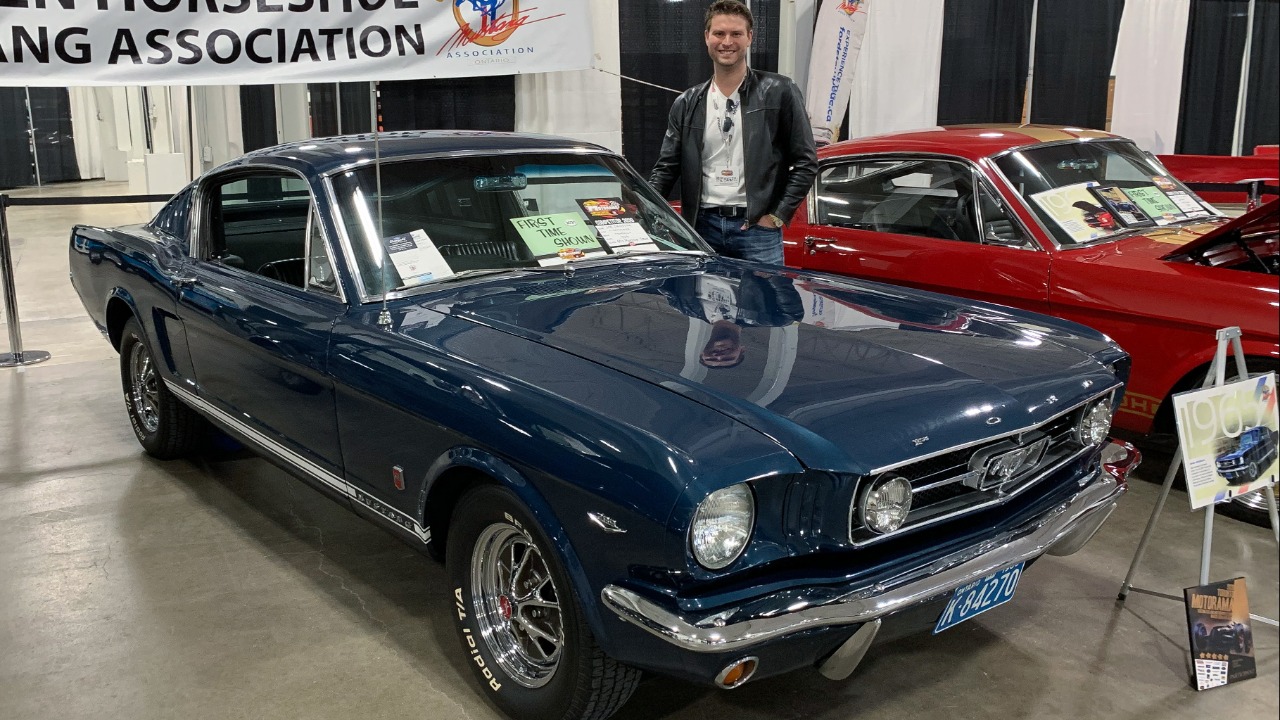
The original Ford Mustang was supposed to be a solid success, not a stampede. Ford executives forecast a respectable market for their new sporty compact, but the car that arrived for the 1965 model year blew through those expectations so fast that early buyers found showrooms picked clean. The company did not plan for a first day in which the Mustang effectively sold out, yet that is exactly what happened when American buyers saw a low, long-hood coupe that seemed built for them.
The cautious bet that became a runaway hit
Inside Ford in the early 1960s, the Mustang began as a carefully hedged project. The company originally predicted the car would sell about 100,000 units per year, a healthy number for a niche-oriented sporty model but hardly a volume revolution. That forecast reflected Detroit’s conventional wisdom that youth-oriented cars were a side business, not the core of the market.
Ford already understood that American buyers were shifting away from heavy, chrome-laden sedans toward smaller, more agile cars. Internal research and outside analysis of changing consumer tastes showed that younger drivers wanted style and performance but could not afford the luxury badges that traditionally delivered both. The Mustang would answer that demand with a compact footprint, a low price and a huge options list, all built on proven mechanical components that kept development costs under control.
From the beginning, the project carried the imprint of Lee Iacocca, then a rising executive who pushed hard for a car that could hook the baby boom generation. Accounts of the era describe how, in the early 1960s, Lee Iacocca argued that Ford needed something small, sporty and affordable that would speak directly to younger buyers. That vision shaped everything from the Mustang’s proportions to its marketing.
World’s Fair stage, instant national spotlight
Ford chose a very public moment to pull the wraps off its new car. The Mustang was introduced on April 17, 1964, a date that appears again and again in enthusiast histories and anniversary celebrations. The company used the New York World’s Fair as a stage, with Henry Ford II of Tomorrow-style pavilion in Flushing Meadows to give the car an official debut in front of television cameras and crowds.
At the same time, Ford orchestrated a coordinated rollout at dealerships across the United States. Advertisements had primed public curiosity for weeks, teasing a new kind of car without fully revealing it. By the time doors opened on what fans now call Ford Mustang Day, customers were already lining up.
Inside the company, the car was technically a 1965 model, even though it reached showrooms in the spring of 1964. Contemporary descriptions and later retrospectives note that the original Mustang, introduced in April 1964, was officially designated as a 1965 model. That detail matters because it helps explain the extraordinary sales totals that would soon follow for that model year.
What “sold out” looked like in 1964
Dealers had been supplied with launch inventory based on the internal forecast of 100,000 units a year. In practice, that meant most showrooms had only a handful of cars available on day one. The company expected strong interest, but it did not anticipate the kind of rush that would see buyers fighting over the few Mustangs parked under the fluorescent lights.
Period accounts describe customers placing deposits on cars they had not yet driven, or even seen in their preferred color or body style. The early cars used familiar Ford Falcon underpinnings, which made them easy to build, but ramping up production still took time. As a result, many dealerships effectively ran out of Mustangs within hours and had to convert that first wave of enthusiasm into orders for later delivery.
Enthusiast groups that track early production note that the first-day response was not just enthusiastic, it was historic. One detailed summary of early sales reports that first-day demand translated into more than 22,000 units sold and that the car went on to clear 400,000 sales in its first year. For a model that executives thought might be capped near 100,000 annually, the gap between projection and reality was immense.
From conservative forecast to record-breaking launch
Later analysis of the 1965 Mustang’s performance has repeatedly described it as the most successful vehicle introduction since the 1927 Model A. One widely cited breakdown of the launch notes that the 1965 Mustang became the most successful new car debut since that earlier model and that Ford originally planned to sell 100,000 M in the first full year. Instead, the market responded at quadruple that volume.
Production statistics for the first generation tell the same story in more detail. A breakdown of Gen Mustang Sales lists 1964½ output at 121,538 units, followed by 559,451 units for 1965 and 607,568 units for 1966. Even as the novelty wore off, the car still reached 472,121 units in 1967 and 317,404 in 1968. Those figures confirm that the launch was not a one-day fluke but the beginning of a sustained wave.
By the time the first generation wound its way through the late 1960s, the car had already become a fixture in American driveways. A long-view sales analysis notes that the Ford Mustang Overview was originally expected to sell 100,000 a year, yet cumulative production had climbed into the millions by the time modern analysts looked back on its legacy. In other words, the cautious bet had turned into a franchise.
Why the formula resonated so quickly
The Mustang’s overnight success was not an accident. Ford had studied the market carefully, then built a car that aligned with what younger Americans said they wanted. A detailed historical overview of Ford Introduces the explains that the company created the car in response to changing consumer demands and shifting market dynamics. The Mustang’s low price, long-hood, short-deck profile and wide range of engines let buyers tailor the car to their budgets and personalities.
That flexibility mattered. A base Mustang with a six-cylinder engine gave economy-minded drivers a stylish commuter, while V8 options turned the same basic shape into a performance machine. The options list extended to colors, interiors and trim packages that encouraged customers to see the car as an expression of identity. For a generation coming of age in the 1960s, that promise of individuality on four wheels had obvious appeal.
Timing also helped. By 1964, the American youth market was booming, and many buyers were purchasing their first new car. They wanted something that looked more sophisticated than a compact economy sedan but that still fit within a modest paycheck. The Mustang stepped into that gap and, as one market snapshot later put it, became a remarkable success for the Mustang and for Ford from the first day.
Inside Ford, a surprise that reshaped strategy
While marketing teams hoped the car would be a hit, the scale of the response still caught the company off guard. One enthusiast retelling of the early years describes how executives thought they had a strong product on their hands in 1964, but, as a later reflection framed it, what they did not realize was that the Mustang would redefine expectations for youth-oriented cars. That same account, shared in Feb with a nod to the anniversary, opens with the phrase Feb Against Lee and casts Iacocca as the visionary who pushed past internal skepticism.
Inside the company, the early sellouts forced a rapid reassessment of production plans. Plants that had been scheduled for modest output increases were pushed to expand faster. Suppliers had to ramp up deliveries of everything from sheet metal to interior trim. The car’s success also influenced future product planning, encouraging Ford and its rivals to think more aggressively about specialty models that could attract younger buyers without sacrificing volume.
That shift helped create an entire category. The Mustang’s mix of long hood, short deck and accessible pricing effectively launched the pony car segment, a term that would soon be applied to rivals that followed its formula. The early surprise at Ford headquarters, in other words, helped set the template for a decade of American performance coupes.
From launch-day frenzy to cultural icon
The first-day sellout and the towering sales figures that followed laid the foundation for the Mustang’s long-term cultural impact. Over the decades, the car has become a symbol of freedom and personal style in American automotive culture, a status reinforced every time enthusiasts gather to celebrate its anniversaries.
On social media, those celebrations often circle back to the original launch. One widely shared post marking National Mustang Day notes that, sixty years after the first cars went on sale, fans still remember how the car was National Mustang Day originally predicted to sell 100,000 a year and then became the most successful launch since the Model A. That kind of framing shows how the story of the car’s surprise success has become part of its legend.
Behind those celebrations are more formal historical efforts that document how the car went from corporate project to cultural touchstone. Archival projects linked through links.thf.org and National Mustang Day material gather period advertising, design sketches and internal memos that show the evolution of the program. Researchers who work with those collections, often accessed through portals connected to Discovered Ford Introduces and related History Research Starters, emphasize how much of the car’s eventual impact stemmed from decisions made before the first prototype turned a wheel.
Why the first-day sellout still matters
Looking back from the distance of six decades, the idea that the Mustang sold out on its first day might sound like a colorful anecdote. In reality, it captures a turning point in how American carmakers thought about their business. The gap between Ford’s cautious forecast of 100,000 units and the actual first-year tally in the hundreds of thousands revealed a generational shift in buyer priorities.
That lesson still resonates. Modern automakers study the Mustang’s launch to understand how a company can identify a new market, price a product aggressively and then use design and marketing to turn interest into a cultural moment. The fact that early dealers ran out of cars within hours is more than a fun story from 1964. It is proof that when a product aligns perfectly with its time, demand can overwhelm even the most careful planning.
For Ford, the 1965 Mustang’s first-day sellout was an operational headache, but it was the kind every manufacturer hopes to have. The company did not expect the car to vanish from showrooms almost as soon as it arrived. American buyers decided otherwise, and in doing so they helped turn a single new model into one of the most enduring names in automotive history.
More from Fast Lane Only