

The 1984 Ford Mustang SVO was an ambitious attempt to blend European-style finesse with American muscle. Built by Ford’s Special Vehicle Operations (SVO), it offered sharp handling, advanced technology, and unique styling. But despite its forward-thinking design, the SVO was overshadowed by its V8-powered siblings. Here are the reasons why this misunderstood Mustang deserves another look.
Turbo Four Over V8

The 1984 Mustang SVO used a 2.3-liter turbocharged four-cylinder producing 175 hp and 210 lb-ft of torque. That was equal in horsepower but down on torque compared to the 5.0L V8 in the Mustang GT, which made 175 hp and 245 lb-ft. With a five-speed manual, the SVO hit 0–60 mph in 7.5 seconds and ran the quarter-mile in 15.5 seconds—numbers that matched or beat many V8 rivals of the day.
But muscle car buyers wanted the soundtrack of a rumbling V8, not a whistling turbo. Even with its lighter 3,100-pound curb weight and intercooler, the four-cylinder felt like a compromise to traditionalists.
Price Was Too High

The SVO launched at a base price of $15,585—about $6,000 more than a Mustang GT at the time. Adjusted for inflation, that’s around $47,000 today. While it included Recaro-style sport seats, a premium stereo, and leather or cloth options, most buyers couldn’t see past the fact that it had fewer cylinders than a cheaper GT.
Where the SVO truly excelled was handling. With Koni adjustable shocks, thicker sway bars, and sticky 225/50VR16 Goodyear “Gatorback” tires, it could pull 0.86g on a skidpad, outperforming the GT’s 0.82g. The SVO’s chassis balance and steering precision were world-class, tuned more for winding roads than drag strips.
Styling Broke Tradition

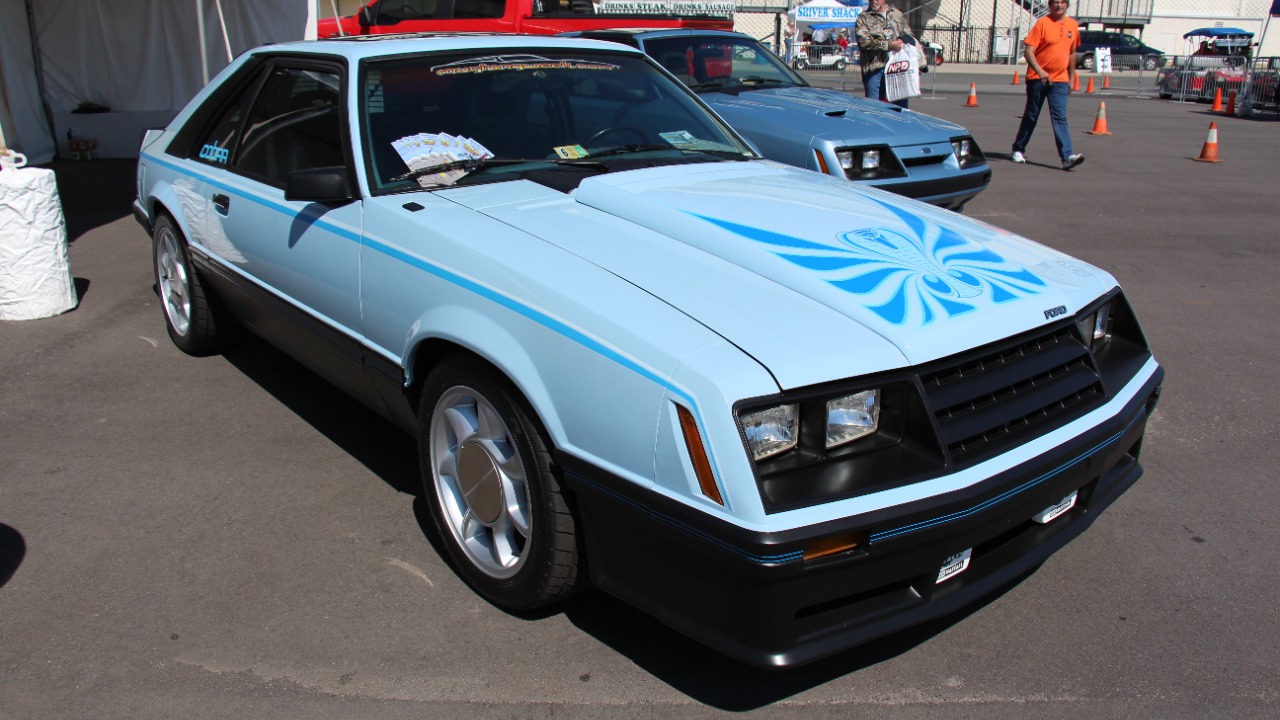
Ford gave the SVO a unique look: a grille-less front end, offset hood scoop, flush headlights, and a “biplane” rear spoiler. It cut a sleeker, more European profile, but to many buyers it didn’t look like a Mustang. Inside, suede and charcoal leather trim aimed at upscale sports car buyers, but it reminded some of imports like the Porsche 944 more than a pony car.
Four-Wheel Disc Brakes

The SVO featured four-wheel disc brakes, with 10.9-inch fronts and 11.25-inch rears—borrowed from the Lincoln Continental. Stopping from 60 mph took just 158 feet, excellent for the time. This tech put it ahead of the GT’s rear-drum setup, but again, the Mustang crowd wanted horsepower bragging rights, not advanced braking.
Limited Production Run

Ford built 4,508 SVOs in 1984, with just under 10,000 produced across its three-year run (1984–1986). The rarity added to its mystique but confused buyers who expected Mustangs to be mass-market cars. Its unique three-lens taillights and SVO-specific trim now make it instantly recognizable to collectors.
Advanced Turbo Tech

Ford packed the SVO with forward-thinking tech: EEC-IV electronic engine management, an air-to-air intercooler, and a premium/regular fuel switch that altered timing for different grades of gas. A boost gauge on the dash kept drivers in tune with the turbo’s 14 psi of pressure. It was a driver’s car—but it demanded more engagement than most buyers wanted.
Misjudged by Muscle Fans

Although its handling was praised by Car and Driver and Road & Track, most Mustang fans dismissed the SVO for lacking a V8. The car’s subtle power delivery and balanced chassis catered more to European-style driving than quarter-mile runs, and that misalignment cost it popularity.
Aimed at European Rivals

The SVO targeted cars like the Porsche 944, with its 2.3-liter turbo (175 hp) hitting ~135 mph. Its 225/50VR16 tires and 0.86g skidpad rivaled European coupes, weighing 3,100 pounds.
Its charcoal interior, leather wheel, and boost gauge felt premium, but Mustang buyers didn’t care about Euro competition. The SVO’s refined dynamics were lost on those chasing quarter-mile times, making it a misfit in Ford’s lineup.
Laid Groundwork for SVT

The SVO’s 2.3-liter turbo (175 hp) and four-wheel disc brakes set the stage for Ford’s SVT division. Its 100.5-inch wheelbase and 3,100-pound frame hit a quarter-mile in 15.5 seconds.
Its sport seats and Hurst shifter were track-ready, but its $15,585 price confused buyers. The SVO’s tech and handling influenced the 1993 Cobra, yet its role as a pioneer was overlooked. It was a forward-thinking car that didn’t fit the 1980s Mustang mold.
Like Fast Lane Only’s content? Be sure to follow us.
Here’s more from us:
*Created with AI assistance and editor review.


Leave a Reply