
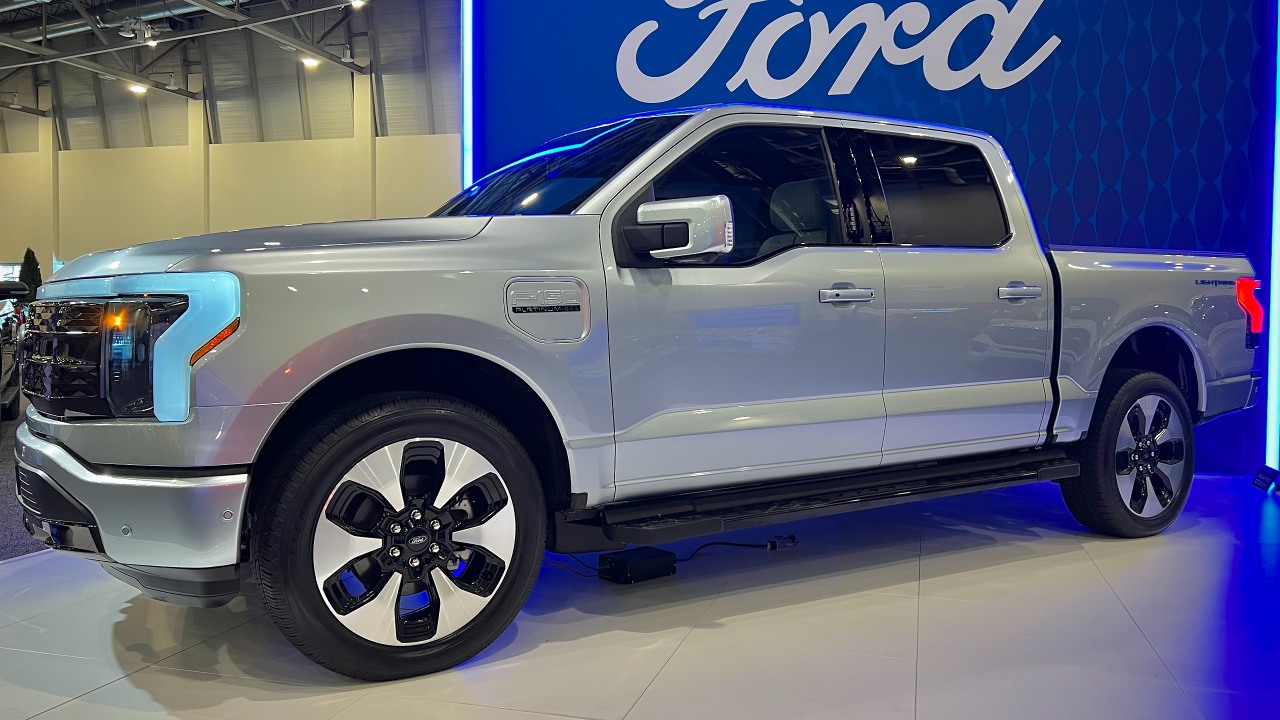
Ford is shutting down its flagship electric pickup, the F-150 Lightning, and redirecting its truck strategy toward hybrids and extended-range powertrains. The move marks a sharp turn away from the idea that a full-size, all-electric work truck would quickly become a mass-market staple and instead leans into a more incremental transition that mixes gasoline, hybrid, and smaller EV options.
By canceling the all-electric Lightning and taking a multibillion-dollar charge tied to its EV ambitions, Ford is signaling that the business case for big battery trucks has eroded faster than expected. I see this as a reset that prioritizes affordability, manufacturing flexibility, and new revenue streams like grid-scale battery storage over chasing early EV glory at any cost.
Ford’s abrupt end to the all‑electric Lightning
The F-150 Lightning was supposed to be the proof that a full-size electric pickup could anchor the next era of American trucks, yet Ford is now ending production of the all-electric version and removing it from its future lineup. Reporting shows that Ford has halted assembly of the F-150 Lightning and reassigned workers to gasoline and hybrid lines, a clear sign that the company no longer sees a viable path to scale for this particular battery-only truck. The company has effectively pulled the plug on the all-electric F-150 Lightning, confirming that the current generation will not be replaced by another pure EV truck of the same size.
Several accounts describe the same pivot: Ford has ceased production of the all-electric F-150 Lightning, is stopping the all-electric pickup program, and is instead focusing on a mix of smaller, cheaper EVs and hybrid trucks. One detailed report notes that the Lightning’s design, which evolved from the conventional F-150, will not carry forward as a full EV, while another explains that Ford has halted F-150 Lightning production in order to redeploy capacity and labor to gasoline and hybrid vehicles and to large-scale energy storage systems. Together, these reports confirm that the all-electric Lightning is not just paused or trimmed back, it is being discontinued as a product line.
A $19.5 billion reckoning and a strategic reset
Ending the Lightning is not a quiet course correction, it is part of a sweeping financial and strategic reset that includes a massive write-down on Ford’s EV bets. The company is taking a $19.5 billion charge as it pivots away from larger electric vehicles and toward smaller EVs, hybrids, and extended-range EVs, a figure that underscores how aggressively Ford is revaluing its battery truck ambitions. Ford CEO Jim Farley has framed this as a better play for the company and its shareholders, arguing that the new direction aligns more closely with what customers are actually willing to buy at scale.
In the same breath that Ford confirmed the end of the F-150 Lightning EV, it also outlined a broader shift in capital allocation and product planning. Larger electric vehicles will be canceled in favor of smaller EVS, hybrids, and extended-range EVs, according to reporting that details the $19.5 billion charge and the associated restructuring. Another account of the strategic shift notes that Ford is cutting electric F-150 Lightning production and absorbing that charge as part of a move toward what Farley describes as a strategy grounded in affordability and common sense. Taken together, these reports show that the Lightning’s demise is not an isolated product failure but a central piece of a company-wide reset of EV expectations.
From full EV to hybrid truck workhorses
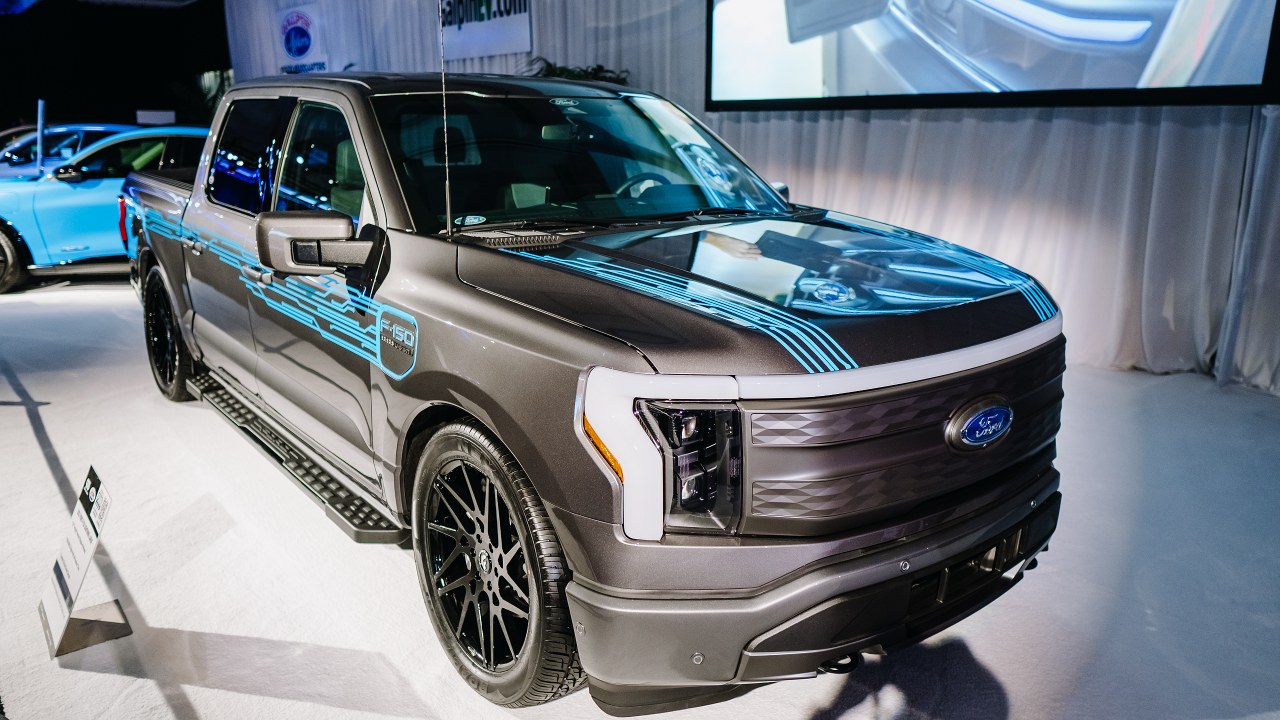
Ford is not abandoning the F-150 nameplate, it is changing what powers it. Instead of a battery-only pickup, the company plans to keep the F-150 in the lineup as a hybrid, effectively turning its best-known truck into a bridge technology between traditional gasoline models and future electrified platforms. One report notes that Ford Scraps Fully electric Lightning but expects the pick-up truck to maintain a hybrid configuration, signaling that the company sees more near-term demand for electrified trucks that still carry an engine than for trucks that rely solely on batteries.
Other reporting reinforces that Ford is expanding its powertrain mix and launching a new extended-range EV (EREV) strategy as it ends production of the F-150 Lightning electric truck. These accounts describe a plan to favor next generation hybrid and EREV systems, with the Lightning’s cancellation framed as a response to an eroded business case for a fully electric full-size pickup. By keeping hybrid F-150 models in the portfolio and developing extended-range setups, Ford is betting that truck buyers want better fuel economy and some electric capability without the range anxiety, charging constraints, and price premiums that have weighed on the all-electric Lightning.
Smaller EVs, eroded demand, and the limits of big battery trucks
The decision to walk away from the all-electric Lightning reflects a broader realization inside Ford that the market for large, expensive EV trucks is smaller and more fragile than early forecasts suggested. Reporting on the company’s new plan makes clear that Ford’s all-electric ambitions will be smaller, literally, with more compact and affordable vehicles at the center of its future EV lineup. Instead of doubling down on full-size electric pickups, Ford is prioritizing smaller EVs that require fewer raw materials, can be priced more aggressively, and are better suited to urban and suburban buyers.
At the same time, Ford executives and internal analyses have concluded that the business case for the F-150 Lightning has eroded. One detailed account of the strategy shift notes that ending production of the F-150 Lightning electric truck is part of a broader move to expand the powertrain mix and launch a battery storage business, with the Lightning singled out as a product whose economics no longer work. Another report explains that Ford has halted production of its F-150 Lightning vehicle in favor of reassigning workers to assemble gasoline and hybrid vehicles and to build large-scale energy storage systems instead, a reallocation that only makes sense if the company believes demand for big battery trucks will not justify continued investment.
From pickup packs to data centers and grid storage
One of the most striking elements of Ford’s pivot is where some of its battery expertise is going next. Rather than pouring more money into large EV trucks, Ford is switching some of its battery focus from cars to data centers and grid-scale storage, aiming to build huge 20GWh capacity in large-scale energy storage systems. Reporting describes how Ford has halted production of its F-150 Lightning vehicle and is redirecting workers and resources to assemble gasoline and hybrid vehicles and to produce these energy storage systems, effectively turning part of its EV supply chain into an infrastructure business.
This shift is closely linked to the same strategic review that produced the $19.5 billion charge and the cancellation of larger EVs. One account of the hybrid pivot notes that Ford is launching a new battery storage business alongside its move away from the F-150 Lightning EV, positioning that venture as a way to monetize battery technology even as it scales back on certain vehicle programs. Another report on the Lightning’s cancellation and the broader strategy explains that Ford is switching some battery focus from cars to data centers, with plans for huge 20GWh capacity, which suggests that the company sees more reliable returns in selling stationary storage than in trying to force a market for big electric pickups that truck buyers are not yet ready to embrace.




Leave a Reply