Chip Ganassi Racing has quietly turned its Indy NXT project into one of the most ambitious junior programs in North American open-wheel racing, and the confirmation of a four-car roster for the upcoming season locks that intent into place. By committing to a full quartet of entries, the team is signaling that its driver development pipeline is no longer a side project but a central pillar of its competitive strategy.
The arrival of James Roe and Carson Etter alongside the returning core gives Ganassi a mix of experience, versatility, and raw potential that few rivals can match. It is a lineup built not just to chase an Indy NXT title, but to feed the organization’s long-term plans across IndyCar and sports car racing.
Why Ganassi is going all-in on a four-car Indy NXT squad
Expanding to four cars in Indy NXT is not a vanity play for Chip Ganassi Racing, it is a structural response to a changing landscape in American open-wheel racing. With the team’s factory IMSA GTP program for Cadillac having reached its end last October, CGR has freed up engineering capacity and strategic attention that now flows directly into its junior single-seater effort. That shift gives the organization a way to keep top-tier personnel engaged on a high-performance project while also cultivating the next wave of talent for its IndyCar operation, a balance that becomes clear once you look at how aggressively the group has scaled up its NXT presence over the past year, as outlined in coverage of Ganassi expanding its Indy NXT program to four cars.
From a competitive standpoint, four entries dramatically increase Ganassi’s data-gathering power and race-day flexibility. Every practice session and qualifying run now yields four sets of feedback, four tire usage patterns, and four approaches to setup, which can be cross-referenced to accelerate development across the stable. The move also gives the team more strategic options in races, from splitting tire strategies to using one car to pressure rivals while another conserves for a late push, a dynamic that has been highlighted in reporting on how Ganassi is expanding its Indy NXT program to four cars and on the broader decision to grow into a four-car Indy NXT effort.
James Roe’s experience as the program’s stabilizing force
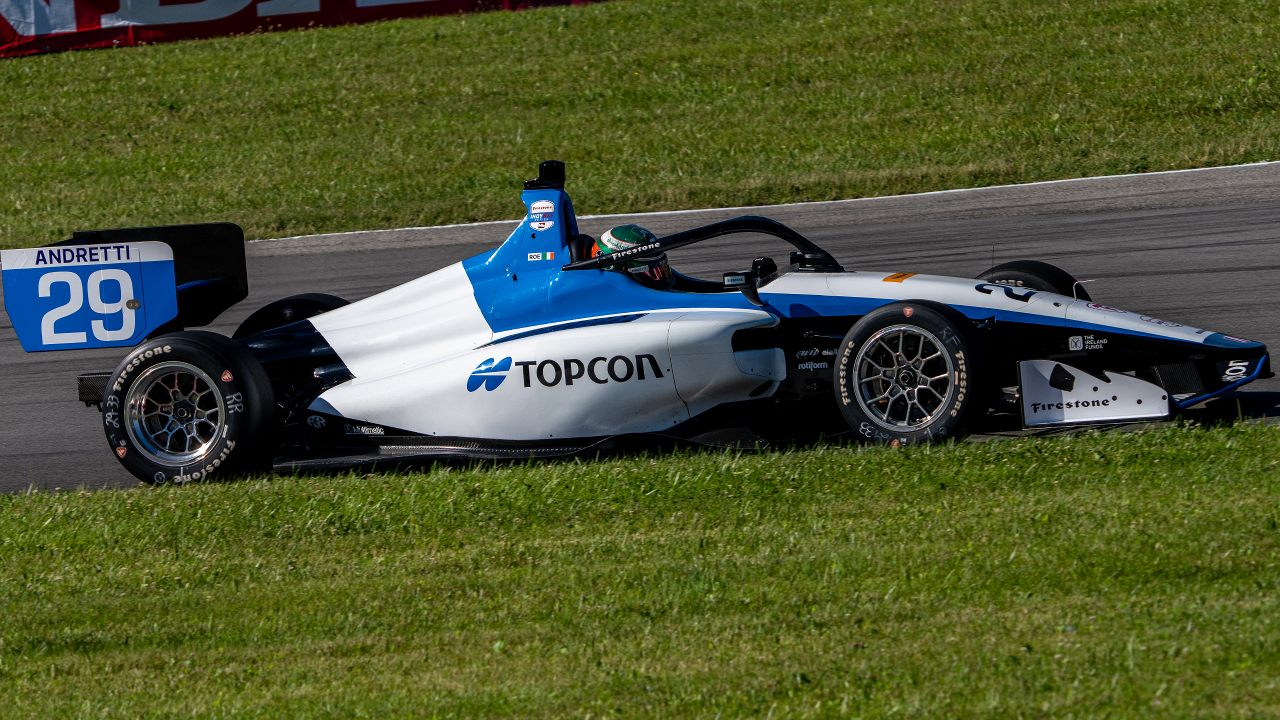
Within that expanded structure, Irish-born James Roe arrives as the most seasoned single-seater racer in the group, and his presence is central to why this four-car configuration looks so potent. Roe brings a résumé that includes time in high-downforce machinery and exposure to multi-series campaigns, experience that is invaluable when a team is trying to harmonize feedback across several cars. His signing, confirmed in the announcement that Ganassi Signs James Roe, Carson Etter To Join Four, Car Lineup, gives Ganassi a driver who can set a baseline on street circuits and road courses, then help younger teammates close the gap through shared debriefs and data overlays.
Roe’s role is not just about lap time, it is about culture. A driver who has already navigated the pressures of professional paddocks can model how to manage race weekends, handle setbacks, and communicate clearly with engineers, all of which matter as much as raw pace in a development series. The team’s decision to lock him in as part of the four-car roster, detailed in the INDYCAR report that Chip Ganassi Racing has signed James Roe and Californian Carson Etter, suggests that Ganassi sees him as a bridge between the junior ranks and the expectations of a front-running IndyCar outfit, especially now that the organization is channeling more of its post-IMSA focus into this ladder program.
Carson Etter and the upside of betting on youth
If Roe represents stability, Carson Etter embodies upside. The Villa Park, California, native steps into the Ganassi structure at a moment when the team is clearly willing to invest in long-term potential, not just immediate results. Etter’s signing, confirmed in the same Ganassi Signs James Roe, Carson Etter To Join Four, Car Lineup announcement that introduced Roe, underscores how the organization is deliberately pairing an experienced hand with a younger driver who can grow inside a high-resourced environment. For a prospect, there are few better places to learn than a four-car operation where every session generates a wealth of comparative data and where the engineering standards are set by a group that has just come off a top-level IMSA GTP program with Cadillac.
From my perspective, the strategic logic is straightforward: by bringing in a Californian talent like Etter at this stage, Ganassi can shape his driving style, racecraft, and technical understanding in-house, rather than trying to retrain a more established driver later. The expanded Indy NXT effort, detailed in coverage of Ganassi Expands To Four, Car Indy NXT Effort, gives Etter a platform to make mistakes, adapt, and refine his approach while still contributing to the team’s broader performance goals. In a series where the margin between a future IndyCar seat and a stalled career can be a single standout season, embedding a driver like Etter in a four-car Ganassi program is as much a talent insurance policy as it is a bet on immediate results.
How the expanded roster reshapes the Indy NXT competitive picture
With four entries confirmed, Ganassi’s Indy NXT presence now has the scale to influence the competitive balance of the entire series. A multi-car powerhouse can tilt qualifying sessions, control the tempo of races, and shape how rivals approach strategy, especially on tracks where clean air and undercut windows are decisive. Reporting on how Chip Ganassi Racing reveals its expanded 2026 Indy Nxt line-up makes clear that this is not a token expansion but a fully resourced program, complete with the kind of engineering depth and organizational rigor that typically define the front of the grid. When a team of that caliber commits four cars, it effectively raises the bar for what it takes to contend for a championship.
There is also a broader ecosystem effect. As Ganassi scales up, other organizations on the Road to Indy ladder must decide whether to match that investment or differentiate in other ways, perhaps by focusing on niche strengths like oval expertise or driver coaching. The detailed breakdown of how Ganassi is expanding its Indy NXT program to four cars, combined with the confirmation that the team has completed its expanded roster, suggests that the series is entering a phase where factory-aligned or heavily resourced outfits will increasingly define the narrative. For drivers, that means the choice of team becomes as strategic as the choice of series, since landing in a four-car Ganassi environment could be the difference between fighting for podiums and simply learning in the midfield.
What this means for Ganassi’s long-term driver pipeline
Viewed through a longer lens, the four-car Indy NXT lineup is less about a single season and more about how Ganassi intends to stock its driver bench for years to come. With the Cadillac IMSA GTP chapter closed and the IndyCar program remaining a flagship, the organization needs a steady flow of candidates who understand its systems, expectations, and culture before they ever strap into a top-tier car. The decision to expand, detailed in the report on Ganassi Expands To Four, Car Indy NXT Effort and reinforced by the confirmation that Chip Ganassi Racing has signed James Roe and Carson Etter, effectively turns Indy NXT into a proving ground where the team can evaluate not just speed but adaptability, technical feedback, and fit.
In practical terms, that pipeline approach means every seat in this four-car roster carries dual responsibilities: chase results in Indy NXT and audition for future opportunities across Ganassi’s portfolio. A driver like Roe can position himself as a near-term option if an IndyCar seat opens, while someone like Etter can be groomed over multiple seasons, potentially including test roles or crossover appearances if the organization re-enters other categories. The expanded 2026 Indy Nxt line-up, as outlined in the detailed coverage of Chip Ganassi Racing’s reveal, shows that the team is thinking in layers, building a structure where today’s NXT driver can become tomorrow’s race winner at the top level. For a series built on the promise of upward mobility, Ganassi’s four-car commitment is a clear signal that the ladder is not just intact, it is being reinforced from the top down.