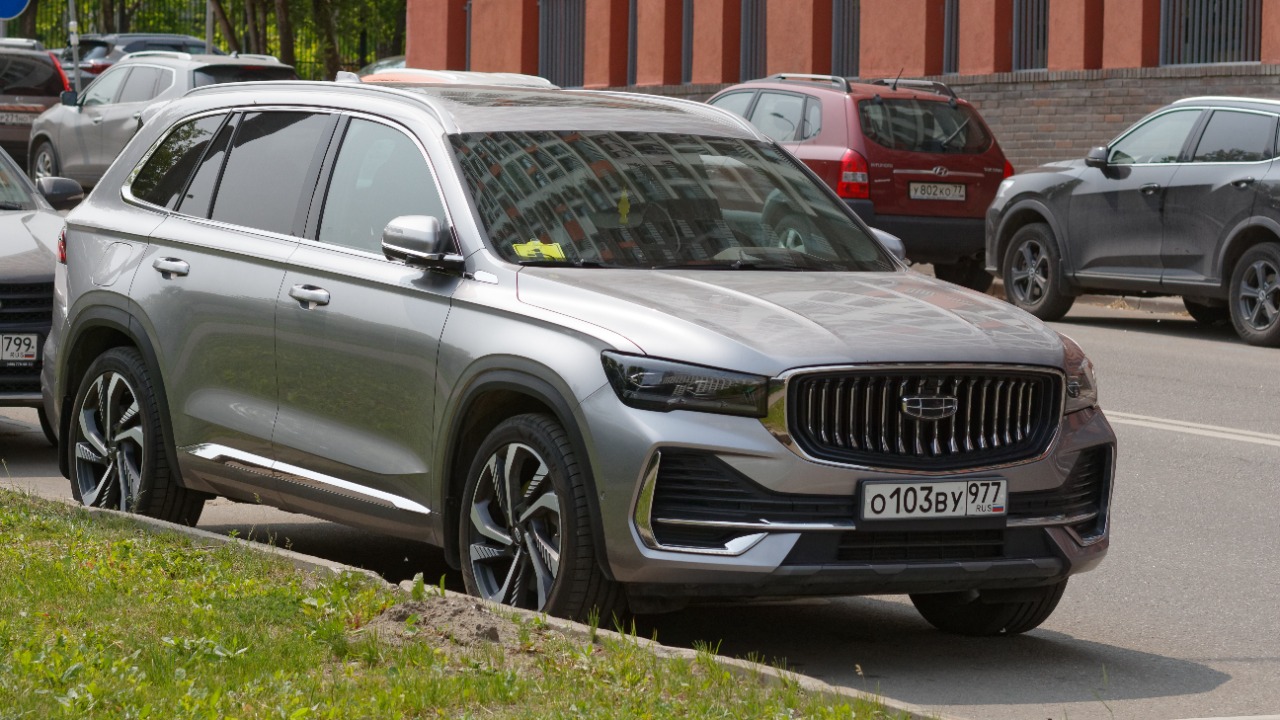
Geely is not content with being another fast-growing Chinese carmaker. It has laid out a plan to sell more than 6.5 m vehicles a year by 2030 and muscle its way into the global top five, a target that would put it in the same conversation as Toyota, Volkswagen and General Motors. To get there, the group is betting hard on electrification, overseas expansion and a tightly coordinated strategy across its sprawling portfolio of brands.
I see this as one of the boldest bets in the auto industry’s current upheaval. If Geely can really turn 6.5 m annual sales into reality while shifting most of its volume to electrified drivetrains, it will not just climb the rankings, it will help redefine what a “legacy” automaker looks like in the age of New Energy Vehicles.
The 6.5 m moonshot and the top five ambition
At the heart of Geely’s new roadmap is a simple, audacious number: by 2030 the group wants yearly global sales to exceed 6.5 m vehicles. The company has framed this as a groupwide target that includes all of its brands under Geely Holding Group, from mass market nameplates to premium players, and it is tying that volume goal to a push into regions such as Southeast Asia and Latin America where it sees room to grow. In its own words, Geely Holding Group is positioning itself as one of China’s leading automotive companies that can translate domestic scale into global heft, with the 6.5 m figure serving as both a rallying cry and a benchmark for success, as reflected in detailed plans shared through Geely Holding Group and reiterated in coverage of how Geely targets 6.5 m global sales and a trillion yuan revenue milestone by 2030 in Geely Holding Group.
Volume alone is not the endgame. Chinese Geely is explicit that it wants those 6.5 m sales to translate into a top five global ranking by the end of the decade, a leap from its current position in the top ten. That means overtaking at least a couple of entrenched giants in total deliveries, something the company and its brands believe is achievable as they scale exports and deepen their presence in Europe and emerging markets. The ambition to become a top five automaker, including all of its brands, has been spelled out in Chinese automaker Geely briefings and echoed again in a separate rundown of how Chinese Geely is aiming to climb from the top ten into that elite group in Chinese Geely. For context, China’s Geely has also highlighted to international audiences that it is targeting global sales of over 6.5 m vehicles by 2030, a figure that has been picked up by outlets such as The Mighty 790 KFGO, which noted that China’s Geely is tying that target to a broader narrative about the country’s industrial rise in pieces like China’s Geely.
“One Geely” and the trillion yuan blueprint
Ambition on this scale needs more than slogans, and Geely has tried to answer that with a detailed five year strategic blueprint that stretches to 2030. Under the banner Geely Holding Releases Five Year Strategic Blueprint for 2030, the group has Announced a Strategy for what it calls One Geely, Leading through Innovation, a framework that is meant to knit together its various subsidiaries and joint ventures so they share platforms, software and supply chains instead of duplicating effort. The One Geely concept is not just branding, it is a governance model that aims to centralize core technologies while letting individual marques keep distinct identities, a balance the company laid out in its own Geely Holding Releases year strategic outline.
Financially, the blueprint is just as aggressive as the volume targets. Geely Holdings targets 6.5 million global sales and trillion yuan revenue by 2030, a combination that would significantly lift its average revenue per vehicle and push it deeper into higher margin segments. The company has also committed to improving efficiency, including a pledge in its Strategy for 2030 Announced One Geely, Leading roadmap to cut lifecycle costs per model by over 30%, a figure that underscores how much it is counting on shared architectures and scale. Those cost and revenue goals are spelled out in the group’s own Strategy for document and are echoed in independent breakdowns of how Geely targets 6.5 m vehicle sales by 2030 in new global strategy, including the projection that annual revenue could reach around 1tn yuan, or roughly $143.39bn, as noted in Geely targets 6.5.
Electrification: 75% NEV and New Energy focus
What really jumps out at me is how central electrification is to Geely’s growth story. The group is not treating New Energy Vehicles as a side bet, it has set a target for NEV to account for 75% of its sales by 2030, effectively making electric and plug in hybrid models the core of its portfolio. The Chinese Geely Group, which includes Polestar, Volvo and Zeekr, has framed this 75% goal as a way to align its global brands with China’s own policy push on clean transport, and it expects that shift to drive its revenue up to around 122 billion euros equivalent according to projections cited in Chinese Geely Group.
Geely’s own internal documents reinforce that electrification is non negotiable. In its Strategy for 2030 Announced One Geely, Leading plan, the group states that the share of New Energy Vehicles is expected to exceed 75%, a figure that aligns with the external 75% NEV share target and signals that combustion only models will be pushed to the margins. That focus is already visible in brands like Zeekr, a premium NEV brand owned by Geely Auto that showcases its products as technology flagships, and in the way Geely, NEV specialists and partners such as Polestar, Volvo and Zeekr are being positioned as a coherent electric ecosystem in analyses of how Geely aims for 75% NEV share by 2030, including detailed breakdowns in Geely aims for. The company’s own communications on how Geely Holding Releases Five Year Strategic Blueprint for 2030 also underline that New Energy Vehicles are expected to exceed 75% of the mix, a point it highlights in its Year Strategic Blueprint and that is echoed in third party summaries of how Geely’s vehicle targets are equally tied to NEV growth in Geely’s vehicle targets.
Going global: exports, Zeekr and overseas share
To crack the global top five, Geely knows it cannot rely on China alone. The group has said that by the end of the decade, overseas markets should account for more than one third of its deliveries, a shift that would make exports and foreign production central pillars of its business rather than side lines. That target for overseas share sits alongside the 6.5 m volume goal in its new global strategy, where Geely targets 6.5 million vehicle sales by 2030 and expects overseas markets to contribute over 33% of the group total, a figure highlighted in analyses of how Geely’s five year strategic blueprint for 2030 envisions global auto leadership, including the note that overseas markets should reach around 33% of the Group total in pieces like overseas markets and in broader discussions of how Geely sets out blueprint for global auto leadership by 2030 that note the 33% of the Group total aspiration in Geely’s five year.
More from Fast Lane Only