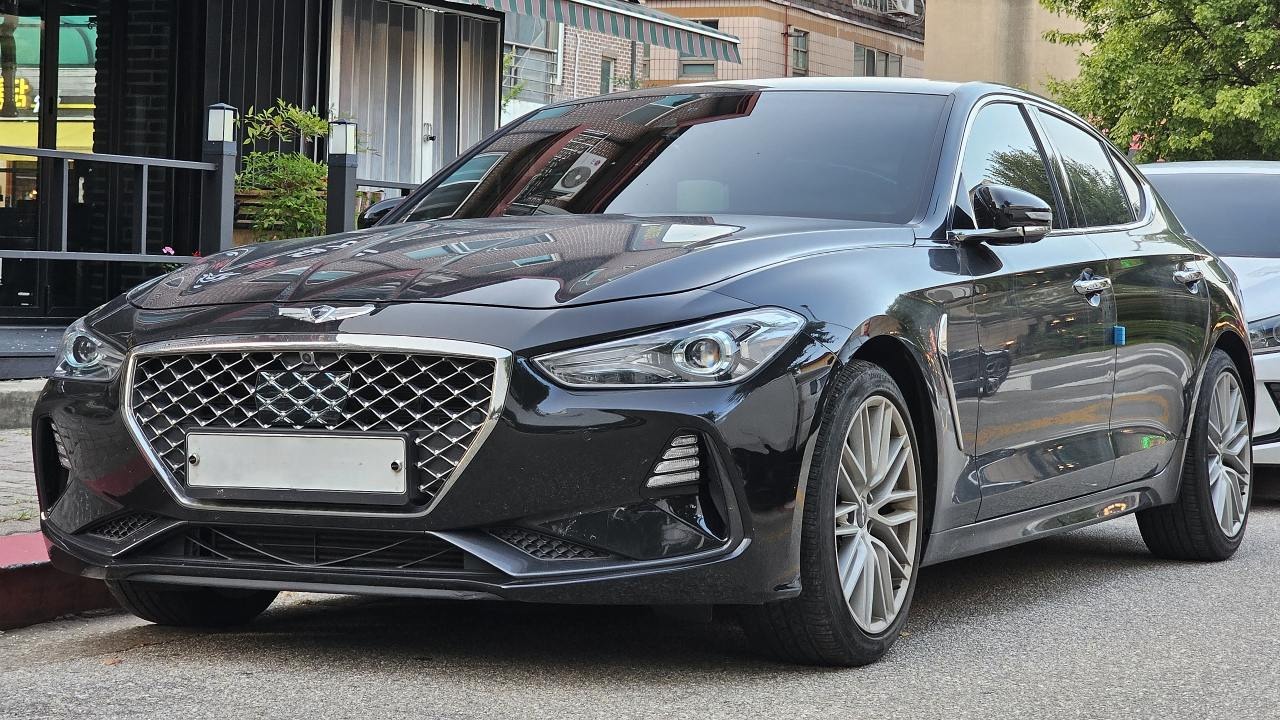
Genesis is not content with being the polite newcomer in Europe’s premium car park. It is targeting a 650% jump in European sales within five years and is building a dedicated Magma performance line to tempt buyers who might otherwise sign for a BMW M or AMG. The scale of that ambition, and the way it is being stitched together from motorsport to market expansion, tells us a lot about how quickly the luxury landscape is shifting.
I see a brand that is trying to compress decades of German heritage into a single, coordinated push, from halo hypercars to everyday crossovers. The question is not just whether Genesis can find 650 percent more customers, but whether it can persuade Europe’s most demanding drivers that its badge belongs on the same shopping list as BMW M.
From latecomer to 650% European moonshot
The starting point for this story is brutally simple: Genesis is still a small player in Europe, yet its leadership has signed off on a plan to grow regional sales by 650% in five years. Hyundai boss Jan has tied that target directly to the launch of the Magma performance line, describing how the new sub‑brand is expected to help Genesis lift its European volumes by exactly 650%. In parallel, executive José Muñoz has framed the same figure as an “ambitious” but necessary goal if Genesis is to be taken seriously alongside the continent’s established premium names, again spelling out that European sales are expected to rise by 650% over that period.
To understand how bold that is, it helps to zoom out to the global picture. According to Hyundai’s own figures on Genesis Global Performance, the brand sold 221,482 retail units worldwide and set record results in the United States, which remains its biggest and most mature market. Europe, by contrast, is still in its infancy for Genesis, which is celebrating only its tenth anniversary as a standalone marque and is only now talking about Ambitious Goals for that include becoming a serious competitor to BMW M among Europ buyers. When you start from a small base, a 650 percent surge is mathematically easier, but it still demands a step change in awareness, desirability and dealer reach.
Magma: the weapon aimed at BMW M and AMG
Genesis is not trying to win over BMW M drivers with spreadsheets alone, so it has created Magma as a dedicated performance arm to give the brand a sharper edge. Design chief Luc Donckerwolke has been clear that Magma is not a vanity project but a strategic move to give Genesis the kind of emotional halo that Audi Sport and BMW M provide for their parents, explaining that the company “originally planned to make a sub‑brand” and is now following through on that vision for Donckerwolke. In his view, Europe is not “less successful” but simply at the beginning of its journey, which is why the Magma rollout is being timed to coincide with a broader regional push rather than trailing behind it.
The intent is to go straight at the heart of Germany’s performance establishment. Donckerwolke has explicitly positioned Magma as a rival to Audi Sport and, not as a softer, comfort‑first alternative. That is why every Genesis model is slated to receive a range‑topping Magma version, a strategy highlighted in reporting that notes how Every Genesis will eventually carry a high‑performance derivative. For a European buyer used to seeing an M, AMG or RS badge on almost every BMW, Mercedes or Audi in the showroom, that parity of choice matters as much as the raw numbers on the spec sheet.
Racing, Le Mans and the credibility play
If you want to sell to BMW M loyalists, you need more than bright paint and launch‑control party tricks, you need motorsport credibility. Genesis is trying to shortcut that process by tying Magma directly to racing, including a headline‑grabbing Le Mans Hypercar under the Genesis Magma Racing Unveils banner. The decision to field a 2026 Le Mans Hypercar is not just about chasing trophies, it is a way to prove that the engineering behind Magma road cars can survive 24 hours of abuse on the most famous endurance stage in Europe.
That racing push is being woven into a broader narrative of performance and technology. Coverage of the Magma GT concept and its siblings has stressed that Genesis wants to take its cars “to an entirely new level” of speed and stability, with Genesis has big that go beyond raw power alone. For drivers who grew up watching BMW M3s and M5s dominate touring car grids, seeing a Genesis prototype fight at Le Mans could be the moment the brand stops feeling like an outsider and starts to look like a genuine peer.
Expanding the European map: France, Italy, Spain and The Netherlands
Ambition is meaningless without showrooms, so Genesis is rapidly filling in the blank spaces on its European map. The company has confirmed that it will launch in France, Italy, Spain, describing this Expansion as a major step in its global growth strategy and a signal of its long‑term commitment to international markets. Those four countries are not random dots on a map, they are some of Europe’s most competitive premium battlegrounds, where BMW M and AMG are as common as hatchbacks in affluent suburbs.
The product mix arriving with that rollout is tailored to European tastes. Genesis has highlighted that all three of its core models for the region have recently been updated, with new electric versions delivering extended range and performance, a point underlined in its announcement that tied the market push to the spirit of Le Mans on the global stage. For a BMW M customer who might be cross‑shopping an i4 M50 or an M3 Touring, the idea of a Genesis EV or Magma‑tuned sedan with comparable performance and a fresher design language could be a tempting alternative, especially if pricing undercuts the Germans.
Tripling global sales and the luxury EV dark horse
Behind the European surge sits an even bigger global ambition. Reporting on the Magma strategy notes that Genesis plans to triple global sales while it rolls out a Magma version of every model, explicitly setting its sights on rivaling Europe’s biggest names in the performance arena. That kind of growth would move Genesis from niche to mainstream in the premium hierarchy, and it would give the brand the scale it needs to keep investing in both combustion‑adjacent performance cars and next‑generation electric flagships.
At the same time, Genesis is emerging as what one report calls a dark horse in the luxury EV space, with leadership stating that While Genesis aims to become a high‑performance luxury brand over the next decade, it will also launch new vehicles across several new segments, as detailed in While Genesis. That dual track, pairing Magma’s combustion and hybrid‑leaning theatrics with a serious electric portfolio, is designed to catch BMW M buyers at a moment when many are wondering whether their next car should still burn fuel at all. If Genesis can deliver the drama they expect from an M3 while also offering a credible EV alternative in the same showroom, its 650 percent European target starts to look less like a fantasy and more like a calculated bet on where the market is heading.
More from Fast Lane Only