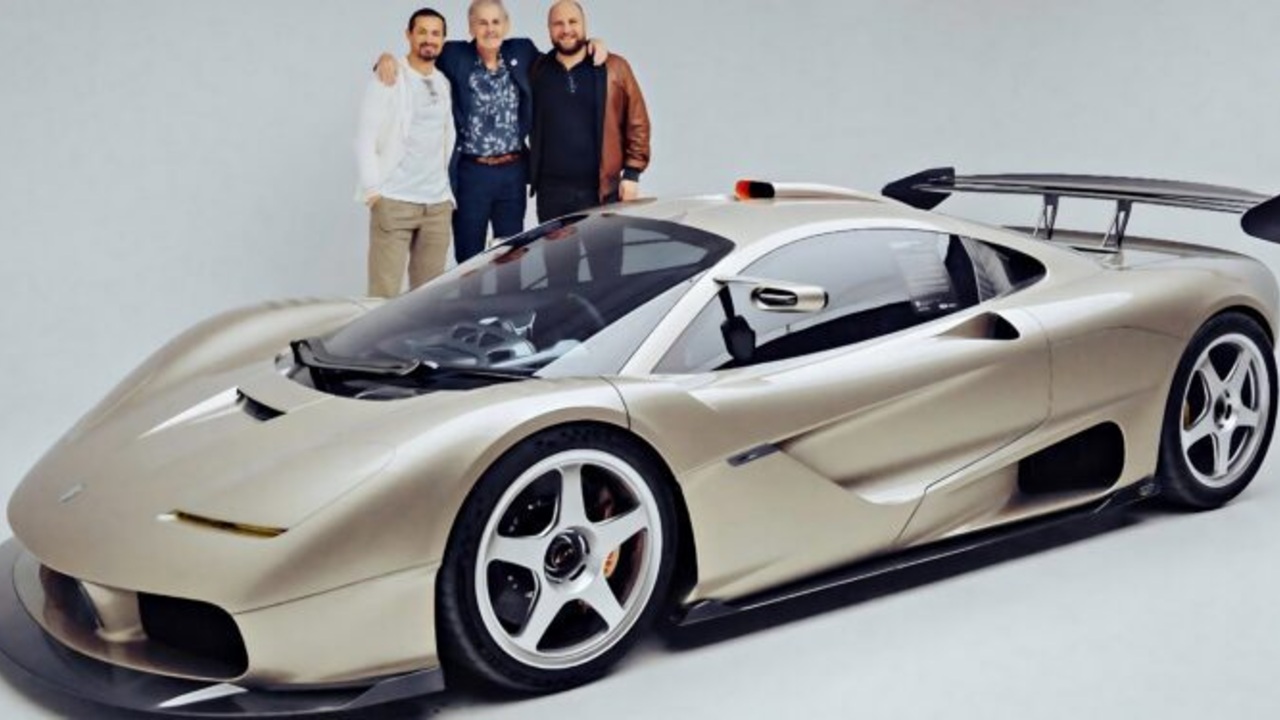
Gordon Murray Automotive has secured a $120 Million capital injection that gives the boutique supercar maker fresh firepower to scale its ultra low volume business without diluting its obsessive engineering standards. The funding, tied to a £90 backing package, signals that investors are betting heavily on the long term appeal of Gordon Murray’s purist vision just as the company prepares its next wave of bespoke models.
I see this as a pivotal moment for a brand that has built its reputation on lightweight, driver focused cars rather than volume or hype, and the size of the investment suggests its backers want that philosophy preserved, not replaced. With new money flowing in alongside leadership changes and record setting auction results for Gordon Murray machinery, the company is quietly positioning itself as one of the most influential small players in the performance car world.
The $120 M vote of confidence behind GMA’s next chapter
The headline figure is simple but telling: Gordon Murray Automotive has received a $120 M funding boost, described as a $120 Million injection of capital earmarked for future bespoke supercars. That sum, paired with a £90 package referenced in related reporting, is enormous by the standards of a company that builds cars in tiny numbers, and it effectively underwrites the next phase of development for models that follow the T.50 and T.33 families. I read this as a clear vote of confidence in the brand’s strategy of staying small, focused and engineering led rather than chasing mass production.
Reporting around the deal notes that Gordon Murray Automotive, often shortened to GMA, has secured a $120 m, or $120 million, commitment that aligns with a £90 backing from a key early customer, the first T50 buyer, who has deepened their involvement with the company. That combination of dollar and sterling figures underscores how international the support base has become, and it also hints at a structure where long term partners are willing to tie up significant capital to keep Gordon Murray’s design ethos intact. For a business built on cars that are measured in dozens rather than thousands, that kind of financial runway can be the difference between cautiously surviving and confidently planning a decade of new projects.
Strategic investors, leadership shifts and the Halo Cars link
Money at this scale rarely arrives without strategic strings, and in GMA’s case the new funding is closely associated with specialist investors who see value in ultra high end performance brands. Coverage of the deal highlights a R2bn investment package that connects Gordon Murray Automotive with Halo Cars Group, with figures such as Tarik Ouass and JR Rahn appearing alongside Gordon Murray as key players in the agreement. I interpret that as a sign that the company is not simply raising cash, it is aligning with partners who understand the economics of rarefied supercars and are prepared to support long gestation engineering programs rather than push for quick volume.
The investment also lands at a moment of leadership transition. Phil Lee, identified as the CEO of the company that builds the T.50, has stepped away from the British hypercar specialist after three years in charge, a tenure that coincided with the ramp up of GMA’s first production models. Reports note that the new £90million backing arrives in the wake of his departure, with commitments that extend support for the company through to 2039, which suggests the investors are thinking in generational terms rather than chasing a fast flip. As I see it, that long horizon gives Gordon Murray and his team the breathing room to keep refining their cars without compromising on the painstaking development that has defined the brand so far.
How the cash fuels T.50, T.33 and future bespoke projects
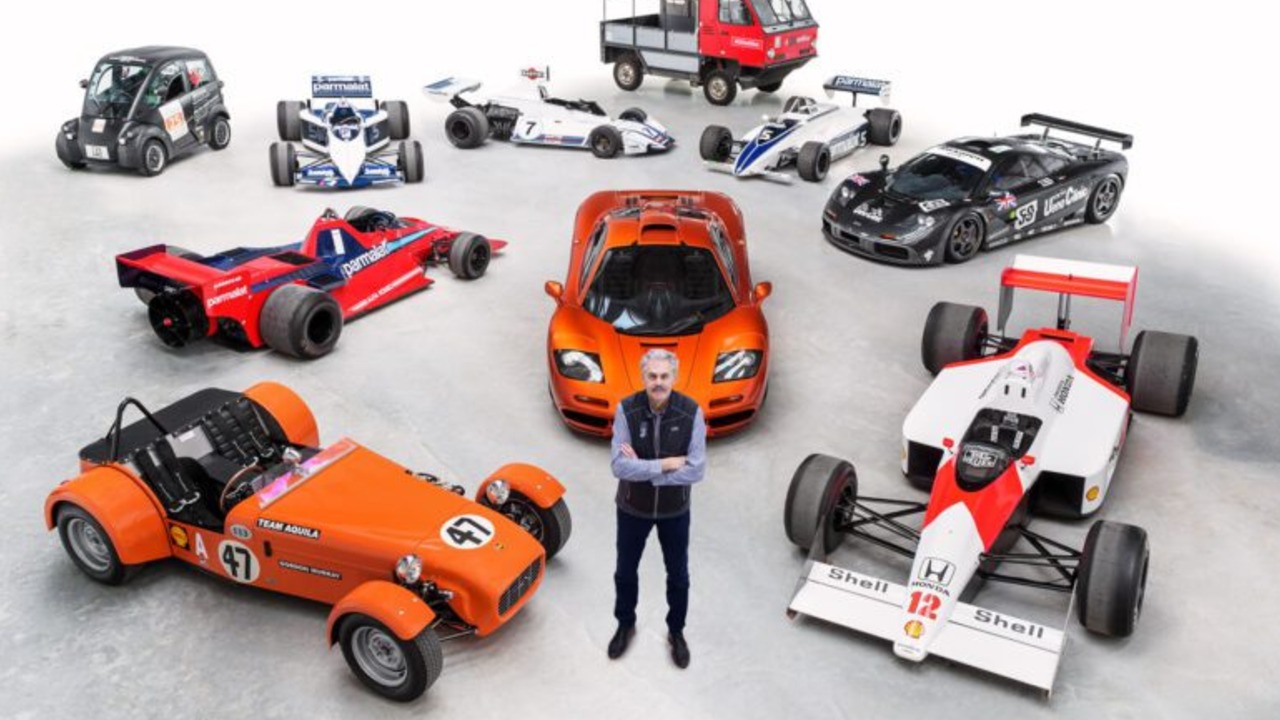
GMA’s product roadmap is already ambitious for a company of its size, and the fresh capital looks tailor made to accelerate that plan. The T.50 has served as the spiritual successor to Gordon Murray’s legendary three seat supercar layout, while the T.33 has been pitched as a slightly more approachable, but still intensely focused, companion. Reporting on upcoming models points to a track focused “s” version of the T.33, often referred to as the T.33s, which is set to push the platform further toward circuit use. With the new $120 Million injection, I expect development of that 33 based variant and its supporting programs to proceed with fewer financial constraints, allowing engineers to chase marginal gains in weight, aerodynamics and engine response that might otherwise be hard to justify.
The funding also dovetails with GMA’s broader commitment to bespoke, low volume projects that sit outside the mainstream supercar template. The company has already demonstrated how far it can push this philosophy with cars like the T.50, and the fact that the first T50 buyer is behind the £90 support package indicates that early adopters are not just satisfied customers, they are willing to become long term stakeholders. That kind of alignment between client and constructor is rare, and it gives GMA a unique platform to experiment with future one off or ultra limited series cars that can be tailored to specific collectors while still benefiting from the shared engineering base of the T.50 and T.33 families.
Highams Park, Surrey and the importance of staying small
One of the most striking details in the reporting is how rooted GMA remains in its home base. The company operates from its Highams Park headquarters and production facility in Surrey, England, where it produces limited run supercars rather than chasing mass market scale. That setting is not incidental. By keeping design, development and assembly tightly clustered in Surrey, GMA can maintain the kind of close knit engineering culture that Gordon Murray has championed since his Formula 1 days, with short feedback loops between designers, aerodynamicists and production technicians.
The R2bn investment linked to Halo Cars Group appears designed to reinforce that model rather than uproot it. Instead of pushing GMA to expand into multiple factories or outsource key processes, the backing is framed as a way to secure the company’s future in Highams Park and give it the resources to refine its existing facilities. In my view, that is crucial to preserving the character of cars like the T.50 and T.33, which rely on meticulous craftsmanship and hand built attention to detail. Scaling up too aggressively would risk diluting the very qualities that make GMA’s products so desirable to the kind of investors and collectors now funding its growth.
Record breaking prototypes and the strength of the Gordon Murray brand
The financial vote of confidence in GMA does not exist in a vacuum. It is reinforced by the market’s response to Gordon Murray’s cars, including record setting auction results that underline how coveted his designs have become. A rare 2025 Gordon Murray S1 LM Prototype recently set a benchmark as the most expensive new car ever sold, a result that stunned the automotive world and highlighted the depth of demand for his most extreme creations. The fact that a Prototype, rather than a mainstream production model, could command that kind of price speaks volumes about how collectors value the purity and rarity of Murray’s work.
That auction result sits alongside the broader narrative of GMA’s growth, from the T.50 and T.33 programs to the new $120 M capital injection and the R2bn backing tied to Halo Cars Group. When I connect those dots, I see a brand whose engineering credibility, market desirability and investor confidence are all reinforcing one another. The S1 LM Prototype’s performance at auction validates the idea that ultra focused, low volume cars can be both artistic statements and serious financial assets, which in turn makes it easier for investors like Tarik Ouass and JR Rahn to justify long term commitments. For Gordon Murray Automotive, the challenge now is to use its $120 Million war chest to keep delivering cars that live up to that reputation while staying true to the obsessive, driver first philosophy that made the funding possible in the first place.