
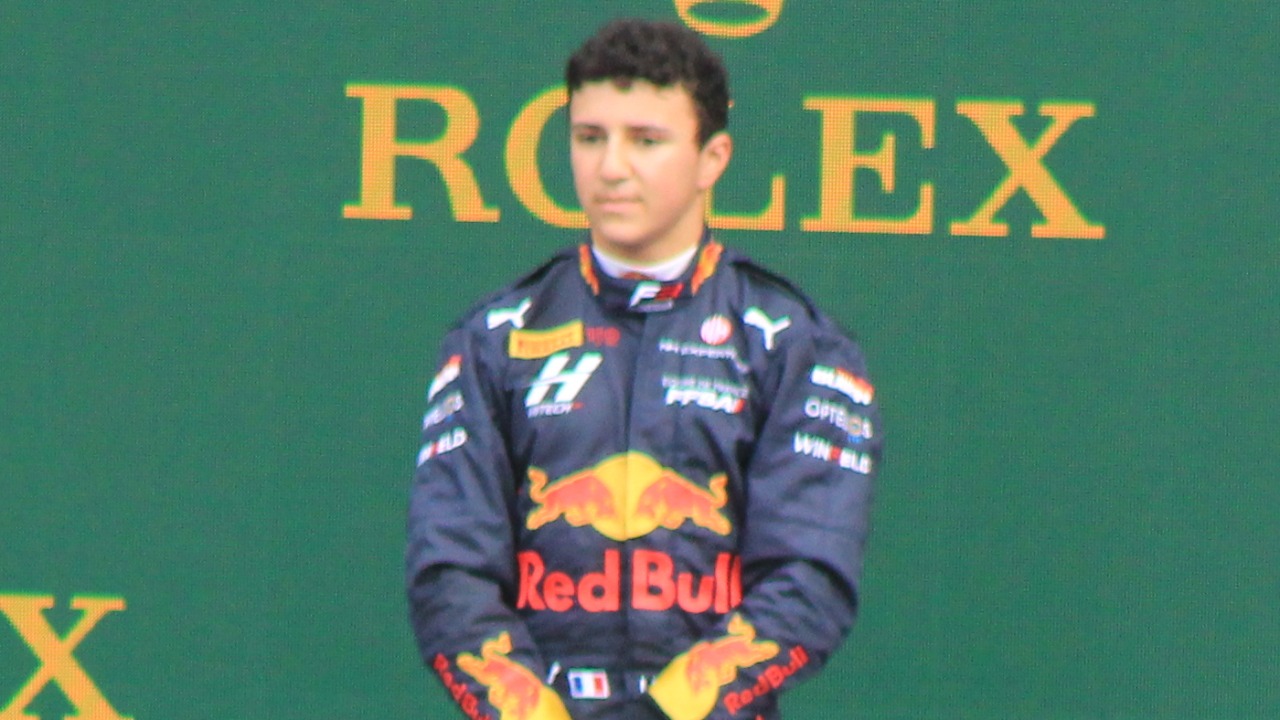
Red Bull’s carefully choreographed pre-season in Barcelona has been jolted by a high-profile mistake from its newest Formula 1 racer. Isack Hadjar, the 21-year-old Frenchman promoted into the senior team, lost control of Red Bull’s new car in tricky conditions and slammed into the barriers, leaving the world champions scrambling to protect mileage, parts and confidence before the season even begins. For a team used to setting the pace, you are now watching them manage risk as much as raw speed.
The crash has already forced Red Bull to rethink its test schedule and raised uncomfortable questions about how aggressively to use a rookie in such a valuable new chassis. Yet it also underlines why teams invest in young talent in the first place: you only find the limit by occasionally stepping over it, and pre-season is where that learning is supposed to happen.
The wet‑weather mistake that stopped Red Bull cold
You can trace the disruption back to a single moment at the Circuit de Barcelona-Catalunya, when Isack Hadjar lost the rear of Red Bull’s new car in damp conditions and went backwards into the wall. Earlier this week, with the track still slick and light drizzle lingering, Hadjar spun at the final corner and struck the barrier, a sequence described as a wet‑weather crash that cut short his pre-season running for Hadjar. The impact damaged the car heavily enough that Red Bull’s day effectively ended on the spot, with mechanics facing a major rebuild rather than routine setup work.
Reporting from Barcelona makes clear that this was not a minor off but a crash serious enough to threaten Red Bull’s broader testing programme. One account framed it bluntly as a setback that could wreck Red Bull and its carefully laid testing plans, after the team had already committed significant time and resources to shakedown runs. For you as an observer, the key detail is not just that a rookie made a mistake, but that it happened in the window when teams are validating reliability, new power units and aerodynamic concepts that will define their early-season form.
How the crash reshaped Barcelona testing plans
Once the car was in the wall, Red Bull’s priorities shifted from gathering data to simply preserving its new machinery. The team’s test day on Tuesday ended with the crash for Isack Hadjar, and the damage, combined with a limited stock of components for the brand‑new chassis and power unit, meant Red Bull chose not to run on a subsequent test day in Barcelona while it waited for spare parts to arrive. That decision, detailed in coverage of how Red Bull skip a later Barcelona test day, underlines how fragile early mileage can be when you are running a fresh design with limited inventory.
Team principal Laurent Mekies has also been weighing whether to use a further day of running at all after what he called a very unfortunate incident. The Red Bull Formula 1 team is still evaluating its plans for a final day of Barcelona running after the Hadjar crash, with Mekies acknowledging that the car had already completed two days and that the team must balance risk against the value of extra laps. That internal debate, captured in reports that Red Bull undecided on a third Barcelona test day, shows you how a single crash can cascade into strategic choices about how much more to expose a scarce new car before the official pre-season test.
Hadjar’s rookie profile and the stakes of a rare chance
To understand why this incident is so scrutinised, you need to look at who Isack Hadjar is and what this opportunity represents. The 21‑year‑old Frenchman has been part of the Red Bull system for years, climbing through junior categories and earning practice outings with the then‑named AlphaTauri and the senior team as Red Bull evaluated his potential. His promotion into a full Formula 1 race seat comes with the expectation that he will be fast enough to justify the faith, but also disciplined enough to keep the car out of the barriers when the conditions turn marginal.
Hadjar’s rise has been built on strong results in the junior ladder, including a fourth place in a key series that helped cement his reputation as one of the most promising young drivers in the Red Bull pipeline. His official athlete profile highlights how Isack Hadjar converted that junior momentum into a Formula One opportunity, with his date of birth listed as September 28, 2004 and his birthplace noted in the same record. When you see a driver with that background put the car in the wall in his first major outing as a race driver, it is not just a line in the test report, it is a stress test of how the team handles development, pressure and public scrutiny around its young talent.
Conditions, context and the role of experience
It is important to recognise that Hadjar’s error did not happen in a vacuum. The Barcelona sessions were held in changeable weather, with the track still damp and light drizzle in the air when he lost control. One detailed account notes that, with the track still damp and light drizzle lingering, Hadjar spun and struck the barrier backwards, a scenario that has caught out far more experienced drivers over the years. For you, the takeaway is that while the mistake is costly, it is also the kind of misjudgement that can occur when a driver is learning the limits of a new car on a low‑grip surface.
The wider testing field in Barcelona underlines that context. On the same day Hadjar crashed, Lewis Hamilton and Max Verstappen were also on track as they made their first appearances of the year, with coverage noting that Lewis Hamilton and Max Verstappen were sharing the circuit with the rookie. That mix of champions and newcomers on a treacherous surface is exactly the environment where experience usually pays off, and where a 21‑year‑old Frenchman like Hadjar is most exposed to the learning curve that separates junior series from the demands of Formula 1.
Strategic caution and what it means for Red Bull’s season start
Red Bull’s response to the crash has been deliberately conservative, and that tells you a lot about how the team is prioritising its season. After the incident, the team was not expected to run on the next day in Barcelona, with reports from byTobia Elia explaining that Red Bull chose caution as Max Verstappen sat out Barcelona test day three following the crash for Isack Hadjar. That decision effectively protected Verstappen’s race chassis and the new power unit from unnecessary risk, but it also meant sacrificing valuable setup time that could have refined balance, tyre understanding and reliability checks.
The incident has also been framed in some reports as part of a broader pattern of disruption to Red Bull’s Barcelona programme. One account from Pakistan notes that Red Bull’s driver Isack Hadjar crashed his car in wet conditions in Barcelona, describing how Red Bull’s Isack went off in a pre‑season test session. Another report, citing Reuters, stresses that the 21‑year‑old Frenchman lost control at the final corner in the afternoon and that Red Bull’s Isack Hadjar left the team facing questions about whether the car would run in the next days, with the Frenchman at the centre of the story. For you, the message is clear: Red Bull is willing to trade short‑term mileage for long‑term security, even if that means entering the official pre‑season test with fewer Barcelona laps than planned.
More from Fast Lane Only





Leave a Reply