
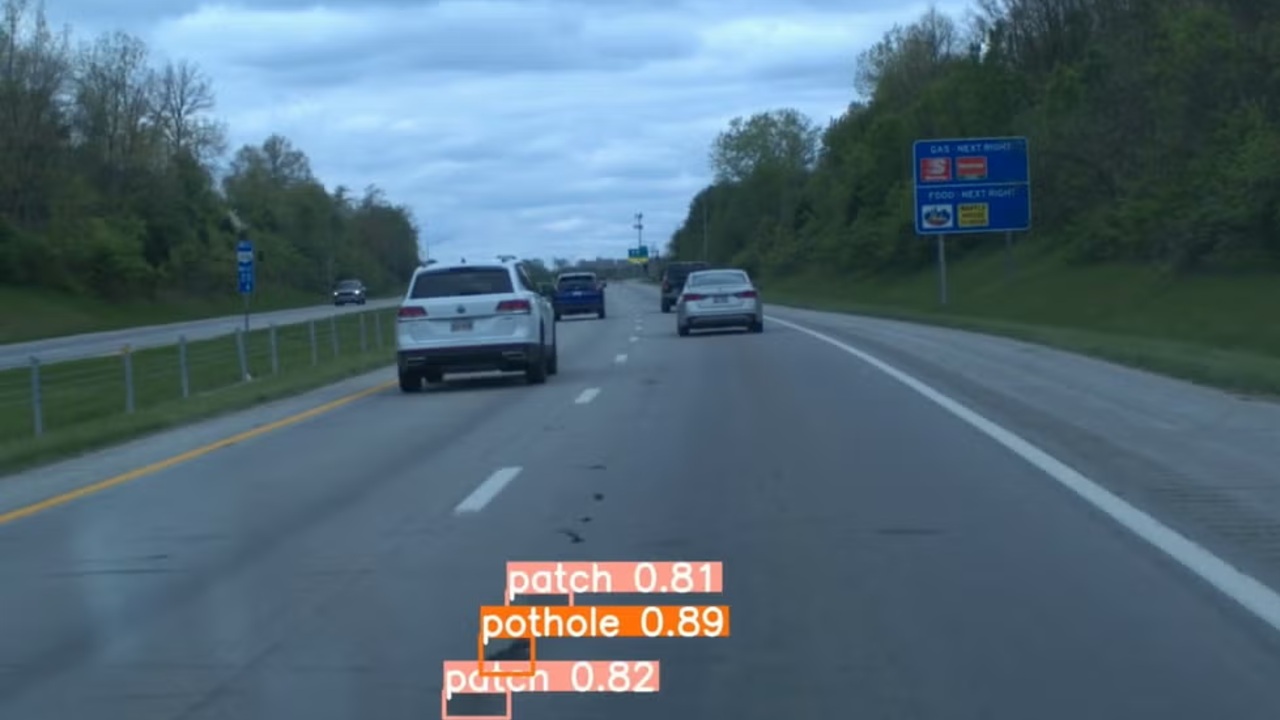
Honda is testing artificial intelligence that can feel the road long before a human notices a bump in the steering wheel. By turning ordinary production vehicles into rolling sensors, the company is trying to spot rough pavement and emerging potholes early enough for road crews to act before drivers hit them. If it scales, the approach could quietly redraw how cities understand the health of their streets, shifting maintenance from reactive patchwork to something closer to preventive care.
The early results, gathered on thousands of miles of Ohio roads, suggest that this is no speculative lab project. Honda’s system has already shown that it can identify trouble spots with high accuracy while blending into everyday traffic. The question now is how quickly transportation agencies, and eventually drivers, will be able to see and use what the cars are learning.
How Honda taught cars to feel the road
At the core of Honda’s effort is a simple idea: modern vehicles already carry the sensors and computing power needed to recognize when the road surface is starting to fail. Instead of waiting for drivers to complain or for inspectors to drive specialized survey trucks, Honda is using in‑car accelerometers, cameras, and other existing hardware, paired with Edge AI models, to interpret the subtle vibrations and visual cues that signal rough roads and forming potholes. Those models run directly in the vehicle, then send processed data to Honda’s cloud platform, where it can be turned into maps and alerts for transportation partners.
In a recent pilot, Honda vehicles were configured to proactively report road safety issues as they encountered them in normal traffic. The Edge AI software filtered raw sensor readings in real time, flagging patterns that matched rough pavement or emerging potholes and passing those findings to Honda’s own cloud environment for aggregation and analysis. Instead of streaming every frame of video or every jolt from the suspension, the cars shared only what the algorithms judged to be meaningful, which reduced bandwidth needs and protected drivers from having their full journeys constantly uploaded.
A 3,000‑mile test bed in Ohio
To see whether this concept could work at scale, Honda and the Ohio Department of Transportation partnered on a two‑year trial that turned a slice of the state’s highway network into a living laboratory. Test vehicles equipped with the AI road‑sensing system covered approximately 3,000 miles of routes in central and southeastern Ohio, quietly collecting data as they mixed with everyday traffic. The project brought together Honda and DriveOhio with i‑Probe Inc, Parsons Corporation, and the University of Cincinnati, combining automotive engineering, infrastructure expertise, and academic analysis in a single program.
Within that 3,000 miles, the system was tasked with spotting potholes and other surface defects that could threaten safety or comfort. According to the trial results, the AI models achieved an 89% average accuracy for potholes, a level that suggests the technology is already good enough to be useful for maintenance planning rather than just a research curiosity. By comparing the AI‑generated road condition data with traditional inspections, the partners were able to validate that the vehicles were not simply over‑reporting every bump, but were reliably distinguishing between normal road texture and genuine hazards.
From raw data to maintenance decisions
Turning millions of sensor readings into something a road crew can act on is as important as the detection itself. Honda’s cloud platform aggregates the alerts coming from individual vehicles, clusters them by location, and builds a dynamic picture of where the pavement is deteriorating fastest. Transportation officials can then use that map to prioritize which stretches of highway need immediate attention and which can wait, instead of relying on sporadic field reports or waiting for damage complaints to pile up.
Officials involved in the Ohio trial have already suggested that this approach could reshape how maintenance is planned. One transportation leader described the system as having the potential to streamline how information is collected and how maintenance operations are scheduled, emphasizing that the technology could help crews move from chasing the worst problems to anticipating them. Even with that optimism, they also noted that the models can still improve, signaling that the current performance is a starting point rather than a finished product.
Why AI pothole spotting matters for drivers
For drivers, the appeal of this technology is straightforward: fewer surprise impacts, less damage to tires and suspensions, and more predictable commutes. Potholes and rough roads are not just annoyances, they can bend wheels, blow out tires, and contribute to crashes when motorists swerve suddenly to avoid them. By identifying trouble spots early, Honda’s system gives transportation agencies a chance to repair the pavement before it reaches that stage, which could reduce both repair bills and safety risks for people in vehicles ranging from compact sedans to family SUVs.
The benefits extend beyond individual drivers to the broader transportation network. More timely repairs can help keep traffic flowing by reducing the need for emergency lane closures and unplanned work zones. Over time, a data‑driven understanding of where roads fail most quickly could also influence how and where agencies invest in more durable materials or redesigned intersections. In that sense, the AI in Honda’s test vehicles is not only reacting to the road, it is quietly generating the evidence base for smarter infrastructure decisions.
From prototype to everyday feature
Honda has been signaling interest in this kind of capability for several years, including earlier demonstrations of prototype road condition monitoring that highlighted how drivers routinely face potholes, debris, construction zones, and challenging weather. The Ohio pilot marks a shift from controlled demonstrations to a real‑world test that spans thousands of miles and multiple winters, a much tougher environment for any sensing system. By partnering with organizations such as i‑Probe Inc, Parsons Corporation, and the University of Cincinnati, Honda has been able to refine both the technical models and the workflows that would be needed if the data were to feed directly into state maintenance systems.
What remains unverified based on available sources is exactly when or how this technology might appear in specific Honda models that consumers can buy, such as the CR‑V or Accord, or whether it will be offered as a software update to existing vehicles. The current reporting focuses on test vehicles and pilot programs rather than retail deployment timelines. Even so, the combination of Edge AI in the car and cloud‑based analytics has now been proven on 3,000 miles of real roads with 89% average accuracy for potholes, which suggests that the technical foundation is in place whenever Honda and its public partners decide the system is ready for everyday use.
More from Fast Lane Only


Leave a Reply