Jimmie Johnson did not just win another championship in 2010, he finished off the kind of five year stretch that turns a great career into a dynasty. Chasing down a deficit in the finale and outlasting younger rivals, he converted a vulnerable season into the ultimate statement of control at the top of stock car racing. In doing so, he transformed the No. 48 program from a dominant team into a historic benchmark for sustained excellence.
The pressure cooker of a fifth straight title
By the time Johnson arrived at Homestead for the 2010 finale, the chase for a fifth consecutive NASCAR Sprint Cup title had become a test of nerve as much as speed. He trailed then points leader Denny Hamlin, which meant the margin for error was gone and the usual comfort of racing from ahead had evaporated. Winning that fifth straight crown required Johnson to manage risk, accept that he was no longer the favorite, and still execute at a level that allowed him to close the gap when Hamlin faltered, a reality underscored by how he ultimately wrapped up his Winning fifth straight title.
The dynamic inside that final race was simple but unforgiving: Johnson had to be aggressive enough to capitalize on any opening, yet conservative enough to avoid the kind of mistake that would end the streak on the spot. That balance defined his afternoon as he kept his car in contention, responded to strategy swings, and turned the pressure of chasing Hamlin into a methodical climb through the running order. The fact that he emerged from Sunday with the championship, after starting the day behind, is what elevated this run from routine dominance to a defining act of resilience.
Homestead as the crucible of a dynasty
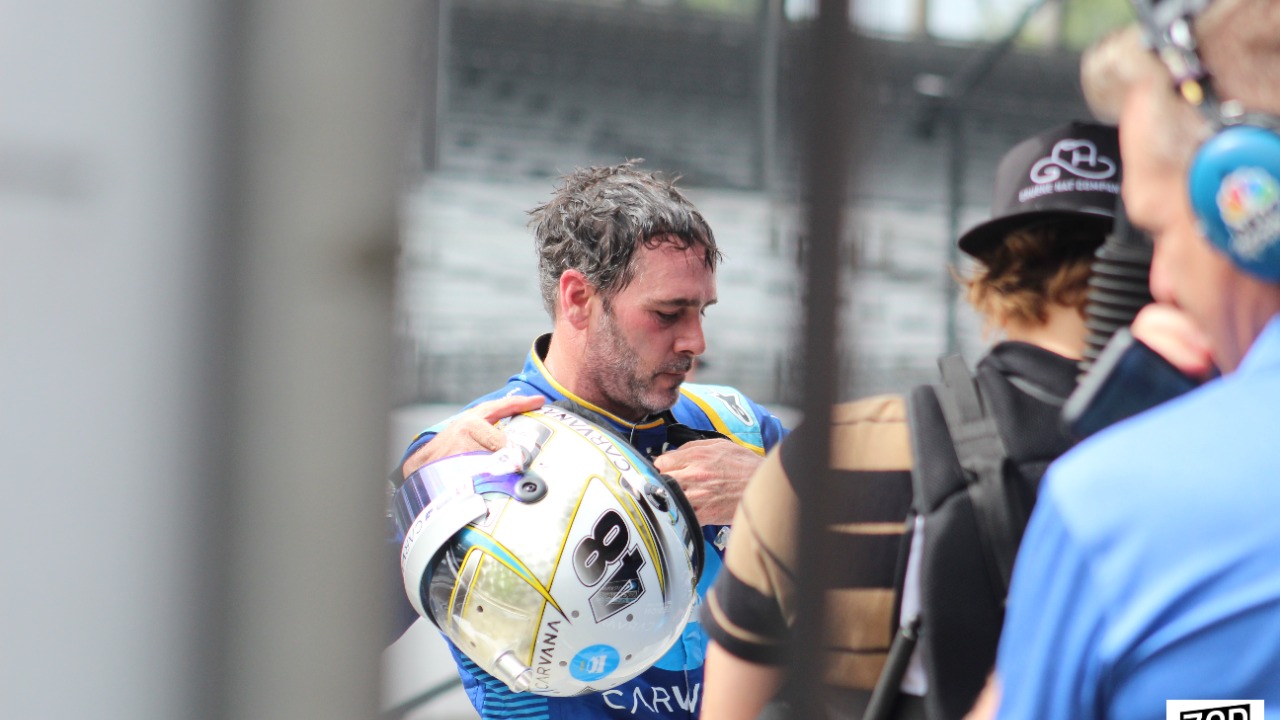
Homestead, Florida became the proving ground where Johnson’s era either would be confirmed as a dynasty or exposed as a run that had finally met its limit. The track’s progressive banking and the season long grind meant that by the time the finale began, the No. 48 team had to be nearly flawless to beat both Hamlin and Kevin Harvick. Reporting from Homestead, Florida captured how Jimmie Johnson was not the best all year, not even close, yet when it mattered he could not be beaten, which is the essence of a dynasty closer.
That afternoon also reframed how the 2010 season was remembered. Instead of being the year the streak ended, it became the season that showcased Johnson’s adaptability in the face of stronger regular season rivals. Analysts later noted that 2010 was Jimmie Johnson’s hardest title fight, with the Chase format producing some of the best side by side championship racing of his run, and that context made his ability to outlast Hamlin and Harvick even more impressive. The idea that 2010 was his Hardest Title Winning Season only strengthens the argument that sealing the deal at Homestead was the moment his dominance crossed into something more enduring.
Five defining moments that shaped the run
Every championship season turns on a handful of inflection points, and Johnson’s 2010 campaign was no exception. Over the course of the year, there were races where he and the No. 48 group had to dig out of poor qualifying efforts, survive chaotic restarts, or stretch fuel and tires beyond comfortable limits. With the exception of a few laps at mid race in key events, Johnson kept his competition behind him, which kept him out front in the standings and reinforced the trust between him and his crew, a pattern highlighted in coverage of With the defining moments that shaped his run.
Those moments were not just about late race heroics, they were about how Johnson responded when the car was off or when strategy calls went sideways. Instead of panicking, he often settled into a long game approach, salvaging top ten finishes on days that could have spiraled into disasters. That consistency, more than any single win, is what allowed him to arrive at the finale still within striking distance of Hamlin, and it is why the 2010 title is remembered as a product of cumulative poise rather than one lucky break.
The No. 48 machine and the making of a dynasty
To understand how Johnson sealed a dynasty, I have to look beyond the driver and focus on the infrastructure around him. The No. 48 team was built on continuity, with a stable roster that allowed communication, setup preferences, and race day decision making to evolve together rather than reset every season. From CONCORD to the pit box, that stability meant that when the pressure spiked in the Chase, the group could lean on years of shared experience instead of improvising under fire.
That organizational strength is why the 2010 title felt like the culmination of a long term plan rather than a one year surge. Jimmie Johnson and his crew did not need to reinvent themselves to respond to Hamlin’s challenge, they simply refined the formula that had already produced four straight championships. The presence of partners like Lowe and Chevrolet, and the ability to keep key personnel in place, turned the No. 48 operation into a model of how to build a modern NASCAR powerhouse that can withstand rule tweaks, new challengers, and the natural ebb and flow of performance.
A historic year for Johnson and NASCAR
By the end of 2010, Johnson’s fifth consecutive championship had reshaped the historical conversation around NASCAR’s greatest drivers. His run invited direct comparison to legends who had previously set the standard for title hauls, including icons of whom won seven titles, and it forced fans and analysts to reconsider how they weighed dominance in the playoff era against achievements from earlier formats. Coverage of that season framed 2010 as a historic year for both Johnson and the sport, noting how his sustained success placed him alongside names that had long defined stock car greatness, as detailed in the account of Dec historic year.
The broader industry impact was just as significant. Johnson’s streak forced rival teams to rethink how they approached the Chase, from car preparation to mental conditioning, because the bar for a championship caliber season had been raised. His ability to keep winning in an era of deep fields and evolving competition formats underscored how much the sport had changed since the days when a single dominant car could simply outmuscle the field on raw speed alone.
Media validation and the weight of five in a row
When the season ended, the media response confirmed what many inside the garage already believed, that Johnson’s fifth straight title was the defining motorsports story of the year. In year end voting, first place votes received 21 points, with second place votes receiving 20 points, third place votes 19 points and so forth down the ballot, and Johnson’s championship amassed 1,294 points in that system, a tally that reflected how decisively his achievement stood out. The selection of his fifth championship as the top story of 2010 showed that his run had transcended NASCAR’s niche and entered the broader sports conversation, as captured in the breakdown of media select Johnson’s fifth.
That kind of recognition matters when assessing a dynasty, because it signals that the dominance was not just statistically impressive but culturally resonant. Fans might have debated whether the streak was good for competitive balance, yet the sheer scale of Johnson’s accomplishment demanded attention. The media validation effectively stamped the 2010 title as the moment his run moved from impressive to historic, the point at which five in a row became a shorthand for a standard that may never be matched.
How 2010 tested Johnson’s style and stamina
What set the 2010 campaign apart from Johnson’s earlier titles was how thoroughly it tested his preferred style of racing. He had built his reputation on being smooth and steady, especially in the stretch of the year when he traditionally dominates, but this time the field refused to let him control the tempo. Rivals attacked early and often, forcing him to race harder in the regular season and adapt to a Chase where track position and pit calls were more volatile than in previous years, a shift that made his ability to stay composed even more impressive, as reflected in the description of how he remained Smooth and steady through a season that refused to follow his usual script.
That grind demanded not just physical stamina but mental flexibility. Johnson had to accept that he would not always have the fastest car, that he would sometimes need to settle for damage limitation instead of chasing every win, and that the path to a fifth straight championship would run through more adversity than any of his previous four. The way he navigated that reality, adjusting his risk tolerance without losing his trademark calm, is a big part of why the 2010 title is often cited as the most revealing window into his competitive character.
Why the fifth title sealed the dynasty label
In the end, what sealed Johnson’s status as the architect of a dynasty was not just the number of trophies, but the way he and his team evolved to secure the fifth. Earlier in the run, their dominance could be chalked up to a perfect combination of driver, crew chief, and car in a relatively stable competitive environment. By 2010, the field had caught up, the Chase had matured, and rivals like Hamlin and Harvick had built programs specifically designed to knock the No. 48 off its perch, yet Johnson still found a way to finish on top, a reality that even his peers acknowledged as unbelievable.
Looking back now, I see that season as the hinge point between dominance and legacy. Four straight titles could have been remembered as a remarkable hot streak, the kind of run that eventually cools as the sport resets around it. The fifth, earned in a year when he was not the best all season and had to claw back from a deficit in the finale, turned that streak into something more permanent. It is why, when I think about dynasties in modern motorsports, Johnson’s 2010 title run is the moment that defines the standard everyone else is still chasing.