
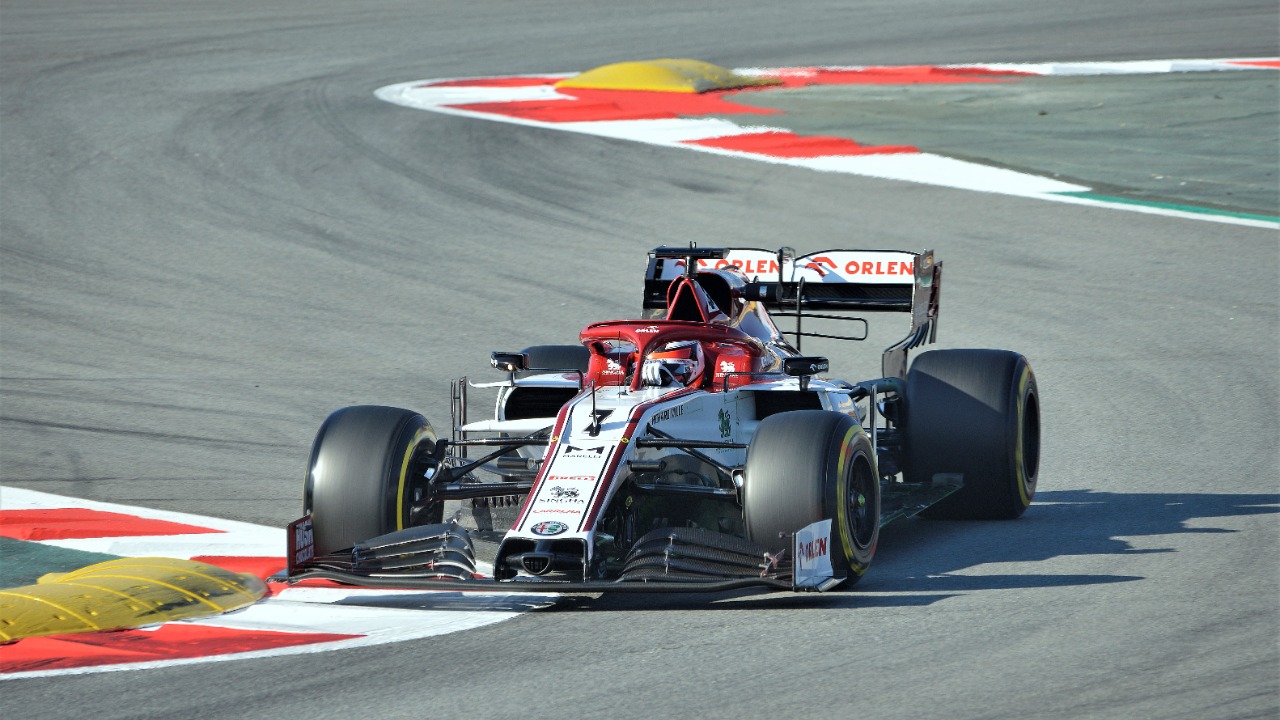
The night Kimi Räikkönen won in Abu Dhabi did more than end a victory drought, it turned a returning champion’s quiet defiance into a story fans still trade like folklore. His first triumph after coming back to Formula 1, and the first for Lotus since the Detroit Grand Prix in the late 1980s, felt less like a routine result and more like a collective jolt of recognition that the sport’s great characters rarely fade quietly. More than a decade on, that comeback win still lives in the shared memory of the paddock and the grandstands as the purest expression of who Räikkönen is when everything finally falls his way.
I remember watching that race and feeling the mood shift from curiosity about whether he still had it, to a kind of delighted inevitability as he controlled the chaos out front. The details of the evening, from the way the race fell into his hands to the words he snapped over the radio, have been replayed so often that they have hardened into legend, yet the story behind them is even richer than the soundbites.
The long road back to Lotus glory
For the mythology of Abu Dhabi to make sense, you have to start with the simple fact that Kimi Räikkönen had already walked away once. After his first stint in Formula 1, he drifted into other disciplines, then worked his way back, carrying the weight of a world champion who had chosen absence over decline. When he returned to the grid with Lotus, he was not stepping into a dominant machine, he was joining a team that had not tasted victory since its previous era, when the name Lotus last won at the Detroit Grand Prix in the 1980s, a gap that made his eventual success feel like a bridge across generations of fans who still revered that badge on the nose of the car, as reflected in memories of Lotus and the Detroit Grand Prix.
His path back to that stage had started long before, in smaller cars and quieter paddocks, where his raw speed first caught the right eyes. In 2000 he was racing in Formula Reno, winning seven of ten races and forcing people like Pete to take notice of a driver who seemed to bend grip and confidence to his will, a run of dominance that helped propel him toward the top tier and eventually back to a seat when he was on team Lotus again later in his career, a journey captured in the way his early Formula Reno success impressed Pete.
A chaotic race that suited “The Iceman”

By the time the lights went out in Abu Dhabi, the season had already shown that Räikkönen’s consistency could drag Lotus into fights it had no business winning, but this race unfolded in a way that seemed tailor-made for his temperament. Early drama and retirements shuffled the order, and when Kimi Raikkonen found himself leading the Abu Dhabi GP in the Lotus-Renault, he did not treat it as a surprise, he treated it as a job to be finished, guiding the car through a dramatic contest that left him ahead of rivals like Fernando Alonso while others slipped down to the final points paying position, a performance chronicled in detailed race notes from the Abu Dhabi GP.
What struck me most that evening was how naturally the chaos seemed to calm around him once he was in front. While others wrestled with strategy and nerves, Lotus’s Kimi Raikkonen simply kept hitting his marks, even as a charging field tried to reel him in, and as Chief F1 writer Andrew Benson later described, he won the Abu Dhabi Grand Prix while Sebastian Vettel fought his own recovery drive after starting from the back, a contrast that underlined how Räikkönen’s control at the front was the quiet center of a wild race, a balance captured in coverage of Kimi Raikkonen leading the Abu Dhabi Grand Prix.
The radio message that became a catchphrase
Every great sporting folk tale needs a line of dialogue, and Abu Dhabi delivered one that still echoes through grandstands and meme feeds alike. As the tension rose in the closing laps, his engineer tried to feed him information, only for Kimi to cut across the noise with a sentence that instantly distilled his personality: “Just leave me alone, I know what to do.” It was not a rehearsed slogan, it was a reflex from a driver who had always preferred to let his driving do the talking, and that blunt reply has since been enshrined among the most iconic quotes in the sport, with Kimi’s own words, starting with that emphatic “Just,” now celebrated as a defining moment of how he communicates under pressure, a status reflected in lists of Kimi and his “Just leave me alone” quote.
That single exchange did more than make people laugh, it reframed how fans saw the human side of a driver often caricatured as distant. The message, delivered while Raikkonen was leading and Fernando Alonso’s Ferrari loomed behind, captured Kimi Raikkonen’s independent streak and focus under pressure, and it has since been replayed as the moment when the sport’s radio chatter stopped being just data and became part of the emotional theatre, a shift underlined in accounts of how Raikkonen and Fernando Alonso were locked in that tense exchange.
“The Iceman” at peak cool
What made that radio moment land so perfectly was that it fit the man behind the visor. Known as “The Iceman” for his cool and collected demeanor under pressure, Kimi had built a reputation for quiet intensity long before Abu Dhabi, and his refusal to be rattled by engineers, rivals or the stakes of the championship only reinforced that image. Even away from that particular race, stories of how Kimi stayed calm in late-race strategy calls, how Kimmy pitted and then pushed again with laps to go, and how he balanced a love of parties with a ruthless focus on track, all fed into the idea that his nickname was not a marketing line but a lived reality, as seen in profiles that open with how he is Known as The Iceman for his cool and collected demeanor.
That composure is part of why the 2012 season is often remembered as peak Kimi energy, a blend of speed, silence and savage one-liners that turned every race weekend into a new chapter of the same character study. When people look back on that year now, they talk about the way the 2012 Formula 1 campaign captured Kimi Räikkönen’s essence, from his podium interviews to his offhand comments, and how that Abu Dhabi victory sits at the center of a season that felt like a highlight reel of his personality, a mood summed up in tributes that call it the 2012 Formula season of peak Kimi.
Why this win still feels different
Plenty of drivers have comeback wins, but few victories feel as instantly complete as Räikkönen’s that night, because the numbers and the narrative clicked together so neatly. The race ended a long wait for both driver and team, with Associated Press accounts noting how the result tightened the points picture, leaving one rival on 245 and Raikkonen at 198, and that kind of precise context helps explain why the paddock felt the significance of the moment in real time rather than only in hindsight, a sense captured in reports that framed it as a breakthrough which prompted fans to Open Extended Reactions to the points swing.
There was also the simple sporting satisfaction of seeing a season of near misses finally convert into a win. After so many podiums without a victory, Kimi delivered a faultless drive that some observers described as a fantastic performance after a season of almosts, with Viknesh Vijayenthiran November noting how After a string of close calls, Kimi finally produced a race in which he looked like the class of the field, a narrative that helped cement the idea that this was not a fluke but the natural endpoint of sustained excellence, as reflected in coverage that highlighted how Viknesh Vijayenthiran November wrote that After Kimi finally looked the class of the field.
From one iconic moment to a wider sporting canon
Part of why I think Abu Dhabi has slipped into folklore is that it now sits alongside other iconic sporting performances that are remembered as much for their poise as their statistics. Commentators at the time of Liu Xiang’s 12.91s Olympic record in the 110m hurdles talked about how composed he looked before the gun and how technically perfect the race appeared, and the massive response afterward showed how audiences respond to athletes who seem utterly in control of their craft at the decisive moment, a reaction that mirrors how Commentators described that hurdles run and its massive response.
In motorsport, that same blend of calm and audacity has defined other champions too, from riders who showed impressive pace in their rookie year and then allied it to unwavering consistency on their way to titles, to drivers who turned rocky starts into seasons of relentless scoring. One example often cited is a Suzuki Moto GP champion who combined early speed with a run of results that carried him to the crown, a story that echoes the way Kimi’s steady points haul set up his big night, as seen in accounts of how he showed impressive pace in his rookie year and then consistency on his way to the title.
The legend that grew around Kimi
What makes Räikkönen’s folklore so rich is that Abu Dhabi is only one chapter in a much stranger, more entertaining book. Years after that win, he would add to his myth with moments like the time he Quit Mid race for His Yacht, an unforgettable 2018 episode in which The Unbelievable Moment Kimi left the car and headed for the marina became instant social media currency, reinforcing the idea that he lived by his own rules even when the world was watching, a story retold in clips that highlight The Unbelievable Moment Kimi seemed to Quit Mid Race for His Yacht.
Even within Formula 1’s own storytelling, his radio messages from Abu Dhabi have been elevated above the usual chatter. But the award for most memorable Raikkonen radio message is routinely given to that 2012 exchange in Abu Dhabi, where his blunt instruction to be left alone crystallized everything fans loved about him, and later features have framed it as the standout among a long list of sweary outbursts, emotional celebrations and cheeky jokes, a hierarchy that underscores how But the most memorable Raikkonen radio came in Abu Dhabi.
Why Abu Dhabi 2012 became instant folklore
Looking back now, I see that night as the moment when all the strands of Kimi’s career braided together into a single, unforgettable image. His famous radio message, starting with the word “Leave,” has been cited as one of the defining soundbites in the history of the Abu Dhabi Grand Prix, a line that not only captured his personality but also cemented the race itself as a modern classic in the event’s history, a status underlined in retrospectives that note how His “Leave me alone, I know what I’m doing” line became iconic in Abu Dhabi history.
That is why, when fans swap stories about Kimi today, they do not just talk about the statistics or the trophies, they talk about the feeling of watching The Iceman glide through a chaotic race, brush off the noise in his ear, and bring Lotus back to the top step as if it were the most ordinary thing in the world. The folklore lives in that contrast between how extraordinary the achievement was and how casually he treated it, a balance that keeps drawing us back to that cool night in Abu Dhabi whenever we look for proof that sport can still surprise us with a perfect, self-contained story.



Leave a Reply