Scott Dixon’s legend at Indianapolis is not built on a stack of Indianapolis 500 trophies, but on the way a single 500 win, relentless consistency and a towering body of IndyCar work have converged on the sport’s biggest stage. His record at the Speedway and across the NTT INDYCAR SERIES has turned every May into a referendum on greatness, even when the Borg-Warner Trophy has gone home with someone else. I see his Indianapolis story as proof that one 500 victory can still define a career when it is backed by a generation of dominance everywhere else IndyCar races.
From karting prodigy to IndyCar standard-setter
Scott Dixon’s path to Indianapolis began long before he first rolled into Gasoline Alley, and the roots of his composure at the Speedway are visible in his earliest laps. As a teenager, he was already a phenomenon, with reports noting that Scott Dixon started karting young and was winning quickly enough that he drew national attention in New Zealand. That early exposure to pressure, cameras and expectations hardened him for the unique scrutiny that comes with leading the Indianapolis 500, where every mistake is magnified and every decision is replayed for years.
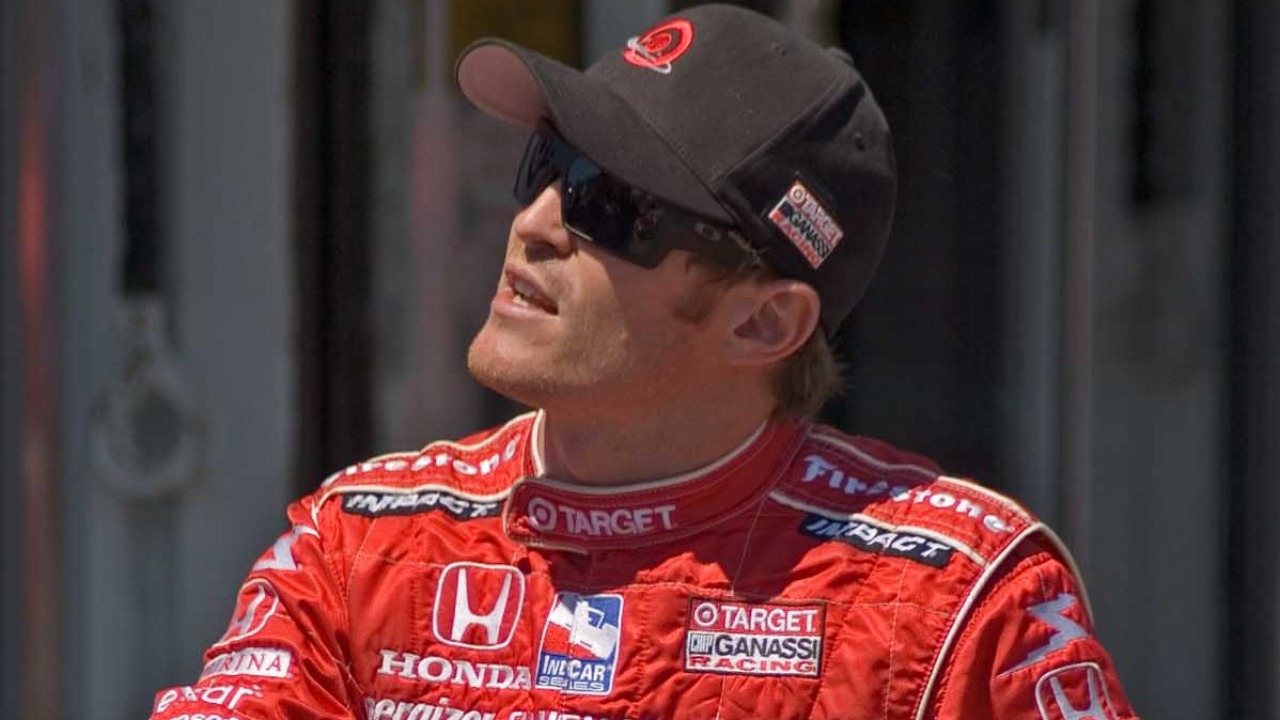
The leap from promising youngster to IndyCar benchmark came when One of the defining moments in Scott’s career arrived in 2003, as Scott joined Chip Ganassi Racing in the IndyCar Series and immediately turned potential into championships. That move embedded him inside a powerhouse organization that understood how to win at Indianapolis and across the calendar, and it gave him the engineering depth and strategic muscle to translate raw speed into titles. From that point on, his career has been less about flashes of brilliance and more about a sustained, almost methodical accumulation of results that would eventually reshape the record book.
Why one Indianapolis 500 win still looms so large

In a sport that often measures immortality by the number of times a driver drinks the milk, Dixon’s Indianapolis 500 record is unusual: he has a single 500 victory, yet his reputation at Indy is enormous. The key is that his 500 win in 2008 came as part of a broader pattern of dominance, not as an isolated upset. Official biographies describe him as a six-time NTT INDYCAR SERIES champion and a 2008 Indianapolis 500 winner, a pairing that instantly elevates that lone Indy triumph into something more symbolic. The win confirmed that his week-in, week-out superiority could also withstand the chaos of 500 miles at the Speedway.
Team accounts underline how central that single victory remains to his story, noting that no serious discussion of his career is complete without revisiting his Memorable History at the Indianapolis 500 and that breakthrough in 2008. I see that race less as a one-off achievement and more as the moment when his broader IndyCar excellence finally intersected with the Speedway’s unforgiving demands. The fact that he has not added a second or third 500 win has become part of the intrigue, sharpening the sense that every May is another chance to align his statistical dominance with the one number that still looks modest on his résumé.
Dominance across the NTT INDYCAR SERIES
What truly cements Dixon’s legacy is the way his Indianapolis record sits atop a mountain of success across the rest of the NTT INDYCAR SERIES calendar. Official series profiles describe Scott Dixon, Hailing from New Zealand, as one of the elite drivers in INDYCAR, with a win total and longevity that few can match. That sustained excellence means that when he arrives at Indianapolis, he does so not as a 500 specialist but as the driver who has set the standard everywhere else, which in turn magnifies every near-miss and every pole run at the Speedway.
Team statistics underline just how far his dominance extends, noting that Dixon has 58 career wins, second in series history behind only A.J. Foyt with 67. His six championships and that chase of Foyt’s all-time mark give every race, including the Indianapolis 500, an added layer of historical tension. When I look at those numbers, it is clear that his legacy at Indy cannot be separated from his broader record: the Speedway is the most visible chapter in a career that has already rewritten what consistency and longevity look like in top-level American open-wheel racing.
Consistency that turns every Indy run into an event
Raw win totals only tell part of the story, because Dixon’s defining trait has been his ability to run at the front almost every weekend, year after year. Hall of Fame citations point out that Dixon also has produced a series record 194 top-five finishes in his 370 career starts, a strike rate of 52.3 percent. That means more than half the time he straps into an IndyCar, he finishes in the top five, a level of reliability that turns every Indianapolis 500 start into a likely storyline rather than a hopeful long shot.
That consistency has been stress-tested in difficult seasons as well, including campaigns like the 2020 INDYCAR schedule that presented compressed calendars and unusual conditions. Even in those circumstances, profiles of his career note that the 2020 IndyCar season presented unique challenges yet still reinforced his place in the history of IndyCar racing, a point highlighted in detailed career retrospectives that describe the 2020 IndyCar season as another chapter in his sustained excellence. When I weigh that level of performance, it becomes obvious why a single Indianapolis 500 win has carried so much weight: fans and rivals have come to expect that he will be in the mix every time the green flag drops at the Speedway.
How peers and fans frame his Indy legacy
Legacy in motorsport is not only written in record books, it is also shaped by how peers and fans talk about a driver in real time. In long-form conversations about his career, veteran voices such as Paul Tracy have described him in glowing terms, with one discussion in Racers Unchained noting that Racers Unchained host Paul Tracy places Scott Dixon firmly in the conversation among the greatest in the history of the sport. When a driver with that kind of résumé is willing to elevate Dixon to that tier, it reinforces the idea that his single Indianapolis 500 win is not a limitation but part of a larger case for greatness.
Fans echo that sentiment in their own way, often focusing on the improbable drives that have defined his reputation. In one widely shared Comments Section discussion, supporters highlight how His IndyCar career has outlasted entire team lineups such as those at Arrow McLaren and recall specific comeback performances that seemed to defy strategy and fuel math. I read those anecdotes as evidence that, for many fans, Dixon’s legend at Indianapolis is intertwined with his broader knack for turning impossible situations into podiums, whether at Mid-Ohio, Texas or the Speedway itself.
Chasing A.J. Foyt and the weight of history at Indy
Every time Dixon rolls into Indianapolis, he carries not just his own expectations but also the weight of the records he is chasing. Analytical pieces about his career frame the conversation around which of A.J. Foyt’s marks he might reach first, with writers like Paul Kelly arguing that Semantics matter when debating whether he will match Foyt’s win total or championship haul, and noting that Paul Kelly believes that If the question is which milestone comes first, the answer may depend on how long he chooses to keep racing. Once he does, will he walk away while on top, or continue to stretch the numbers beyond what any future driver can realistically chase.
That chase is grounded in hard statistics, including the fact that Dixon has 58 career wins while Foyt sits at 67, and that his six titles already place him in a rarefied group. Team biographies emphasize that His pursuit of Foyt is not theoretical but an active storyline that shapes how every race is perceived. At Indianapolis, that context adds a layer of drama: each 500 start is not only a bid for a second win but also another chance to chip away at the broader records that will define how future generations compare the two men.
Why his Indianapolis story resonates beyond the win column
When I step back from the numbers, what stands out most about Dixon’s Indianapolis legacy is how it blends statistical dominance with a sense of unfinished business. Official honors such as his induction into the Motorsports Hall of Fame of America, which cite his 194 top-five finishes in 370 starts and that 52.3 percent strike rate, confirm that his career already belongs alongside other titans of the sport, a point underscored in the Hall of Fame’s detailed recognition of 194, 370 and 52.3 percent as defining metrics. Yet the fact that he has only one Indianapolis 500 victory keeps the narrative alive, ensuring that every May feels like another chapter rather than an epilogue.
Career retrospectives that trace his journey from karting to Chip Ganassi Racing, including detailed profiles that describe how One of the pivotal steps came when he joined Chip Ganassi Racing in the Series and quickly became the team’s anchor, reinforce the idea that his story has always been about more than a single race. The Indianapolis 500 is the brightest spotlight in that story, but his legacy there is ultimately defined by how often he has arrived as the driver to beat, how consistently he has delivered under pressure and how his broader body of work has forced fans and peers alike to rethink what greatness at Indy really looks like.