
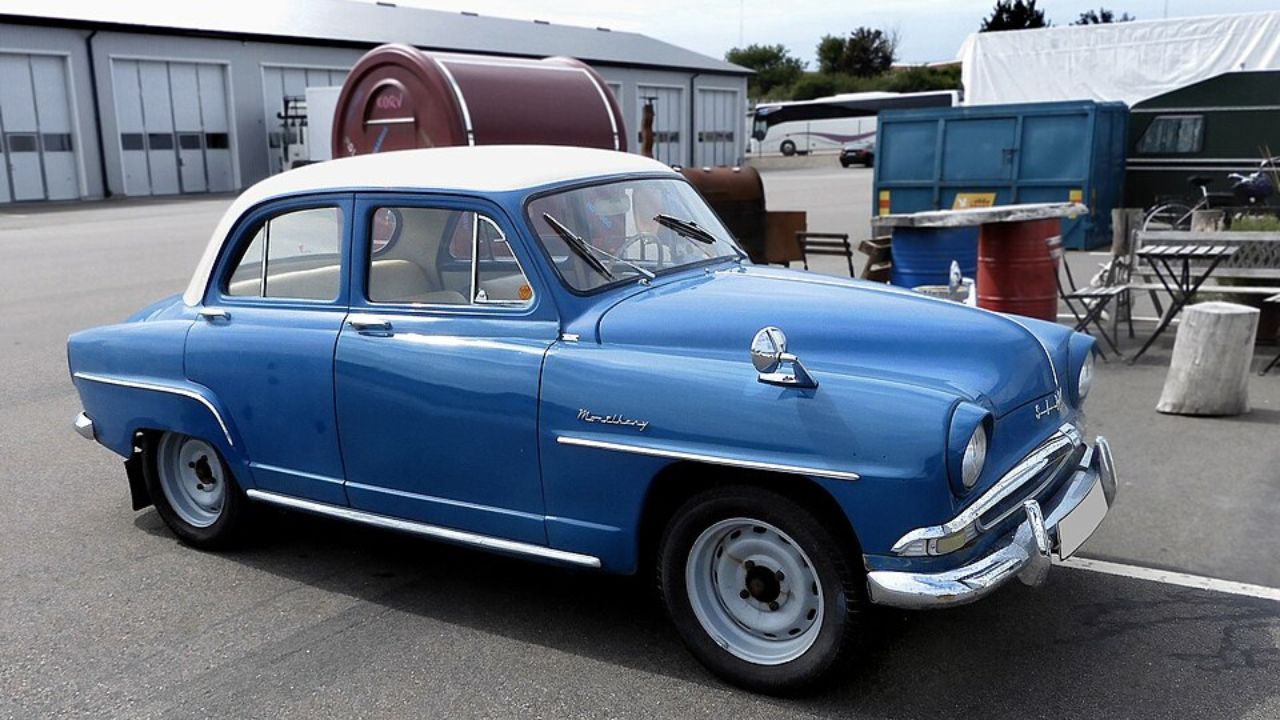
You notice the 1957 Simca Aronde only after it has slipped past you, compact and unshowy, with a hint of French flair in its roofline. It never shouted for attention in the way a big American finned sedan did, yet it quietly converted buyers who wanted something modern, efficient and just a little bit stylish. To understand how it did that, you have to look at how Simca positioned the Aronde as a practical car first, then layered in design, variants and record runs that made owners feel they were getting more than basic transport.
The swallow that arrived at the right moment
You start with the name. Taking its avian name from the French word for swallow, the Aronde signaled lightness and agility at a time when many family cars still felt like shrunken trucks. That branding matched a broader strategy: Simca wanted you to see the Aronde as a fresh break from prewar designs, a car that looked contemporary without scaring conservative buyers. Early on, Production quickly topped 100,000 vehicles, proof that the formula resonated with drivers who wanted something new but not radical.
That success did not come from a single lucky model year. Simca had already been building momentum, and by the early 1950s Production jumped to 50.000 Simca cars, with the Simca Aronde making numerous attacks on long distance records that had stood for years. Those record runs were not about turning the Aronde into a racing idol, they were about reassuring you that this modest family car could endure serious mileage, a quiet confidence play that fit the brand’s understated image.
Breaking from Fiat without breaking the bank
By 1957, the Aronde had become more than just another small sedan, it was the first Simca model that was not Fiat based, and that mattered if you were watching the European industry evolve. The company had grown up building licensed Fiats, so when The Aronde arrived as a clean sheet design, it signaled that Simca trusted its own engineering. That independence is part of why the 1957 Simca Aronde Plein Ciel could be marketed as a distinct, slightly aspirational coupe while still sharing the same basic platform, a move that kept costs in check for you as a buyer while giving the brand room to experiment. Contemporary enthusiasts still describe the Simca Aronde Plein as a Rare model, precisely because it sits at that crossroads of mainstream underpinnings and boutique styling.
Under the skin, the Aronde stayed deliberately modest. Owners and historians note that They are rather easy and cheap to buy and to maintain, since they do not have the cult status of Citroens for instance, and that lack of cult pressure started in period. You were buying a rational car, not a fashion statement, and Simca leaned into that by keeping the mechanical package straightforward and serviceable. The Aronde’s quiet break from Fiat, combined with its sensible running costs, made it an easy recommendation from neighbors and mechanics, the kind of word of mouth that sells cars without big advertising budgets.
Design that whispered, not shouted
Where the Aronde surprised you was in the way it looked and felt once you were up close. The basic three box sedan was clean and modern, but the 1957 Simca Aronde Plein Ciel took that foundation and wrapped it in a low roof, pillarless side glass and a gently curved rear deck that felt more Riviera than commuter route. Period photos and modern test drives of the Plein Ciel and its sister Océane describe how the smallish four is torquey and eager to rev, and how drivers had no trouble keeping up with Nashville traffic, even with The Weekend’s manual drum brakes reminding you of the era’s limits. That mix of modest performance and elegant lines is why the Océane and coupe versions still feel usable rather than fragile.
Simca understood that the Plein Ciel was not perfect. Contemporary assessments concede that it was slow and expensive, but most buyers did not mind, and Simca was aware of its shortcomings and tried to redress the balance with careful detailing and a sense of occasion. Surviving examples show tight panel gaps and brightwork that would not embarrass more prestigious brands, which is why modern writers still praise how well the Simca coupe is built. You were not buying raw speed, you were buying a car that made everyday trips feel a little more special, and that quiet emotional appeal helped the Aronde win buyers who might otherwise have drifted to more obvious status symbols.
Variants that followed your life, not fashion
Another reason the Aronde slipped so easily into people’s lives is that it came in shapes that matched how you actually used a car. Beyond the sedans and coupes, Simca offered wagons and utility versions that turned the same basic package into a family hauler or small business workhorse. In Australia, Chrysler Aust introduced the 5 door Simca Aronde Station Wagon (P60) in late 1961, marketing the wagon as a unique offering in its class and extending the Aronde story well beyond its French roots. That Simca Aronde Station carried the same mechanical simplicity into a more practical body, so you could load it with kids or cargo without feeling you had sacrificed style entirely.
The Aronde’s reach shows up in unexpected places. A large collection of historic automobiles at the Reunification Palace in Ho Chi Minh City, in the heart of Saigon, includes Simca models that once served official duties when the building was the Presidenti residence. That presence, documented in tours of the Reunification Palace, hints at how the Aronde and its relatives were trusted as official transport in a politically sensitive era. When a car quietly serves in roles like that, from French suburbs to Southeast Asian government fleets, it builds a reputation for reliability that filters back to private buyers who just want something that will start every morning.
From forgotten family car to connoisseur’s choice
Today, you are more likely to see a 1957 Simca Aronde Plein Ciel at a specialist gathering than in daily traffic, and that shift has changed how people talk about the car. Enthusiasts now group it with other mid century European designs that blended style and practicality, the kind of cars that sit a few rows away from a Facel Vega at a mixed marque auction. At one recent sale, a 1958 Facel Vega FV3B appeared as Lot number 178, one of just 90 FV3Bs built, a reminder that French style can command serious money when it is rare enough. The Aronde will never reach those values, but it benefits from sharing the same design language, especially in Plein Ciel form, which lets you tap into that world without paying Facel prices.
Among collectors, the Aronde’s lack of cult status is now a selling point. Because They are rather easy and cheap to buy and to maintain, you can treat one as a usable classic instead of a fragile museum piece, and that practicality is part of why interest in the model has been quietly rising. Modern write ups of the Plein Ciel emphasize that only a few hundred were built, which feels about right when you look at how rarely they appear for sale. When you combine that scarcity with the car’s history as the first Simca not tied to Fiat, its record setting background and its service in places as varied as French boulevards and Saigon’s government quarter, you start to see how the 1957 Simca Aronde won buyers quietly in its day and is now winning over a new generation of drivers who appreciate understatement.
More from Fast Lane Only


Leave a Reply