
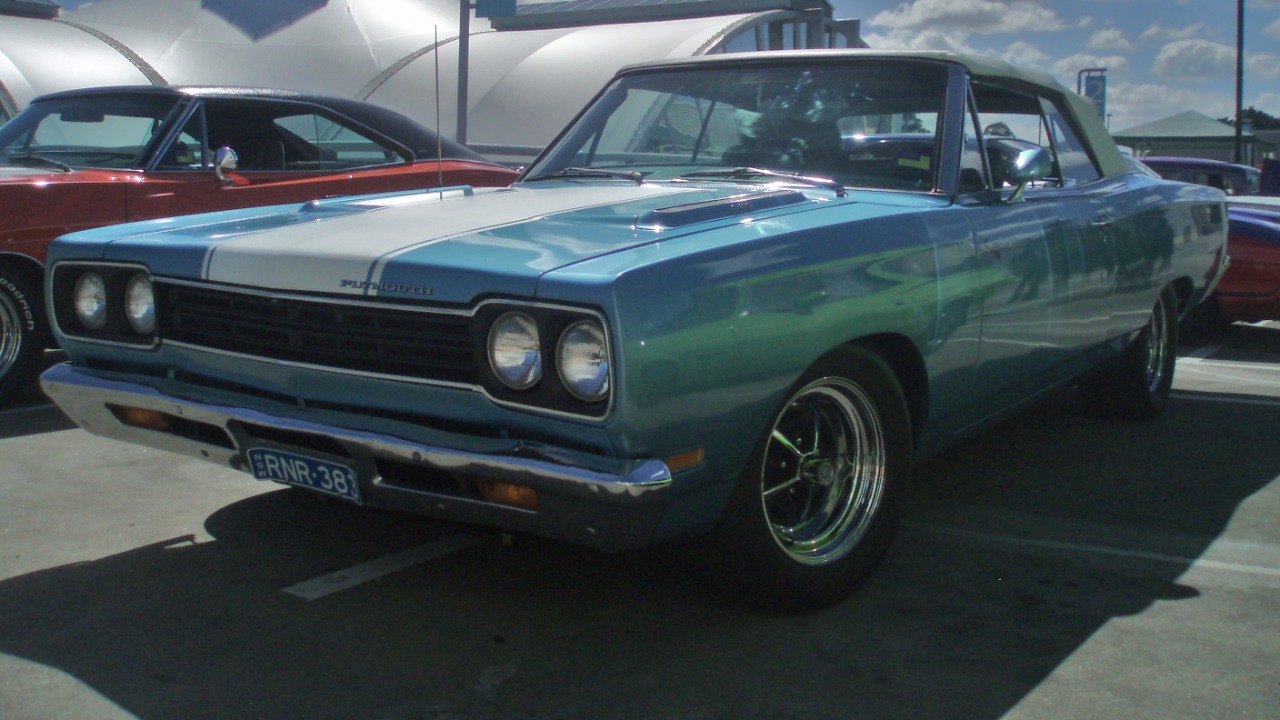
You meet plenty of classic muscle cars that look the part but feel distant from their original purpose. The 1968 Plymouth Road Runner is different. It earned its reputation by stripping away pretense, pouring every saved dollar into speed, and turning that formula into a cultural touchstone that still feels raw and relevant when you slide behind the wheel today.
If you are trying to understand why this particular Plymouth became legend, you have to look at how it blended bare‑bones hardware, cartoon humor, and real‑world affordability into one package. The result was a car that spoke directly to young drivers who cared more about quarter miles than chrome, and that straight‑talk attitude is exactly what keeps its name alive now.
The no‑frills idea that flipped the muscle‑car script
When you trace the Road Runner story back to its roots, you see a deliberate reaction against the creeping luxury that was inflating muscle‑car prices. The Plymouth Road Runner arrived as a car that you, as a young buyer, could actually afford, because Plymouth kept the focus on speed and simplicity. Basic interiors, bench seats, and almost no luxury features kept costs down, while the chassis and driveline were built to take abuse. Reports on the 1968 Plymouth Road describe it as a no‑frills machine that helped reset expectations for what an honest performance car should be.
That philosophy was not an accident. Plymouth intentionally kept the Road Runner relatively spartan in standard trim so you were paying for the parts that mattered, not padded dashboards or power accessories. Enthusiast histories describe the Plymouth Road Runner as the original muscle car built for speed and simplicity, especially in its first 68 model year. That clarity of purpose is a big part of why the car’s reputation has only grown with time.
Big‑block power and quarter‑mile credibility
Of course, attitude alone would not have made the Road Runner a legend in your eyes. Under the hood, Plymouth backed up the talk with serious hardware. Standard power came from a 383-cubic-inch V8 with a four‑barrel carburetor, tuned specifically for strong low‑end torque and durability. That engine gave you real muscle‑car performance right out of the box, and buyers who wanted even more could step up to the famous 426 HEMI. Accounts of the Road Runner with the 426 describe it as one of the fastest cars of its time, capable of eye‑opening quarter‑mile runs that cemented its status among muscle‑car enthusiasts and collectors.
What made that powertrain package so effective for you as a driver was the way Plymouth matched it with heavy‑duty components. Period descriptions of the 1968 Plymouth Road highlight performance‑focused upgrades like stronger suspension pieces and driveline parts that could survive repeated hard launches. In modern video reviews, you can still watch Moran hustle a surviving Plymouth Roadrunner, with thanks to owner Ron, and see how that combination of torque, gearing, and simplicity translates into a car that feels brutally quick yet surprisingly approachable. That real‑world performance is a core reason the model’s reputation has outlived many of its contemporaries.
Styling, sound, and the personality that stuck
Even if you are not a spec‑sheet person, the Road Runner’s look and sound make an instant impression. Visually, the 68 Road Runner stood out with bold, aggressive styling that favored clean lines over chrome clutter. Plymouth gave it a distinctive look with a strong hood, purposeful stance, and graphics that nodded to the cartoon character without overwhelming the sheet metal. That balance of toughness and humor helped turn the car into a classic among collectors and enthusiasts who wanted something that did not take itself too seriously.
The personality extended beyond paint and decals. Owners and restorers often talk about the way a properly tuned car sounds when you let the engine rev and breathe, and one high‑profile build nicknamed the Green Goblin shows how a restored Plymouth can still turn heads. Reports on that car note that Plymouth originally planned to build only 20,000 units in 1968 but ended up selling 45,000 Road Runners, a sign that the market responded to that mix of sound, stance, and attitude far more enthusiastically than the company expected.
A Mopar icon built for real drivers
Part of what you feel when you encounter a 1968 car today is its connection to a broader Mopar culture that prizes authenticity. Enthusiast groups describe the 1968 Plymouth Road as a no‑nonsense muscle car legend built for pure, unapologetic performance, a Mopar icon that stands for muscle‑car purity and attitude. That reputation is reinforced by the way the Plymouth Road Runner is still celebrated in clubs and online communities that focus on Plymouth power and classic American muscle.
That culture is not just nostalgia. When you look at modern buyer guides, you see that the Plymouth Road still offers surprising value. One analysis notes that Really Costs Less a Brand New Miata in some cases, which means you can step into a piece of 1960s performance history without paying the kind of money that other icons demand. That mix of cultural cachet and relative attainability keeps the car in active circulation rather than locked away as a museum piece.
From budget bruiser to enduring classic
Over time, the Road Runner’s original mission as a budget bruiser has evolved into something broader. Histories of the 1968 Plymouth Road describe it as a defining car in the story of the American muscle era, a model that reminded the industry that performance did not have to be wrapped in luxury. That clarity helped the Plymouth Road Runner line earn major recognition, including industry awards that underscored how effectively it captured the spirit of its time.
Today, when you see a well‑kept example at a show or in a video, you are looking at more than just a fast car from the past. You are seeing a machine that combined a Standard big‑block, cartoon‑inspired branding, and a stripped‑down cabin into something that felt honest in its own era and still feels refreshingly direct in yours. That is why enthusiasts keep trading stories about the Visually striking Plymouth, and why the Plymouth Road Runner still feels like a car built for you, not for a marketing department. In a world of increasingly complex performance machines, that straightforward character is exactly what keeps its reputation so strong.
More from Fast Lane Only

Leave a Reply