
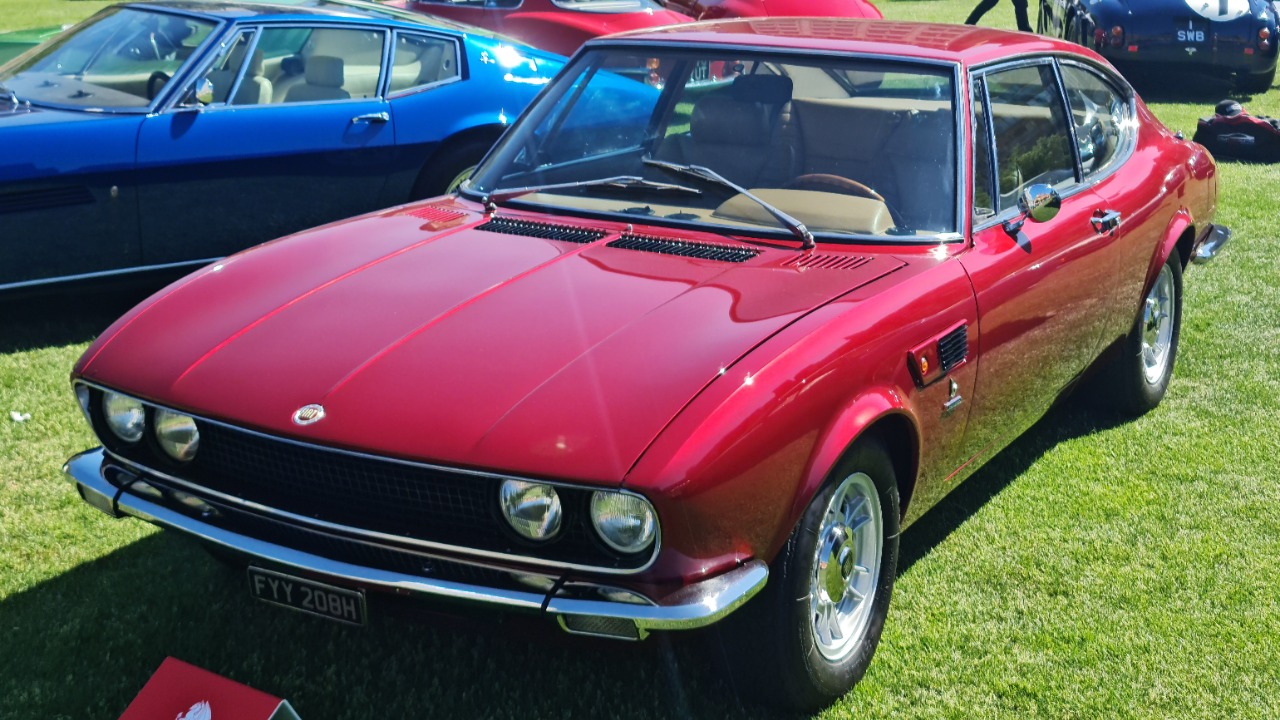
The 1969 Fiat Dino did something few cars have ever managed: it let you enjoy a Ferrari-bred engine in a car wearing a Fiat badge, without feeling like you were getting a diluted experience. You were buying into a clever industrial alliance, where racing regulations, production quotas and Italian design houses all pulled in the same direction. To understand how this car blended brands so seamlessly, you need to look at the rules that forced Ferrari’s hand, the way Fiat scaled up the dream, and how the Spider and Coupé each expressed a different side of the same shared DNA.
Seen from today, the Fiat Dino is more than a curiosity. It is a case study in how two manufacturers with very different images can collaborate without losing their identities, and how a single engine program can spawn both a Ferrari Dino and a Fiat Dino that feel distinct yet deeply related.
Racing rules that pushed Ferrari toward Fiat
If you trace the Fiat Dino back to its origin, you arrive not in a styling studio but in the rulebook for Formula 2. To compete properly, Ferrari needed a new V6 that could be homologated for racing, which meant building at least 500 road-going engines in a short window. For a small manufacturer like Ferrari, that volume was a serious stretch, especially while it was also focused on its core GT models and competition cars.
Rather than walk away from the series, Ferrari turned to a partner with the factories and dealer network to make the numbers work. Since a small manufacturer like Ferrari did not possess the production capacity to reach such quotas, an agreement was signed with Fiat so the new V6 could be installed in a grand touring car that would sell in meaningful numbers. That decision set the stage for the Fiat Dino, a car conceived as much in the paddock as on the open road.
Dino, the name that linked road and race
The badge on the nose carried its own story. The Dino name honored Enzo Ferrari’s son, Alfredo “Dino” Ferrari, who had championed lightweight V6 engines before his early death. When you see the script on the tail of a Fiat Dino, you are looking at a tribute that started inside Ferrari and then spread outward. The Fiat Dino originated from an agreement between Ferrari and Fiat that was prompted by competition requirements and named after Enzo Ferrari’s son, which is why the same family name appears on both the Fiat and Ferrari versions.
That shared branding could easily have caused confusion, so Ferrari created the Dino marque as a way to separate its V6 cars from the traditional V12 flagships while still keeping them in the family. The idea was that Dino would sit slightly apart from Ferrari’s main line, even as it used the same core engine design. When Fiat adopted the Dino name for its own models, it plugged directly into that story, something you can see in the way enthusiasts still discuss the Dino marque as a bridge between the two brands rather than a simple sub-label.
How Fiat and Ferrari split the work
Once the deal was struck, the division of labor was surprisingly clear. Ferrari focused on the engine’s concept and racing application, while Fiat took responsibility for designing and manufacturing the road cars that would carry it. Although Ferrari needed Fiat’s assistance, the Dino lineup was completely designed and manufactured by Fiat, with Bertone handling the Coupé and Pininfarina working on the Spider, a structure that let each company play to its strengths while keeping the Dino engine at the center.
Underneath, the Fiat Dino used a front‑engine, rear‑drive layout that suited grand touring duty, rather than copying the mid‑engine layout of some Ferrari Dinos. According to period production data, the Spider and coupé bodies were produced respectively by Pininfarina and Bertone, and 2.0‑litre and early 2.4-litre cars were assembled by different contractors before final assembly moved in‑house. That industrial choreography is part of why the Fiat Dino could exist at all: it was a networked project, not a single‑factory effort.
Spider vs Coupé: two bodies, one heart
From the outside, the 1969 Fiat Dino looked like two very different cars, depending on whether you chose the open Spider or the more formal Coupé. The Spider arrived first, styled by Pininfarina with flowing lines and a compact footprint that made the most of the V6’s revvy character. Official heritage records describe how the Fiat Dino Spider became the glamorous face of the project, its proportions deliberately echoing contemporary Ferraris while still reading as a Fiat in the showroom.
About a year after the Spider, the Fiat Dino Coupé with Bertone body made its debut, stretching the wheelbase and adding a more angular, practical shape that could carry four adults in comfort. Another year later, the cast iron Dino engine grew in capacity, delivering 132 kW/180 hp from 2.4 liters of displacement in the updated Spider and Coupé. That evolution meant you could choose between two body styles and two engine sizes, all tied together by the same Ferrari‑related V6 soundtrack.
Why enthusiasts call it “a Ferrari cleverly disguised as a Fiat”
Spend time around Dino owners and you quickly hear a recurring phrase: a Ferrari cleverly disguised as a Fiat. One enthusiast group describes the 1969 FIAT DINO SPIDER (PININFARINA) in exactly those terms, noting that when introduced in 1966, the DINO model became the bridge between the two brands and that the SPIDER by PININFARINA carried clear Ferrari cues. That is not just romantic language; it reflects the reality that the engine’s character and the car’s driving position feel much closer to Maranello than to a typical family Fiat of the era.
At the same time, the Fiat side of the equation is not just a badge. The chassis tuning, cabin layout and pricing strategy all came from Turin, which is why the Fiat Dino could be used as a daily driver in a way few Ferraris of the period could match. Owners and specialists who work on these cars point out that the Fiat Dino combines accessible ergonomics with an engine that rewards being revved, a blend that helps explain its growing appeal among collectors who want something usable as well as exotic.
More from Fast Lane Only

Leave a Reply