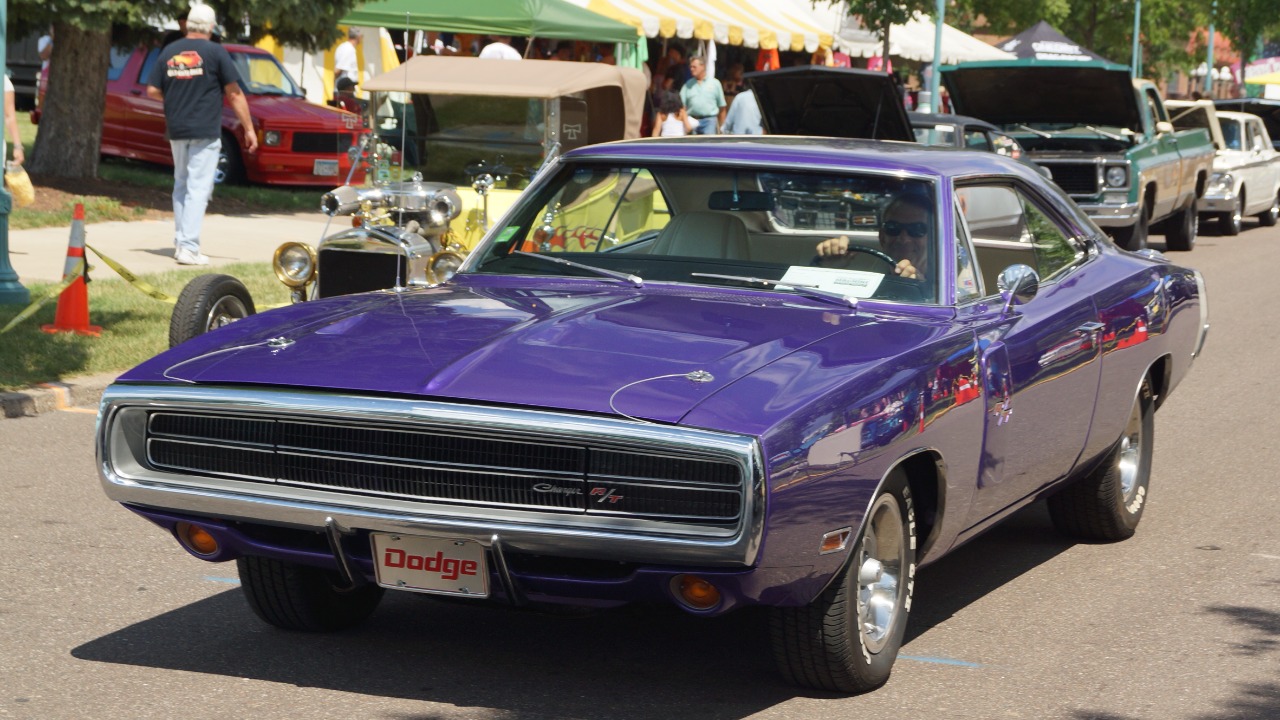
The 1970 Dodge Charger R/T did not just join the muscle car wars, it escalated them, turning raw displacement and unapologetic styling into a kind of rolling intimidation. In an era crowded with big-block rivals, this Charger carved out a reputation for brute-force performance that still shapes how enthusiasts talk about Mopar power today. I see that legacy every time the conversation turns to what a true American muscle car should feel, sound, and look like.
The look of a street brawler
When I picture brute-force performance, I start with the way a car looks standing still, and the 1970 Dodge Charger R/T had the stance of a street brawler waiting for the light to turn green. Its long hood, short deck, and deep-set grille gave it a predatory presence that made even rival muscle cars look cautious. Contemporary enthusiasts still describe the 1970 Dodge Hemi Charger R/T as one of the most feared machines of its time, a car whose bold, aggressive styling matched the violence promised under the hood, a reputation that lives on in how owners talk about the Dodge Hemi Charger today.
What set this Charger apart visually was not subtlety but a kind of sculpted menace. The “Coke bottle” curves over the rear quarters, the recessed tail panel, and the muscular fenders made the car look like it was flexing even at idle. Later reflections on the 1970 Dodge Charger R/T emphasize how that unmistakable profile blended brute force with a design you could recognize from a block away, a mix that still leads fans to call the Dodge Charger one of the most iconic shapes in American muscle.
Big-block power without apology

Styling might grab your eye, but the 1970 Dodge Charger R/T earned its legend with what sat between the fenders. At its core, this was a big-block car built to turn fuel into noise and forward motion with minimal diplomacy. The R/T package centered on the 440 Magnum V8, and that single number, 440, still carries weight in Mopar circles as shorthand for effortless torque and highway-stretching pulls.
What I find striking is how consistently enthusiasts describe this engine as the heart of Mopar performance. Accounts of the 1970 Dodge Charger R/T underline that it was Powered by a standard 440 big-block that turned the car into a kind of rolling benchmark for straight-line speed. Later retrospectives echo the same point, describing the 1970 Dodge Charger R/T as a powerhouse of American muscle, Powered by the 440 Magnum and celebrated alongside the 426 HEMI as a defining expression of Mopar big-block muscle.
How Mopar turned aggression into identity
What makes the 1970 Dodge Charger R/T so important, in my view, is how it helped crystallize Mopar’s identity as the brand of unapologetic power. The R/T badge itself, short for “Road/Track,” signaled that this was not just a cosmetic package but a performance promise. Enthusiast histories of the 1970 Dodge Charger R/T 440 Magnum describe how the car roared to life as a bold, aggressive muscle car that defined Mopar performance, Powered by that same 440 big-block and engineered to back up its visual swagger with real speed.
Over time, that combination of styling and power turned the Charger into a kind of shorthand for the whole Mopar attitude. Later reflections on the 1970 Dodge Charger R/T describe it as a bold, aggressive American icon that defined Mopar muscle, Powered by a standard 440 and revered by car enthusiasts and collectors worldwide. When I look at how modern Dodge products still lean on that heritage, from marketing language to retro-inspired styling cues, it is clear that the 1970 Charger R/T did more than win stoplight races, it gave the brand a personality that still resonates.
Design details that made the power believable
Brute-force performance only feels authentic when the details back it up, and the 1970 Dodge Charger R/T delivered those in ways that still stand out. The model year introduced refinements that sharpened the car’s already aggressive shape, from the sculpted body sides to the way the rear quarters flared over the wheels. Later enthusiast write-ups highlight how this Charger’s Coke bottle design and muscular proportions helped cement its status as a MuscleCarLegend, a point often made when fans revisit the 1970 Dodge Charger and its place in American muscle history.
Inside and out, the car’s details reinforced the sense that this was a serious performance machine. The hood scoops, the R/T striping, and the way the cabin wrapped around the driver all contributed to a feeling of purpose that matched the numbers on the spec sheet. Enthusiasts who celebrate the 1970 Dodge Charger R/T as an iconic American muscle car often point to how its bold, aggressive styling, Powered by the 440 Magnum and framed by that distinctive profile, turned the Charger into a lasting symbol of American muscle rather than just another fast car from a crowded era.
Why the 1970 Charger R/T still sets the bar
More than half a century later, I still see the 1970 Dodge Charger R/T used as a measuring stick whenever enthusiasts debate what counts as “real” muscle. Its blend of big-block torque, intimidating styling, and Mopar attitude created a template that modern performance cars keep trying to recapture. Contemporary fans describe the 1970 Dodge Charger R/T as a bold, aggressive muscle car that defined its era, a view that shows up again and again when people talk about the 1970 Dodge Charger R/T as one of the most feared cars of its time.
What keeps that reputation alive is not nostalgia alone but the way the car still feels coherent in its purpose. The 1970 Dodge Charger R/T is often described as an iconic American muscle car that blends brute force with unmistakable style, a mix that continues to inspire restorations, restomods, and modern reinterpretations of the Dodge Charger nameplate. When I look at that legacy, it is clear that the 1970 R/T did more than go fast in a straight line, it defined what brute-force performance should look and feel like, and it still sets the bar for every muscle car that follows.