
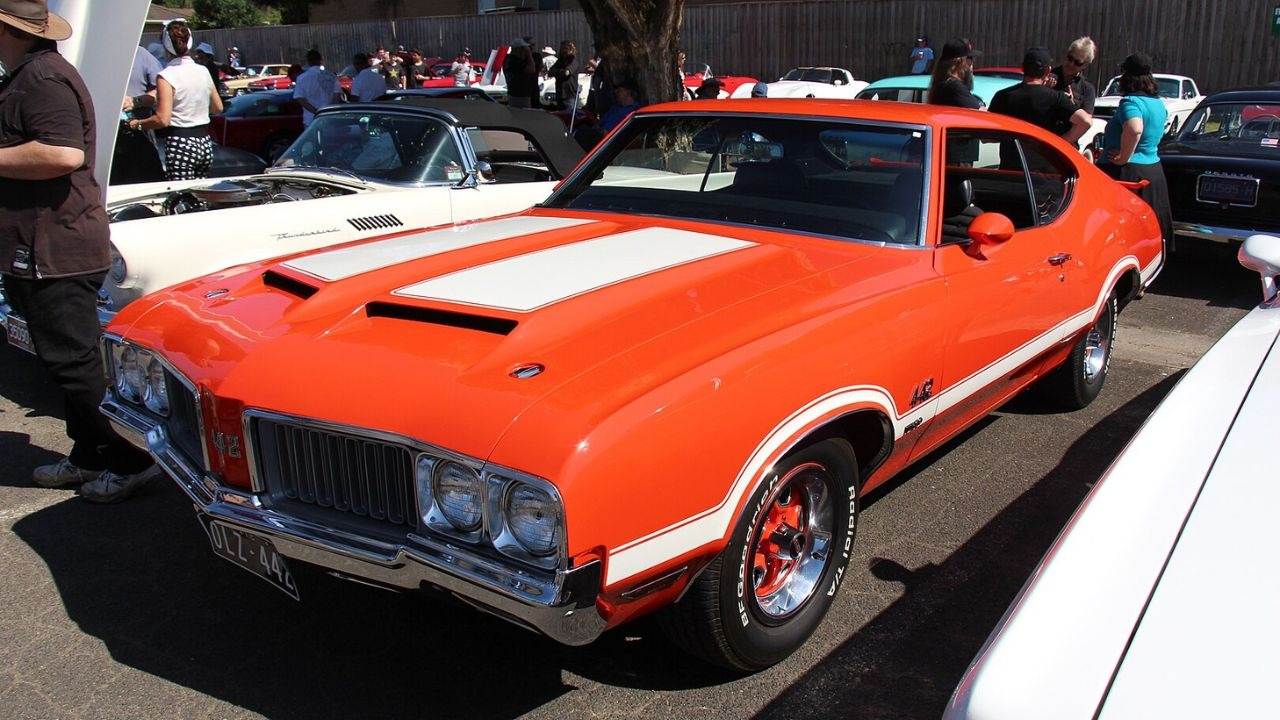
The 1970 Oldsmobile 442 W-30 did not earn its reputation in glossy brochures or on a drag strip alone. It became a benchmark because its hardware translated directly into the kind of real-world performance that mattered to drivers, from stoplight sprints to long highway pulls. When I look at what Oldsmobile built that year, I see a car engineered so its spec sheet advantages actually showed up on the street.
That is the real story behind this particular 442: a package of big-block power, clever airflow, and carefully chosen components that worked together instead of just padding an options list. The W-30 was not about bragging rights in isolation, it was about how quickly and consistently an owner could turn the key, mash the throttle, and feel the car deliver exactly what its numbers promised.
The moment Oldsmobile was finally unleashed
By 1970, the muscle car wars had already escalated, but General Motors had been holding its divisions back with a corporate cap on engine displacement. When that limit disappeared, Oldsmobile did not waste a second. The brand made the standard engine for the 442 the highly awaited 455-cid V8, instantly changing the character of the car from a strong intermediate to a full-bore torque monster.
That decision mattered because it meant the W-30 package started from a much higher baseline. Instead of treating the big engine as a rare, exotic upgrade, Oldsmobile built the 442 around it, then layered on the W-30 hardware to sharpen response and durability. In practical terms, a buyer walking into a showroom was not negotiating for some fragile race motor, they were choosing how far they wanted to push a robust 455-cid foundation that was already baked into the car’s identity.
How the W-30 hardware turned power into usable speed
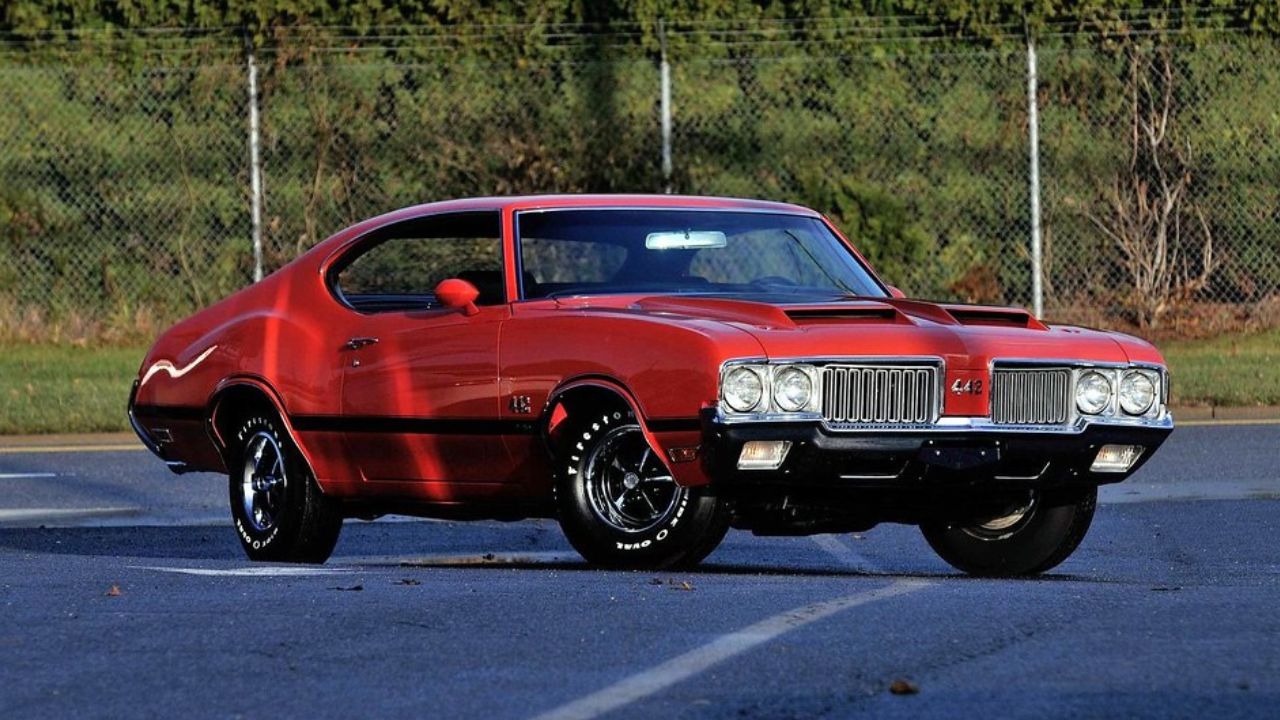
Plenty of muscle cars of the era had big displacement, but the W-30 package focused on getting that power into the real world with as little waste as possible. A key piece was the fiberglass hood, identified as option W25, which came with functional air scoops and low-restriction ducting that fed cooler, denser air directly to the engine. According to period specifications, this high-performance W-30 package was not cosmetic; it was a deliberate airflow solution that helped the 455 breathe better under real driving conditions.
That attention to intake design meant the car could repeat its performance run after run, even in the kind of heat and traffic that would choke a less sophisticated setup. I see that as the core of the W-30’s real-world dominance: it did not just spike on a perfect day at the track, it kept delivering strong pulls on imperfect days, when the air was hot, the engine bay was heat-soaked, and the driver still wanted instant response when they rolled into the throttle.
Why the 442 W-30 felt faster than its rivals
On paper, the 442 W-30 lived in a crowded neighborhood of big-block intermediates, but the way it delivered its power made it feel different from behind the wheel. The 455-cid engine produced a broad plateau of torque that arrived early and stayed with the driver, so the car surged forward with minimal waiting for revs to build. In everyday use, that meant a quick pass on a two-lane road or a short on-ramp felt almost effortless, because the engine was already in its sweet spot the moment the driver tipped into the throttle.
That character contrasted with some rivals that chased peak horsepower at the top of the tach but felt lazier in the midrange. The Oldsmobile approach, especially in W-30 trim, favored strong, repeatable acceleration in the rev band people actually used on the street. When I think about why owners still talk about these cars with such affection, it is that sensation of immediate, confident thrust that stands out more than any single published quarter-mile number.
Street credibility built on consistency, not just hype
Real-world dominance is as much about reliability as raw speed, and the 1970 442 W-30 earned its reputation by showing up every day ready to perform. The combination of the 455-cid block, the functional W-30 induction, and the supporting hardware gave owners a car that could handle repeated hard launches without feeling fragile. That consistency built a kind of quiet confidence, the sense that the car would back up its aggressive styling whenever someone challenged it at a light or on a back road.
In that era, word of mouth traveled quickly among enthusiasts, and a car that disappointed in the wild would have been exposed just as fast. Instead, the W-30 package became shorthand for a 442 that could be counted on to deliver, not only when it was freshly tuned, but after months of daily driving, commutes, and weekend abuse. To me, that is the real measure of its success: it turned marketing promises into a lived experience that owners could demonstrate on demand.
Why the 1970 W-30 still matters today
Looking back from today’s world of electronically managed performance, the 1970 Oldsmobile 442 W-30 stands out as a mechanical solution to a problem modern cars often solve with software. Oldsmobile used displacement, airflow, and careful parts selection to create a package that felt cohesive and predictable in the hands of ordinary drivers. The fact that the 442 name itself encoded “4-barrel, 4-speed, dual exhaust” gave the car a built-in performance identity that the W-30 package then elevated into something truly formidable.
That legacy still resonates because it shows how a manufacturer can turn a set of engineering decisions into a car that dominates not just in isolated tests but in the messy, variable conditions of real roads. When I think about the 1970 442 W-30, I do not just picture it lined up at a drag strip, I imagine it pulling hard onto a highway, idling in traffic without complaint, and then, with a simple stab of the throttle, reminding everyone around it why Oldsmobile chose that moment to unleash its full potential.


Leave a Reply