
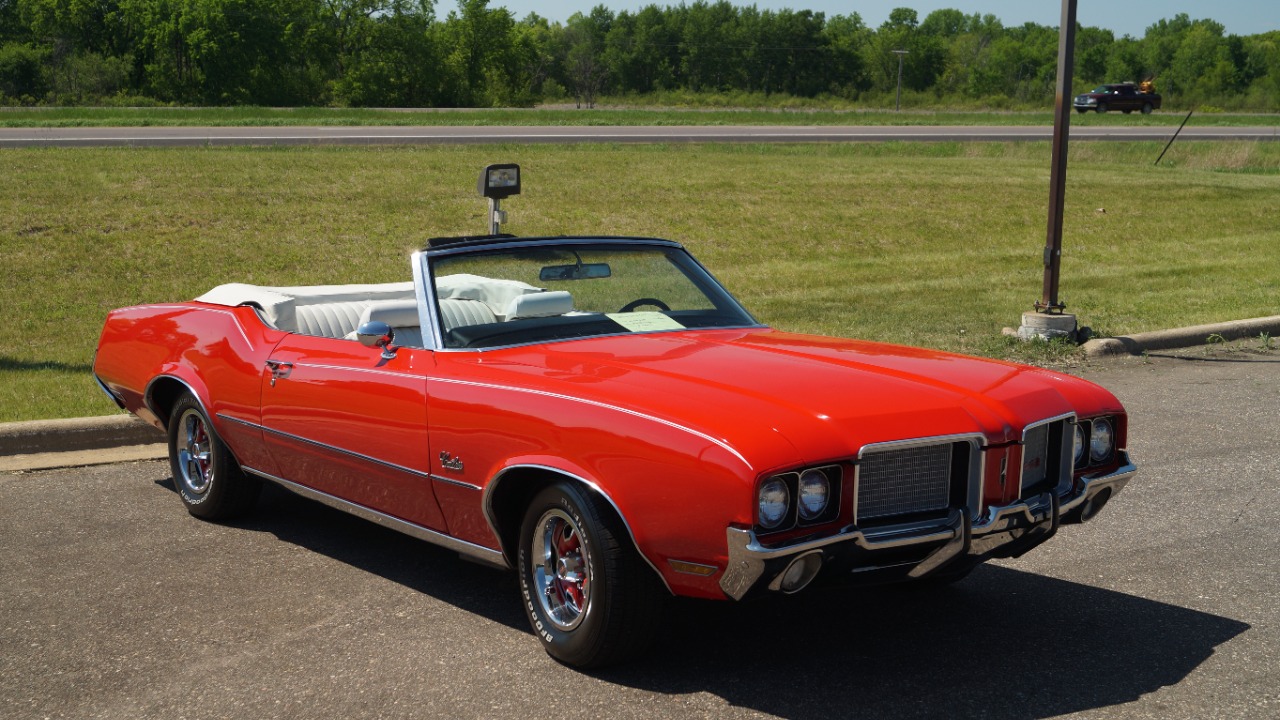
The 1972 Oldsmobile Cutlass arrived just as the classic muscle era was running out of road, yet it managed to keep serious performance alive without shouting about it. Instead of wild graphics and dragstrip bravado, it wrapped V-8 power and real hardware in a clean, almost understated body that fit right in at the office parking lot. I see that quiet confidence as the secret to how this car carried the muscle-car torch into a tougher, more regulated decade.
By the early seventies, insurance companies, emissions rules, and rising fuel costs were all squeezing the life out of big-block street bruisers. The Cutlass did not fight that tide head on, it flowed with it, shifting from headline-grabbing 4-4-2 models to a broader lineup of coupes and convertibles that still hid strong engines and clever option packages under their formal sheetmetal. That balance of subtlety and strength is what makes the 1972 car such a fascinating pivot point today.
The year muscle went undercover
By 1972, the muscle-car craze had largely burned itself out, the victim of higher premiums, new regulations, and a changing sense of what a daily driver should be. Instead of canceling performance outright, Oldsmobile let it slip into the background, turning the once-rowdy 4-4-2 into an option rather than a standalone model. The 4-4-2 name reverted to an appearance and handling package, identified as option code W-29, that could be added to the Cutlass Holiday coupe and other Cutlass body styles, while it was not available on certain Cutlass Supreme notchback hardtops, which signaled how the brand was repositioning its performance halo inside a broader range of comfortable personal cars, as detailed in the history of the Cutlass Holiday.
That shift was not just about marketing, it reflected a real change in how the hardware was packaged. The 1972 Oldsmobile 4-4-2 ceased to be its own separate model line and instead became an appearance and handling package on the Cutlas, which allowed Oldsmobile to keep the look and feel of a muscle car in the catalog while focusing its volume on more broadly appealing trims as Cutlass sales boomed. In practice, that meant a buyer could drive home a car that looked ready for the boulevard but was insured and optioned like a sensible mid-size, a strategy that helped the nameplate stay strong in the sales race according to period valuations of the Oldsmobile Cutlas.
Small-block power with big-block attitude
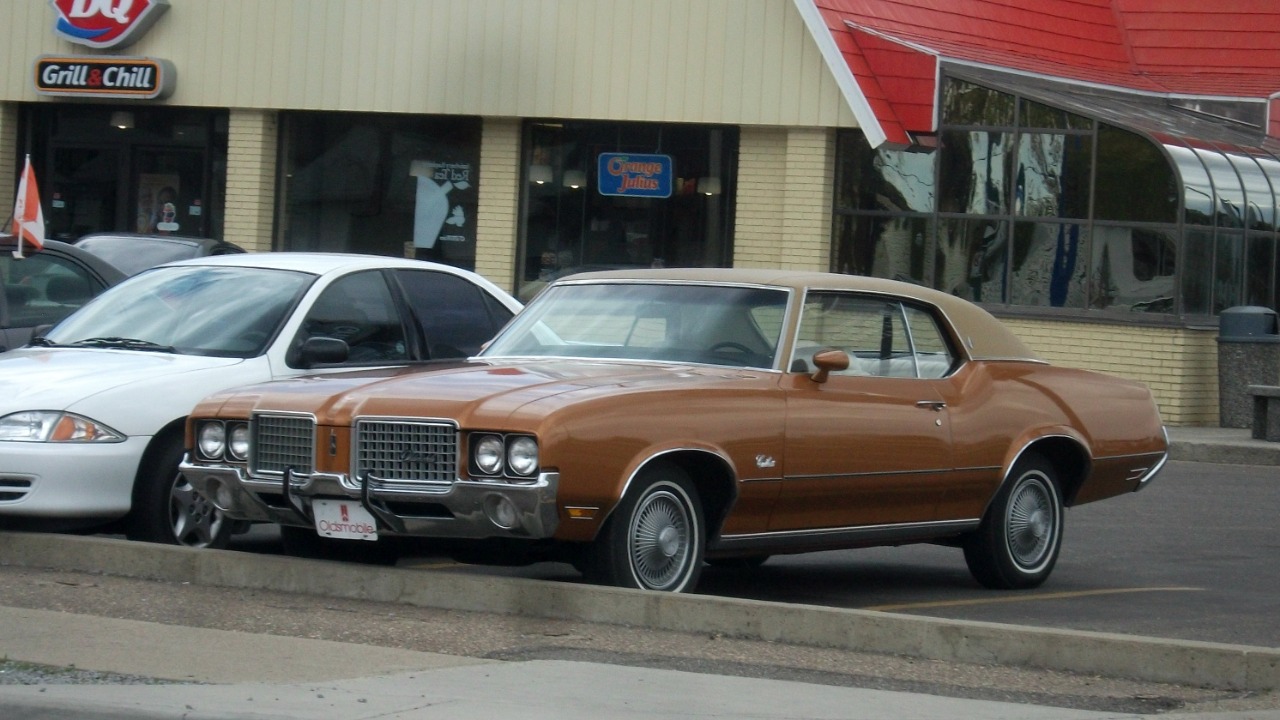
Under the hood, the 1972 Cutlass leaned heavily on small-block V-8s that delivered real-world performance without the insurance red flags of the wildest big-blocks. Two versions of the 350 cubic inch V-8 were available in the 1972 Cutlass, and the L34 specification with a four-barrel carburetor gave the car the kind of midrange punch that made passing effortless while still fitting the era’s tightening emissions and cost constraints, a balance that comes through clearly in period coverage of the Two small-block options.
Even in more modest trims, the car did not feel like a compromise. One well-documented example is Powered by an Oldsmobile 350 C.I. V8 engine and breathing through a 2-barrel carburetor, which shows how a relatively simple setup could still deliver smooth torque and relaxed cruising while pairing with an automatic transmission for seamless and smooth shifting, a combination that made the car as easy to live with as it was satisfying to drive, as seen in the detailed description of that Powered Oldsmobile.
The W-30 and the last flashes of classic muscle
For buyers who still wanted a taste of the old days, Oldsmobile kept a serious performance option alive inside the 4-4-2 package. The W-30, which had 300 hp (224 kW) in 1972, was no longer a separate model but a trim and engine combination that signaled the most aggressive setup available, and the L77 “V” code 455 cubic inch engine remained on the order sheet, although it was tied to specific manual transmissions and gearing, as laid out in the technical breakdown of the 300 224 k 455 configuration.
That hardware existed in a very different market climate than the late sixties. By 1972, the muscle-car craze had all but played itself out, the victim of rising insurance and fuel costs, yet Oldsmobile still offered the 4-4-2 W-30 as an option package for V-8 powered Cutlass models, which meant a determined enthusiast could quietly order a car with serious performance potential while the broader lineup shifted toward comfort and style, a dynamic captured in auction notes on the V-8 powered Cutlass models.
Style, comfort, and the Cutlass Supreme’s quiet confidence
While the 4-4-2 name moved into option-package territory, the Cutlass Supreme stepped forward as the face of Oldsmobile’s mid-size success. The Cutlass Supreme even kept T-Tops alive in an era where convertibles were returning to many manufacturers’ options, which showed how the car blended personal-luxury flair with open-air fun at a time when safety and structural concerns were reshaping roof designs, a balance that stands out in the broader history of The Cutlass Supreme Tops.
That mix of style and substance is part of why the 1972 Oldsmobile Cutlass Supreme convertible remains so desirable among collectors today. One notable car was refurbished in the style of a 442, pairing the elegant Supreme body with visual cues and a V8 paired with a three-speed automatic transmission, a combination that underlines how owners and restorers still see the Supreme as a natural canvas for performance-inspired upgrades, as shown in the auction listing for the Oldsmobile Cutlass Supreme.
Partnerships, heritage, and the Cutlass in the muscle family tree
The 1972 Cutlass did not exist in a vacuum, it sat in a lineage shaped by collaborations and corporate politics inside General Motors. Earlier in the muscle era, Rebuffed by GM ( General Motors ) brass when it first pitched a special package for another division, Hurst made a similar offer to Oldsmobile, which did not have to deal with internal resistance in quite the same way and ultimately helped create the Hurst/Olds, a car that shared the Cutlass platform and showed how outside partners could push performance and image in new directions, as chronicled in the story of Rebuffed General Motors Hurst Oldsmobile.
That heritage helps explain why the Cutlass could pivot from loud muscle to quiet strength without losing its identity. Even as later promotional material for newer Cutlass Supreme and Cutlass Calais models leaned into features like new headlamps that are 20% brighter than previous models and playful lines about how You will be able to flash Butler Bilby directly in the eyes in a crowded lot, the underlying formula of blending comfort, technology, and a hint of mischief remained consistent with what the 1972 car had already established, a continuity that shows up in the dealer video featuring You Butler Bilby.

Leave a Reply