
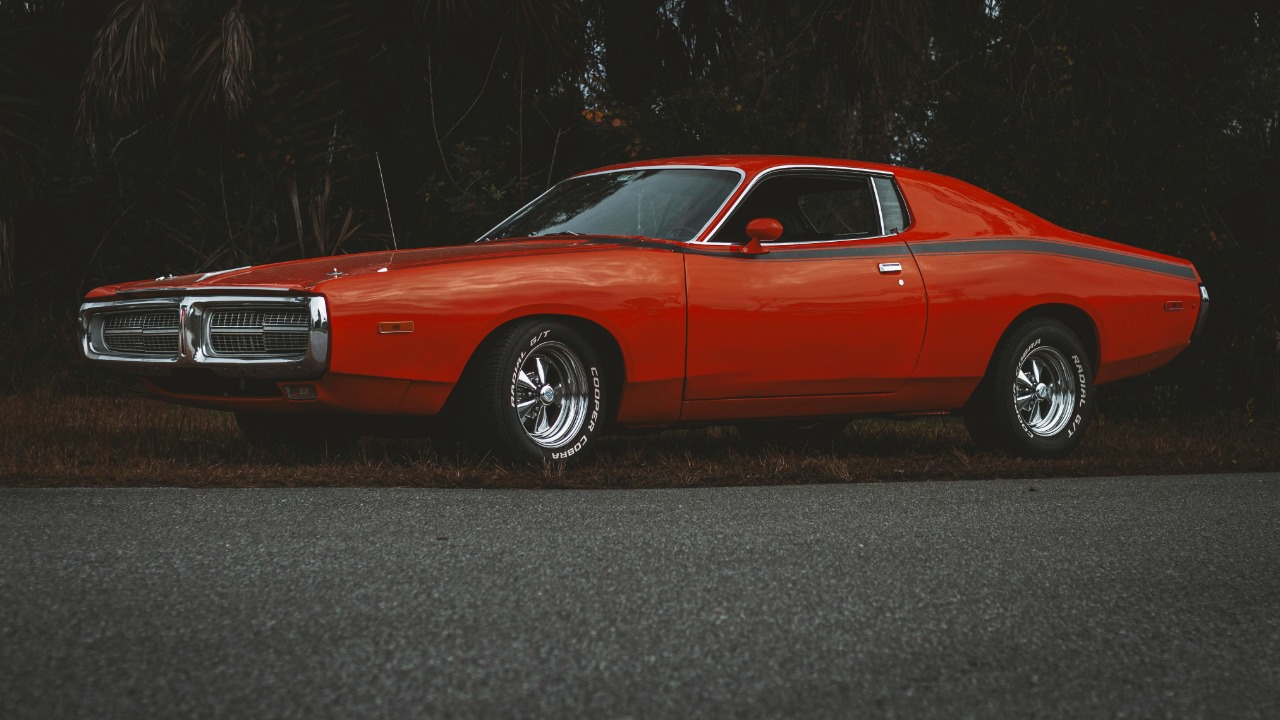
The 1973 Dodge Charger arrived at a moment when American performance cars were being forced to trade brute strength for survival, yet it still managed to look every bit the street bully. Power ratings slipped, regulations piled up, and the muscle era’s wildest days were already in the rearview mirror, but the Charger’s long hood, Coke-bottle hips, and fastback roofline kept its presence intact. I want to unpack how that happened, and why this particular model year still feels muscular even after the numbers softened.
The squeeze on Horsepower before the ’73 Charger
By the time the 1973 Charger rolled into showrooms, the real damage to raw output had already been done in 71 and 72, when compression ratios were cut so engines could live on unleaded fuel and survive tightening emissions rules. Horsepower dropped as compression ratios went down in 71 and 72, a shift that was less about fashion and more about federal pressure and looming fuel concerns that were already reshaping how Detroit engineered its big V8s, as detailed in a discussion of how Horsepower dropped when compression and fuel changed. I see the 1973 Charger not as the moment the music stopped, but as the first model year that had to live fully inside this new rulebook.
At the same time, the broader performance landscape was being rewritten by emissions law, with regulators tightening standards year after year and forcing manufacturers to rethink what a fast car could be. Commentators looking back on that period describe how, by 1972, vehicle emission laws were already getting “tighter and tighter every year,” and how that regulatory squeeze turned the early 1970s into a kind of muscle car culling, a moment some enthusiasts bluntly call a Muscle Car Holocaust. When I look at the 1973 Charger through that lens, its reduced output feels less like a betrayal of the badge and more like a survival strategy in a world that no longer wanted unfiltered big-block fury.
From dragstrip terror to everyday Charger
Earlier Chargers had been built to dominate stoplight races, but by 1973 the car had to pivot toward being a stylish, usable coupe that could still hint at its wild past. I see that shift in the way the lineup leaned harder on comfort and options, even as the spec sheet quietly backed away from the most extreme engines that had defined the late 1960s. The Charger name still carried weight, yet the car itself was being repositioned as a personal luxury machine that could commute all week and still look tough parked outside a drive-in.
That repositioning did not kill demand, it actually broadened it. Dodge sold over 122,000 Chargers in 1973, making it the best-selling Charger so far, a figure that shows how many buyers were willing to trade a bit of quarter-mile glory for a car that fit the new era’s expectations, as highlighted in a breakdown of how Dodge Chargers evolved. When I think about that number, I see a car that had successfully crossed over from niche muscle hero to mainstream icon, even if purists grumbled about the softer edge.
Why the 1973 Charger still looks like trouble
Even with the mechanical compromises, the 1973 Charger’s sheetmetal never got the memo that the party was over. The long hood, recessed grille, and sweeping fastback profile still project menace, and the car’s proportions remain pure muscle, with a stance that makes it look like it is leaning into a punch even when it is parked. I have always felt that this visual aggression is why the 1973 model still reads as a performance car, even when you know the engine is breathing through emissions hardware and lower compression.
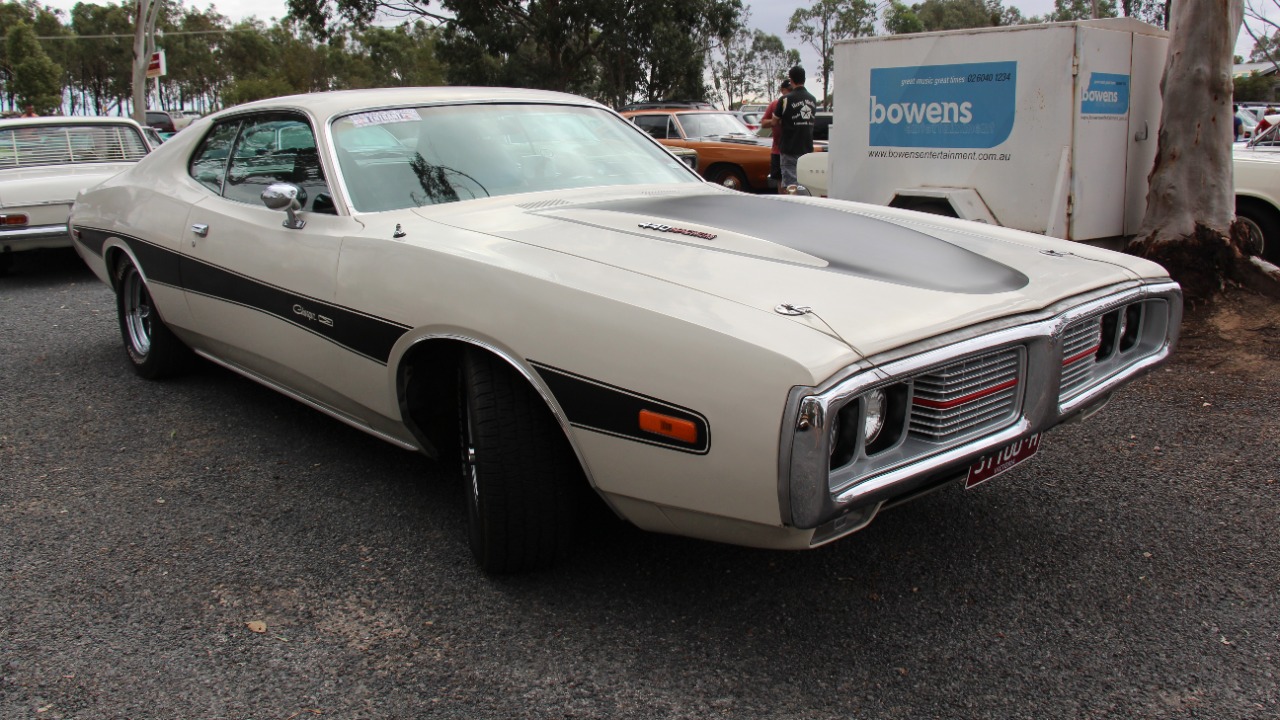
That presence is especially clear in the Rallye versions, which layered stripes, hood treatments, and performance cues over the already bold body. Modern enthusiasts still single out the 1973 Dodge Charger Rallye as a kind of sweet spot, a car that delivers proper 1970s V8 attitude and style while living in a more affordable corner of the collector market, a point underscored in coverage of how the Dodge Charger Rallye Is The Affordable Muscle Car Sweet Spot. When I look at period photos, especially that Front three-quarter angle that shows off the Coke-bottle sides and the nose, I see a car that still announces itself as a threat, even if the spec sheet is more modest than the body suggests.
Living with less power in a changing era
Owning or imagining a 1973 Charger means accepting that the numbers will not match the legends of the late 1960s, and I think that is part of its charm. The car represents a moment when enthusiasts had to recalibrate what performance meant, learning to enjoy torque, sound, and style even as the stopwatch told a less dramatic story. In that sense, the 1973 model teaches a kind of humility, a reminder that the muscle car identity is about more than peak Horsepower figures on a brochure.
At the same time, the Charger’s survival through this transition shows how a strong design and a powerful nameplate can carry a car through regulatory storms. While emissions rules and fuel concerns were clipping wings across the industry, the Charger adapted by leaning into its visual drama and broadening its appeal, rather than trying to fight a losing battle against the rulebook. When I think about the 1973 Charger today, I see a car that lost some of its raw muscle but kept its presence so convincingly that, half a century later, it still turns heads for all the right reasons.






Leave a Reply