
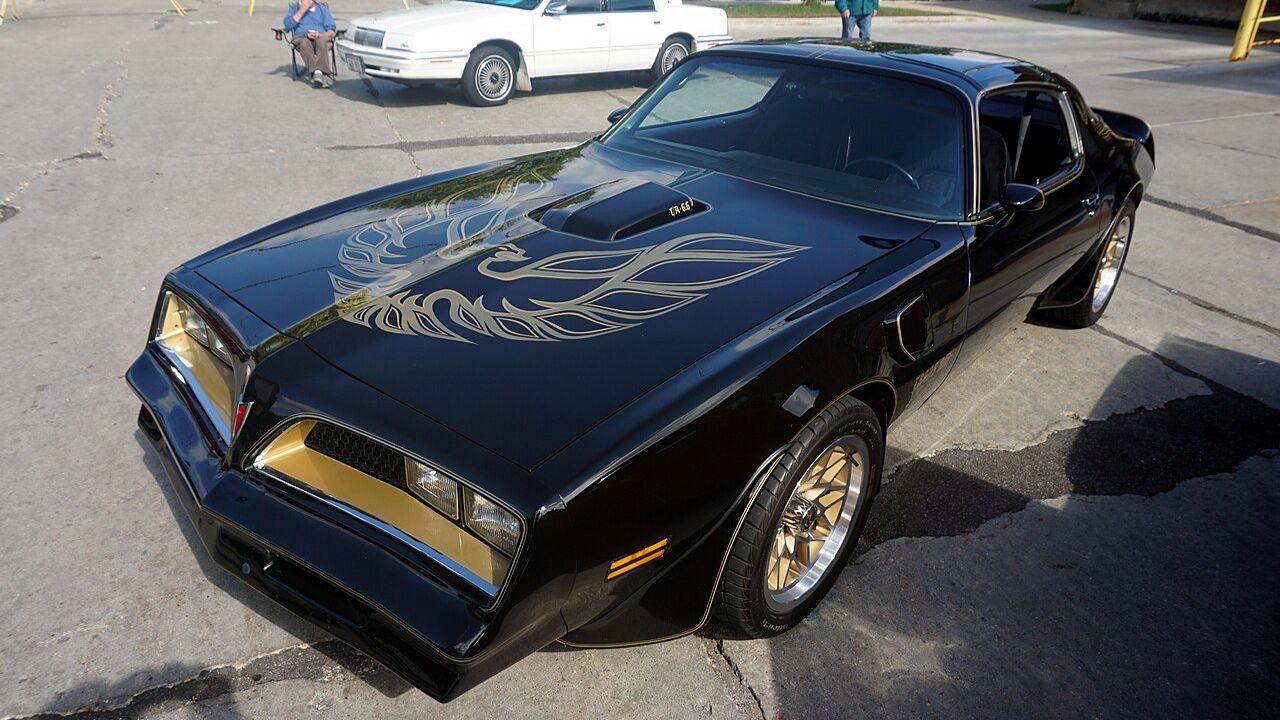
The 1977 Bandit Trans Am did something muscle cars are not supposed to do: it became more famous for how it made people feel than for the power under its shaker hood. At a moment when performance numbers were slipping and regulations were tightening, this black-and-gold Pontiac turned into a rolling folk hero that outgrew its own spec sheet.
When I look at that car today, I see less a horsepower figure and more a snapshot of late‑70s America, where a V‑8 coupe could stand in for rebellion, humor, and a little bit of outlaw fantasy. The Bandit Trans Am became bigger than horsepower because it fused modest mechanical muscle with movie mythmaking, clever marketing, and a cultural mood that was ready to crown a new kind of star.
The Trans Am before the Bandit: from brute force to detuned reality
To understand why the Bandit car hit so hard, I have to start with what came just before it. Early in the decade, Pontiac was still building bruisers like the Pontiac Trans Am Super Duty, a 1973 machine built around a massive 455 cubic inch engine that represented the last gasp of unfiltered American muscle. That car was forged in the teeth of new emission standards, a reminder that the freewheeling horsepower wars of the 1960s were already under siege. By the time the Bandit era arrived, the Trans Am nameplate was carrying a lot of history and expectation on its shoulders.
Regulation and insurance pressure meant the 1977 Trans Am had to live in a different world than its early‑70s predecessors. Instead of chasing ever higher output, Pontiac engineers kept the car relevant by refining what they could, which is why Trans Ams stuck with the 400-cid V‑8, detuned to 180 horsepower, while still retaining a four‑barrel carburetor and dual exhaust in most configurations. On paper, that figure looked tame compared with the wild numbers enthusiasts remembered, yet the car still had the stance, the sound, and the attitude that made people feel like they were buying into the same rebellious spirit.
How Smokey and the Bandit turned a car into a co‑star
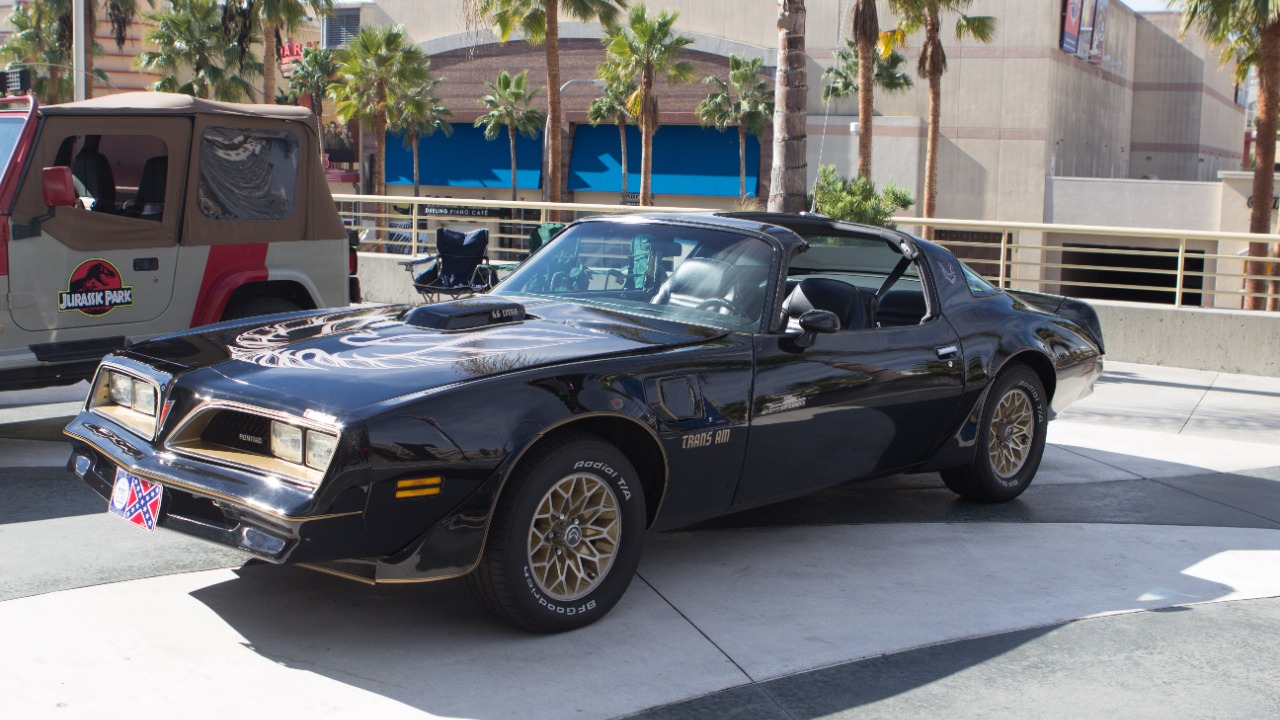
The leap from solid pony car to pop‑culture icon happened the moment Hollywood put the Trans Am in front of a camera. When the first Smokey and the Bandit film rolled into theaters alongside the original Star Wars, the odds looked stacked against a road‑trip comedy built around a Pontiac coupe. Imagine trying to compete with a space opera that nobody yet realized would reshape cinema, and you get a sense of how bold it was to bet on a black Firebird as a box‑office draw. Yet that is exactly what happened when a carefully prepared Pontiac Firebird screamed across America in a cloud of dust and attitude.
The production did not stumble into that magic by accident. Providing cars for Smokey and the Bandit was a deliberate move by Pontiac, and it paid off when sales of the Trans Am surged in the wake of the film. The movie’s success turned the car into a hero in its own right, and Providing those cars proved to be a wise venture that helped double Trans Am demand during the same period. What mattered to buyers was not the dyno sheet, it was the image of that T‑top coupe out‑running the law, kicking up dirt, and making the whole country laugh along with Smokey and the Bandit.
Styling, swagger, and the art of looking fast
Even if you stripped away the movie, the 1977 Trans Am had a visual swagger that made it feel faster than its numbers. The black paint, gold pinstriping, and screaming hood bird turned the car into rolling theater, a look that told a story before the engine ever fired. I have always thought of that “Bandit” package as a costume that let ordinary drivers play the part of an outlaw for the price of a monthly payment, and that fantasy mattered more than the stopwatch.
That sense of drama is exactly why the car slotted so naturally into the grand tradition of famous movie machines. Earlier this year, one analysis of the film’s legacy described how the production let a single car steal the spotlight in Smokey and the Bandit, placing it in a lineage that runs from sleek European coupes driven by James Bond to the battered muscle cars of American chase scenes. In that telling, the Bandit Trans Am became marketing gold for the brand precisely because it looked like trouble in the best possible way, a visual shorthand for speed and mischief that did not depend on quarter‑mile times.
From movie prop to living nostalgia
The real proof that the Bandit Trans Am outgrew its horsepower rating is what happened long after the closing credits. Decades on, fans still gather around replicas, quote lines, and treat the car as a living piece of Americana rather than a mere collectible. I have met owners who care less about matching‑numbers blocks than about getting the stance, wheels, and gold bird just right, because what they are really chasing is the feeling of that first big‑screen chase.
That emotional pull shows up in the way enthusiasts keep re‑creating the car and celebrating its story. After the film’s release, the Trans Am’s popularity sparked a wave of tributes that has never fully faded, from restored originals to tribute builds and even lookalike contests that continue to this day, a pattern captured in a closer look at How One Car Stole the Spotlight. That kind of devotion is not about chasing the latest performance benchmark, it is about preserving a shared memory of what it felt like to watch a Pontiac outwit a sheriff on a Friday night.
A legend that redefined pop culture more than performance
When I step back from the specs and the nostalgia, what stands out is how thoroughly the Bandit Trans Am seeped into everyday culture. It was not just a car on a poster, it was a character that helped redefine how audiences saw American muscle in the late 1970s. One detailed history of The Smokey and The Bandit Trans Am describes it as a Legendary Ride that Redefined Pop Culture, tracing its origins back to the Birth of the Trans Am and following its cultural impact as it made audiences laugh and cheer. That is the language we usually reserve for actors or musicians, yet here it is applied to a car that happened to wear the right paint and show up in the right story.
In the end, the 1977 Bandit Trans Am became bigger than horsepower because it arrived at the exact moment when Americans were ready to trade raw numbers for personality. Emissions rules might have trimmed the output of that 400-cid V‑8 to 180 horsepower, but the combination of styling, screen time, and savvy placement turned it into something more durable than a spec sheet. The car bridged the gap between the brute force of the Pontiac Trans Am Super Duty era and a new age where image, narrative, and shared memories could make a slightly detuned coupe feel like the fastest thing on the road, at least in the stories we still tell.



Leave a Reply