
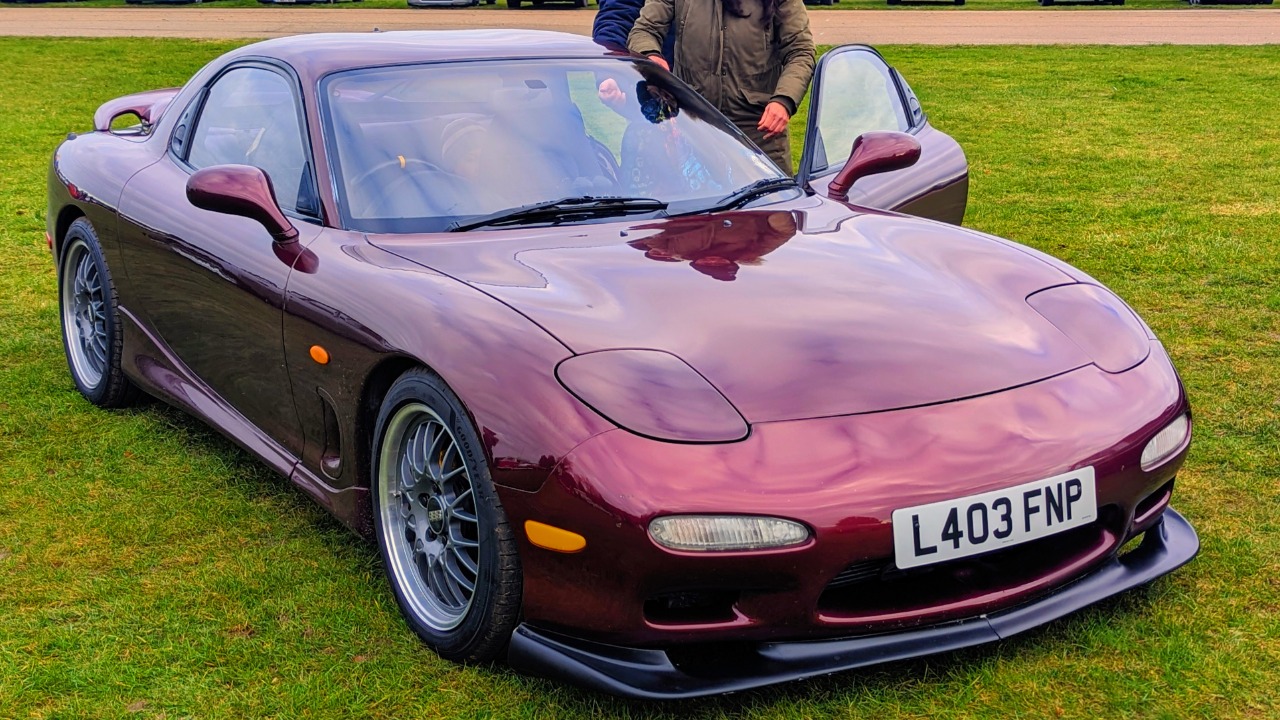
The 1993 Mazda RX-7 FD did not chase speed with brute force. Instead, it treated lightness as its main performance tool, pairing a compact rotary engine with a carefully honed chassis so you could carry momentum rather than simply overpower the road. You feel that philosophy in every control input, from the way the car changes direction to how eagerly the engine spins, which is why this generation still defines lightweight performance for many enthusiasts.
When you look closely at how the RX-7 FD was engineered, you see a series of deliberate choices that traded excess for precision. The compact body, the low-slung rotary, and the obsessive attention to balance all worked together to create a car that rewards smooth, committed driving. If you care about how a car feels rather than just what it does in a straight line, this is where you start paying attention.
The rotary heart that made lightness possible
At the center of the FD’s character is its rotary engine, a layout that let Mazda shrink mass and push it low and rearward in the chassis. The RX-7’s twin-rotor 13B unit displaced just 1.3-liter, yet it delivered the kind of power you would normally expect from a much larger conventional engine. That compact size meant the engine sat close to the firewall and low in the bay, helping the car feel eager to rotate around you when you turn in. When you read about Rotary Engine Magic and how What Made the 1993 Mazda RX so So Special, you see that the unusual packaging was not a party trick, it was the foundation of the car’s balance.
The official Specifications list the Engine as a Twin Rotor Wankel with 1.3 Liter displacement and Twin sequential turbocharging, a setup that let the FD deliver smooth torque without sacrificing its rev-happy nature. Period testing of the Mazda road car highlighted how the twin turbos operated sequentially to reduce lag, so you felt a clean, building surge rather than a sudden wall of boost. That combination of small physical size, relatively big output and progressive delivery is what allowed The RX 13B-REW to serve as a lightweight core instead of a heavy anchor.
A chassis built around balance, not brute force
Once you have such a compact engine, you can design the rest of the car around agility, and that is exactly what Mazda did with the FD’s structure. The third generation, often referred to simply as The Mazda RX, used a steel monocoque that engineers stiffened with carefully placed bracing and rigidly mounted Subframes. Mazda also added bracing underneath to firm up the shell, so when you turn the wheel you feel the suspension doing the work instead of the body twisting around it. While the car was not the lightest object on four wheels, the way the structure and suspension worked together made it feel lithe and precise.
That focus on balance shows up in how owners and tuners still talk about the FD’s near 50 to 50 weight distribution, which lets the car pivot cleanly without feeling nervous. Enthusiast descriptions of the lightweight construction underline how much of the FD’s magic comes from that equilibrium. When you read modern driving impressions that call the FD one of the best-handling cars ever built, they are really describing the way this structure, suspension geometry and weight distribution work together rather than any single headline figure.
Designing a lightweight icon in a heavyweight era
To appreciate how radical the FD felt, you have to place it in the context of early 1990s performance cars. At that time, Perhaps the most interesting thing about Japan’s sports cars was how differently each brand chased speed. While some rivals leaned on big displacement or all-wheel drive, Mazda doubled down on a compact rotary and rear-wheel drive purity. That choice made the FD feel almost delicate compared with heavier contemporaries, yet on a twisting road it let you carry more speed with less effort.
Commentary on The Mazda RX FD3S highlights how the third generation became the most celebrated version of the car, precisely because it was known for its light weight and sharp responses. When you compare it with other legends like The Nissan Skyline R34, you see two very different philosophies from Japan: one built around turbocharged straight-six muscle and all-wheel drive, the other around a compact rotary and minimal mass. Both became icons, but the RX-7 FD is the one that keeps coming up when drivers talk about feel rather than outright numbers.
From showroom to legend: how the FD earned its reputation
When the FD arrived, it was not just a styling update, it was a comprehensive rethink of how the RX-7 should drive. Enthusiast accounts describe how, After changes and upgrades to styling and handling, the RX-7 FD grew slightly in size and engine displacement compared with its predecessor, yet it still prioritized driving exhilaration over comfort. The car’s proportions, with its low hood and flowing fenders, were dictated by that small rotary and low cowl, which again shows how the engine layout and lightweight focus shaped everything you see.
Modern commentators still call the FD one of the best-handling cars ever built, a sentiment echoed when you read that The RX FD is famous for its cornering ability. Video reviews of the Japanese icon keep returning to the same themes: light steering that still communicates, a chassis that rotates predictably, and an engine that encourages you to stay in the powerband. When you see owners celebrating how a Year Old Rotary is still Running, it underlines how much affection there is for the way this car drives, even if the rotary demands more care than a typical piston engine.
Why the FD still matters in a heavier, faster world
Today, you live in an era where even compact performance cars weigh far more and chase huge power figures, yet the FD RX-7 still feels relevant because it shows another path. Enthusiast write-ups on The RX describe it as beautifully flawed, acknowledging that the rotary’s quirks and the car’s age require commitment, but also arguing that the payoff in feedback and connection is worth it. When you see the FD described as an engineering marvel in pieces about The FD RX, you are really seeing praise for a car that put structural rigidity, low mass and balance ahead of raw numbers.
The FD’s influence also shows up in the tuning world, where builds like the 93 M Mazda RX from SEMA, originally built with the help of Nitrous Express and other partners, still keep the car’s light, balanced core even as power climbs. Owners often choose tasteful upgrades like an aftermarket ECU, intake and coilovers, as seen in descriptions of FD examples that feature an a’pexi power fc, a Blitz air intake and Tein Flex Z suspension, precisely because the stock car already nails the fundamentals. When you step back and look at the FD’s legacy, from museum displays that highlight its quality and value to social posts that celebrate Despite its smaller engine size and rotary quirks, you see a consistent message: lightness, balance and feel can create a kind of speed that still resonates long after the spec sheet stops impressing.
More from Fast Lane Only


Leave a Reply