
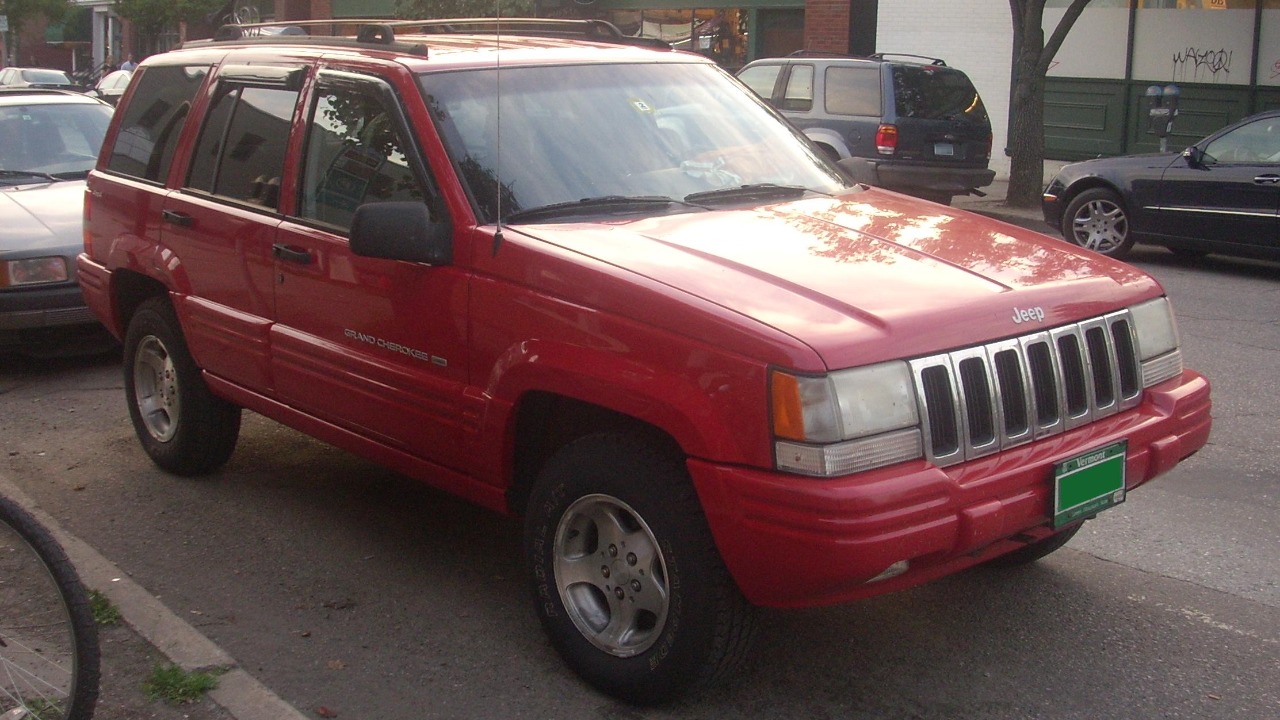
The 1998 Jeep Grand Cherokee 5.9 Limited arrived just as SUVs were shifting from boxy workhorses to everyday family staples, and it quietly rewrote the rules for what that shift could look like. You see the template it set every time you watch a three-row crossover rocket away from a stoplight or glide through a suburb in leather-lined comfort. To understand how modern SUVs became both quick and comfortable, you have to start with that one-year-only Grand Cherokee and the way it blended muscle, refinement, and real off-road ability.
The first Grand Cherokee already felt like tomorrow’s SUV
By the time you get to 1998, the Grand Cherokee had already broken from the old-school truck mold. The first generation ran through the mid‑1990s, and those Years from 1993 to 1998 put a unibody SUV into American driveways long before that was the norm. Built on a unibody platform rather than a separate frame, the Grand Cherokee delivered a smoother ride than traditional body‑on‑frame trucks, which made it feel more like a tall car on daily commutes while still promising weekend getaways on rougher roads.
That balance was not an accident. From the beginning, the Grand Cherokee was designed for on‑road and off‑road use, with From the start positioning the Jeep Grand Cherokee as something you could drive to work all week and then point at a trail. That dual‑purpose DNA is what modern crossovers still chase. When you look at today’s midsize SUVs that promise carlike manners and light off‑road capability, you are seeing a formula that the early Grand Cherokee refined long before the segment exploded.
Why the 5.9 Limited felt like a shock
Into that already forward‑leaning package, Jeep dropped a hot‑rod twist. The 1998 Jeep Grand Cherokee 5.9 Limited took the familiar shape and quietly turned it into a performance machine. Enthusiasts now talk about that 5.9 as the moment when a family SUV first behaved like a muscle car. The Limited trim wrapped that power in leather, wood, and every comfort feature Jeep could fit, so you were not just going faster, you were doing it in something that felt ready for a country club parking lot.
Inside Jeep, this was not a random experiment. The company was nearing the end of the first‑generation Grand Cherokee, and the 5.9 Limited arrived as a kind of farewell statement. Coverage of the Big Engine in that Old Grand Cherokee makes clear that Jeep was willing to push the platform hard at the end of its run. You were getting a familiar body with a very unfamiliar level of urgency every time you pressed the throttle.
The moment SUVs went genuinely fast
What made the 5.9 Limited so disruptive was not just that it was quick for a truck, it was that the Jeep Grand Cherokee 5.9 Fastest SUV In. At a time when most SUVs still struggled to get out of their own way, this one‑year special could sprint in a way that startled sports‑sedan owners. Later testing would peg its run to highway speeds at about 6.8 seconds, a figure repeated in analysis of What that performance meant in context.
Enthusiasts now look back and call the 1998 Jeep Grand Cherokee Limited 5.9 the Trackhawk of its era, a point underscored in coverage of the Old Grand Cherokee and its big‑block attitude. When you see a modern Grand Cherokee Trackhawk or a German super‑SUV crack off a sports‑car‑level acceleration run, you are watching a playbook that the 5.9 Limited helped write: take a family‑friendly body, add serious power, and refuse to apologize for the contradiction.
A bridge between off‑road grit and luxury life
Speed alone would not have made the 5.9 Limited so influential. What really set it apart was how it combined that pace with genuine off‑road hardware and upscale comfort. Contemporary accounts describe it as the ultimate, most true‑to‑MOPAR Grand Cherokee, noting that the most MOPAR flavored Grand Cherokee came out in 1998 as the 5.9 Limited. You could still tackle country roads and muddy tracks, yet the cabin and features were aimed squarely at buyers who also cared about valet lines and long highway trips.
That dual identity is now standard practice. Modern buyers expect an SUV to be quiet, comfortable, and tech‑heavy, but they also want to believe it can handle a dirt road or a snowstorm. Analysts looking at the Grand Cherokee’s evolution point out that One of the things that set the Grand Cherokee apart from rivals like the Ford Explorer in the 1990s was exactly this mix of unibody comfort and real capability. The 5.9 Limited simply pushed that formula to its logical extreme, pairing the plushest interior with the strongest engine and letting you have both identities at once.
How a one‑year special shaped decades of SUVs
When you trace the broader history of performance SUVs, you find that the 5.9 Limited did not appear in a vacuum. The end of the 1980s had already been a golden age for wild ideas at General Motors, with high‑powered trucks and SUVs hinting at what was possible. Jeep’s move in 1998 took that spirit and wrapped it in a package that suburban buyers could actually imagine parking in their driveway. It was not a tuner special or a limited‑run oddity from a performance division, it was a fully trimmed Limited model you could finance like any other family vehicle.
That accessibility is part of why later commentators call the 1998 Jeep Grand Cherokee 5.9 Limited the granddaddy of the modern performance SUV. Video reviews of the Jeep Grand Cherokee Limited highlight how its formula, big power in a comfortable SUV, now feels completely normal. When you shop today’s market and see everything from compact crossovers to three‑row giants offered in high‑output trims, you are looking at a landscape that the 5.9 Limited helped normalize.
More from Fast Lane Only

Leave a Reply