
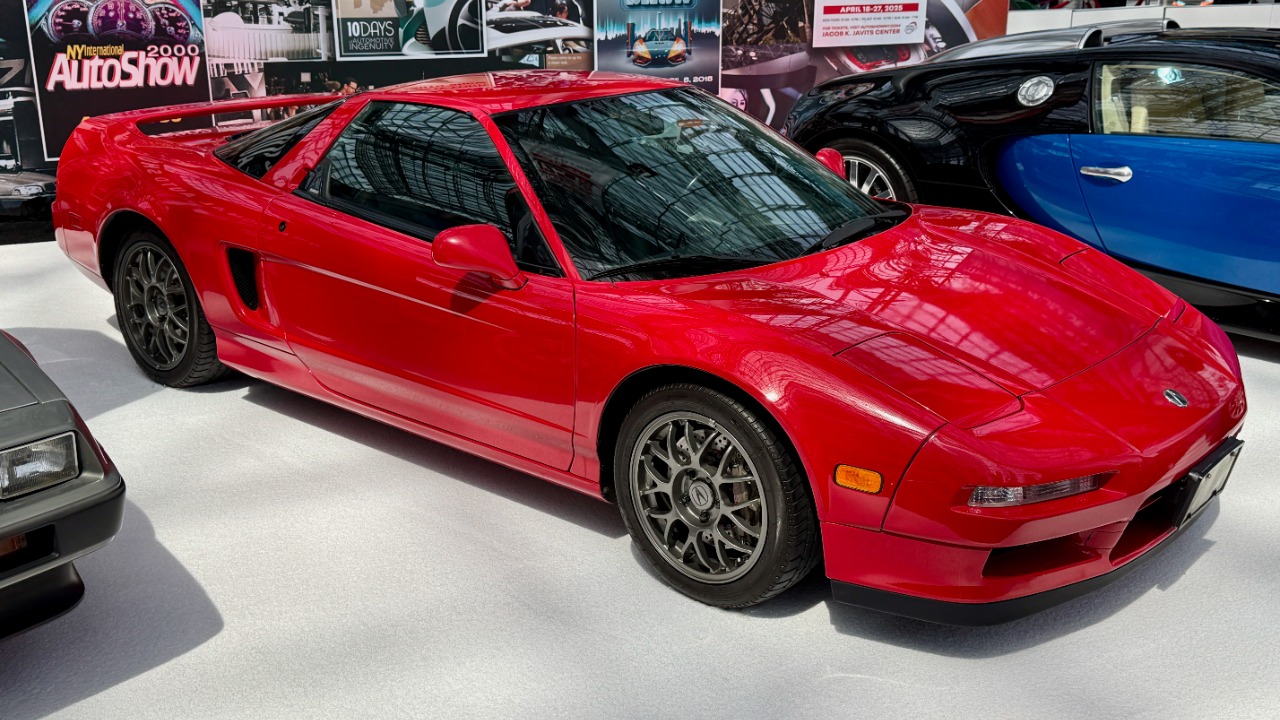
The Acura NSX arrived in the early 1990s as a mid-engined exotic that refused to behave like one, trading twitchy theatrics for precision, predictability, and everyday civility. Instead of chasing lap times at any cost, it redefined how a supercar could feel from behind the wheel, prioritizing balance, feedback, and accessibility. In the process, it quietly reset expectations for rivals and rewrote how the industry thought about high performance handling.
The moment a Japanese upstart challenged the supercar old guard
Before the NSX, the supercar script was tightly controlled by a small European cast, with names like Lamborghini Porsche and Aston Martin setting the tone for how an exotic should look, sound, and behave. When Acura launched the NSX in the early 1990s, it did not just add another fast car to the mix, it fundamentally shifted the supercar paradigm by proving that a mid-engined machine could be both razor sharp and genuinely usable. Instead of embracing the traditional compromises of cramped cabins, vague ergonomics, and temperamental dynamics, the NSX showed that a supercar could be a practical, everyday driver without sacrificing speed or drama, a point underscored when reports noted that When Acura launched it, the car was explicitly positioned as a daily supercar alternative.
That challenge landed hardest in Mar, when commentators began framing the Honda-badged version as a direct affront to the European establishment that had long dominated the segment. One widely shared analysis from Mar described how, in 1990, supercars had largely been the domain of Lamborghini Porsche and Aston Martin until the Honda NSX arrived to disrupt that hierarchy with its mix of reliability, user-friendly handling, and race-bred engineering, a disruption captured in a detailed video breakdown of how the honda nsx altered expectations. By stepping into that arena and immediately being compared with the most storied badges in the business, the NSX signaled that the rules of engagement for supercar handling were about to change.
How the chassis let the driver push harder, not just hang on

The NSX’s real revolution started where the driver met the road, in a chassis that encouraged commitment instead of punishing it. Contemporary impressions describe how, as you start pushing harder, the car seems to shrink around you and feel shorter than its wheelbase suggests, inviting the driver to lean on its balance rather than tiptoe around its limits. That sensation of a car that eggs you to explore its capabilities, yet remains composed and transparent in its responses, is central to why one detailed retrospective concluded that the original NSX delivered the best of all worlds for a mid-engined layout, a verdict backed by the way testers described its behavior in pieces like Apr driving impressions. Instead of the nervous, rear-biased antics that defined many exotics of the era, the Acura chassis felt intuitive, almost telepathic, which made its performance more exploitable for ordinary drivers.
Underpinning that confidence was a rigid but lightweight shell that allowed engineers to run softer suspension without sacrificing control or balance, a combination that gave the NSX a uniquely supple ride for its class. Reports on what it is like to drive the original car emphasize that The NSX could flow over imperfect roads while still delivering the kind of body control and steering precision that more hardcore sports cars struggle to achieve, a duality captured in a detailed account of how The NSX balances comfort and agility. By decoupling speed from harshness and making high performance feel natural rather than intimidating, the NSX quietly reset the benchmark for how a supercar should behave on real roads, not just on a racetrack.
From feared rival to catalyst for better Ferraris
The NSX did not just impress reviewers, it rattled the very brands that had defined the supercar mystique. One detailed look at a 1992 Acura NSX describes it as the Japanese supercar Ferrari feared, noting that this is the 1992 Acura NSX and stressing that this is not just a sports car, it is the supercar that made Ferrari nervous, a framing that captures how seriously Maranello took the newcomer’s threat. That same analysis, presented in a video that welcomes viewers to Scholar and walks through why Ferrari saw the car as a benchmark, underscores how the Acura NSX forced Italian engineers to confront the reality that a rival could match their performance while offering superior usability and reliability.
Over time, that pressure translated into tangible change in Italy, with multiple commentators crediting the NSX for pushing Ferrari to refine its own handling and build quality. One museum-focused retrospective puts it bluntly, stating that it was thanks to Acura’s NSX that we got better Ferraris, a line that has become shorthand for the car’s broader impact on the segment. Another analysis, reflecting on how the NSX concept influenced the market, notes that As John Pearley Huffman recently pointed out at BBC Autos, the NSX ( Acura NSX ) effectively forced Ferrari to build better Ferraris, with more bullet-proof reliability and less finicky supercars as well, a conclusion woven into a piece on the As John Pearley Huffman commentary. By proving that exotic handling could be both thrilling and trustworthy, the NSX became a catalyst that nudged even the most tradition-bound brands toward more approachable, better sorted cars.
The NSX as the first truly daily supercar
What set the NSX apart from its contemporaries was not just how it cornered, but how it fit into everyday life. When Acura launched the NSX, it presented a car that could be driven to work, taken on a long trip, and then hustled around a circuit without the driver needing a chiropractor or a race engineer on speed dial. Analysts looking back on that moment argue that the NSX fundamentally shifted expectations by showing that a supercar could be a practical, everyday driver, with usable visibility, intuitive controls, and a cabin that did not punish its occupants, a shift captured in a broader survey of how NSX and its peers built the first daily supercars. That usability was not an afterthought, it was baked into the handling philosophy, with engineers tuning the car to be forgiving and predictable in traffic as well as on a mountain road.
That same ethos carried into later interpretations of the NSX story, including the way the car has been celebrated and reimagined. A recent project by JAS Motorsport and Pininfarina, for example, explicitly acknowledges that the 1990 original rewrote the rulebook of performance and exotic cars, and that it was famously honed with input from three-time Formula 1 champion Ayrton Senna, a heritage that JAS Motorsport wants to preserve in a limited-run restomod. The announcement of that collaboration, which details how Oct plans aim to keep the original car’s character intact, underlines how central its blend of usability and precision has become to its legend. By making daily drivability a core part of the handling brief, the NSX anticipated a modern era in which supercars are expected to be as manageable on a commute as they are thrilling on a track.
How the second generation carried the handling legacy forward
When the NSX returned for a second generation, its creators faced a delicate task, updating the formula for a hybrid, high-tech era without losing the qualities that had made the original so transformative. Development accounts emphasize that the team focused on core NSX values, deciding that the car should have performance that would be accessible to less experienced drivers, not just experts, and that this accessibility was deemed an essential value of the NSX. That philosophy, detailed in technical summaries of the NSX second generation, shows how the brand saw approachable handling as non-negotiable, even as power outputs and complexity climbed.
The reborn car’s development story reinforces that continuity, with reports describing how But the Acura NSX is back on the scene after an exhaustive process that saw multiple changes in direction before engineers settled on a hybrid all-wheel-drive layout designed to challenge the established supercars of its time. That narrative, captured in a detailed history of how But the Acura NSX returned, makes clear that the goal was not just raw speed, but a new kind of confidence-inspiring handling that used electric torque vectoring to make the car feel more intuitive at the limit. In effect, the second generation translated the original’s rule-breaking approach into a modern context, using technology to widen the envelope of control rather than to create a more intimidating machine.
The NSX’s lasting influence on how we judge supercar handling
Looking back from today’s vantage point, it is easy to forget how radical the NSX’s approach once seemed. In the 1980s, as one Mar commentary memorably put it, the nicest car company in the world asked a provocative question: what if Ferraris were not a pile of steaming crap, but instead combined their charisma with Japanese precision and reliability. That rhetorical jab, delivered in a video essay on how Ferraris were forced to evolve, captures the cultural shock of seeing a car that matched Italian exotica on engagement while outclassing them on day-to-day usability and composure. By centering the driver’s confidence rather than just raw spectacle, the NSX shifted the criteria by which enthusiasts and engineers alike judged what made a supercar great.
That legacy continues to shape how new performance cars are evaluated, from their steering feel and chassis balance to their ability to be driven hard without biting back. Modern reviews that praise a supercar for being approachable, forgiving, or easy to place on a narrow road are, in many ways, echoing the standards first set when Apr testers noted how the original NSX shrank around the driver and encouraged them to push harder. Even today, video retrospectives that revisit how the Honda NSX changed supercars forever, such as the Mar analysis of Mar and its impact on the old guard, frame the car as a turning point in the story of high performance handling. By proving that a supercar could be both thrilling and trustworthy, the NSX did more than rewrite a rulebook, it quietly authored the one that modern exotics still follow.

Leave a Reply