
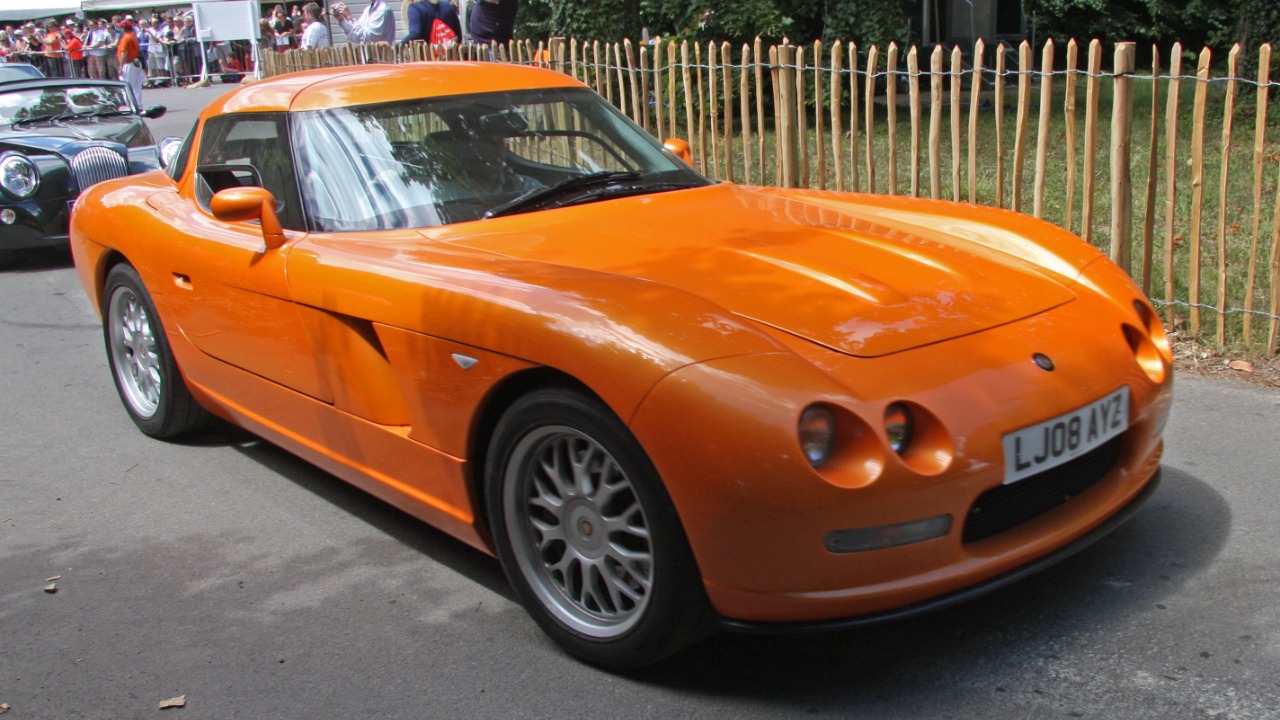
The Bristol Fighter was the automotive equivalent of a pub regular suddenly announcing he is going to out-bench-press the world’s strongest man. On paper, this low-volume British GT set its sights on the era’s hypercar titans, promising outrageous power, serious speed and a whiff of aviation chic. In practice, it became a fascinating near-miss, a car that tried to punch far above its weight and left behind a legend bigger than its production run.
I want to walk through how this eccentric coupe tried to crash the Bugatti and Lamborghini party, why it never quite made it to the main table, and how it still managed to carve out a cult status that has collectors quietly hoarding scale models and trivia like rare stamps.
The obscure British challenger with a Viper heart
To understand the Bristol Fighter, you first have to understand Bristol itself, a company that spent decades building very expensive, very rare grand tourers for people who preferred their luxury with a side of anonymity. This was not Ferrari, with posters on teenage bedroom walls, but a quiet British outfit that treated publicity like an optional extra. When the Fighter arrived in the early 2000s, it was less a model change and more a midlife crisis, the moment the discreet gentleman’s express decided it wanted to run with the hypercar crowd.
That ambition was not entirely delusional. Under the long bonnet sat a version of the Dodge Viper’s V10, a powerplant that was about as subtle as a marching band in a library. As one account of the project puts it, Perhaps the most obscure British GT of its era decided that what it really needed was a turbocharged Viper engine and the confidence to stare down a Bugatti Veyron. I admire the sheer audacity of that decision; it is the automotive equivalent of entering Wimbledon because you once played a decent game of park tennis.
Aeronautical styling and unapologetic weirdness
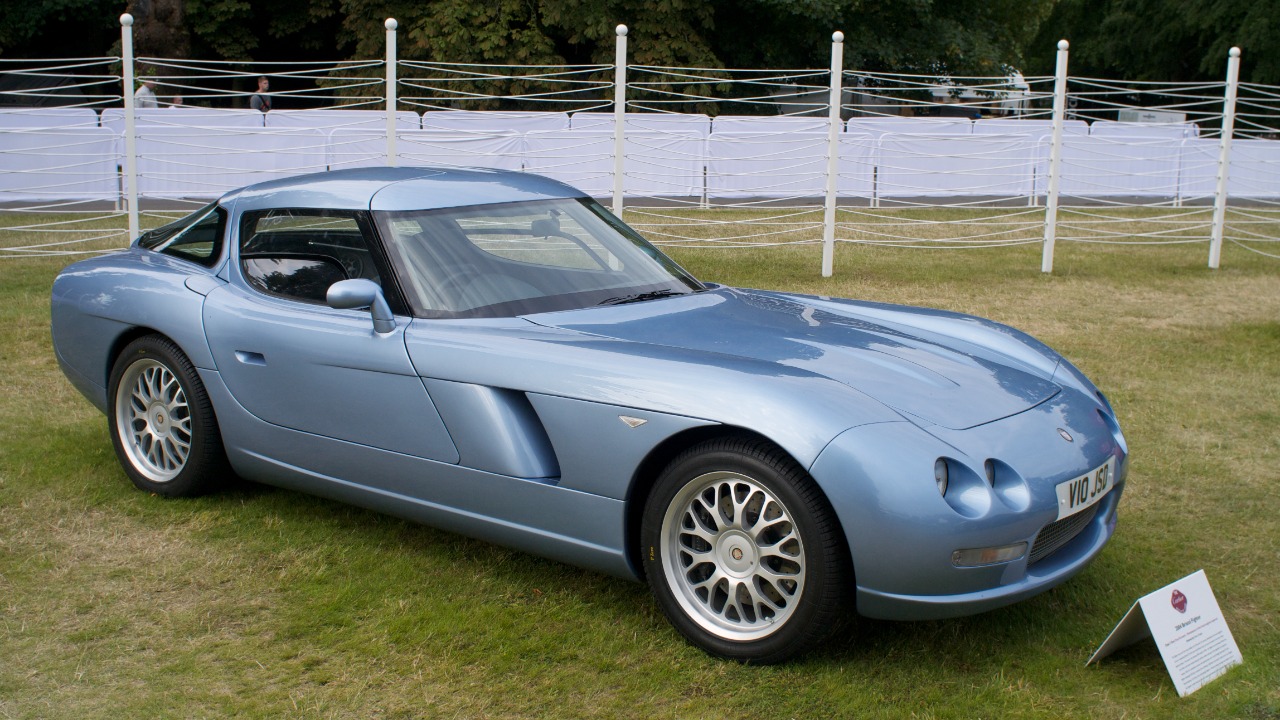
Visually, the Fighter looked like someone had asked an aircraft engineer to sketch a supercar from memory after a long lunch. The rear end in particular was a curious cocktail, with one detailed analysis noting that the design was a mix of Alfa Romeo TZ and Lamborghini Espada. It was as if Bristol had raided a very stylish parts bin from the 1960s and 1970s, then decided to weld the influences together into something that looked fast, slightly odd and very, very Bristol.
Inside and out, the car leaned heavily on aviation cues, and not just in a superficial “stick a fake altimeter on the dash” way. One road test noted that, Indeed, aviation technology still shaped the way Bristol thought about structure and stability, right down to how the car behaved in crosswinds. The result was a GT that felt less like a road car and more like a low-flying object that had accidentally been given a number plate, complete with quirky details and a cabin that seemed designed by someone who thought checklists were a lifestyle, not just a cockpit accessory.
Engineering for war with the hypercar elite
Underneath the eccentric styling, the Fighter’s engineering brief was surprisingly serious. The car’s weight is 1,600 kg, which translates to 3,527 lb, and it sent its power to the rear wheels through either a six speed manual or a four speed automatic transmission. That is not featherweight by racing standards, but for a big V10 GT with proper creature comforts, it was lean enough to make the performance figures sound plausible rather than pub fantasy.
The real moonshot came with the turbocharged evolution. In 2006, Bristol announced the Fighter T, a version of the Fighter that took the already potent V10 and added forced induction, with the company talking about power and speed figures that nudged into Veyron-baiting territory. On paper, this was the moment the quiet British marque walked into the hypercar arena, rolled up its sleeves and suggested that perhaps the established giants might like a little competition from a firm that still thought carburetors were a reasonable dinner topic.
Aerodynamics over drama
What really set the Fighter apart from its Italian and French rivals was its almost stubborn focus on airflow. One detailed profile notes that Aerodynamics were an essential pillar of the Fighter’s design concept, with designer Max Boxstrom, referred to simply as Boxstrom, shaping the basic form around efficiency rather than pure visual drama. In other words, while other supercars were busy perfecting their Instagram angles, the Fighter was quietly trying to cheat the wind like a glider that had discovered protein shakes.
This approach gave the car a slightly understated presence, at least by hypercar standards, but it also meant that the Fighter’s performance claims were not just a function of brute force. The bodywork, the glass area and the proportions all leaned toward reducing drag and improving stability, a philosophy that made the Fighter feel more like a long distance missile than a track toy. I find that oddly charming: in a world obsessed with lap times, Bristol built a car that seemed more interested in crossing continents at improbable speeds while its driver calmly adjusted the ventilation like a pilot trimming a wing.
Price, rarity and the afterlife of a near-miss
Of course, trying to challenge the titans is one thing, convincing customers to pay for the privilege is another. The Fighter was never cheap, even by supercar standards. Contemporary data points out that Bristol asked an expensive price of £229,000 for its flagship, a figure that parked it firmly in the same financial postcode as the most exotic machinery from Italy and Germany. For a brand that prided itself on discretion rather than celebrity endorsements, that was always going to be a tough sell.
The result is that the Fighter’s real legacy lives less on the road and more in the realm of cult appreciation. You can see that in the way enthusiasts now chase even the most obscure memorabilia, such as a pre production scale model described as a rare opportunity to own a piece of The Bristol automotive history. When a third scale model of your car is treated like fine art, you know you have crossed from commercial product into folklore, even if the original plan to dethrone the hypercar establishment never quite materialised.



Leave a Reply