
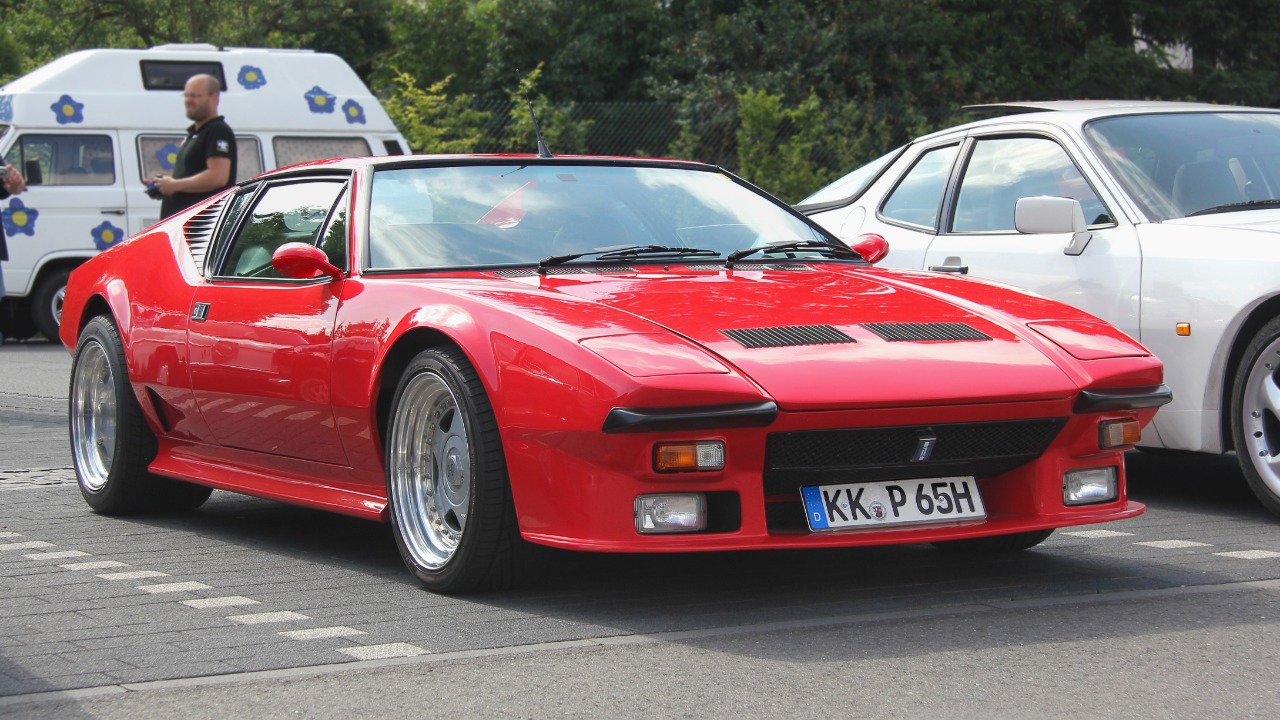
The De Tomaso Pantera arrived at the height of the muscle-car era as something different: a mid‑engine exotic that did not hide behind refinement or electronic safety nets. It paired Italian styling with American brawn in a way that felt unruly even by the standards of its time, and that rawness is exactly what turned it into a cult icon. To understand how it ruled with unfiltered power, I need to trace how its design, engineering and market positioning all pushed toward the same uncompromising goal: speed first, everything else second.
Italian lines, American heart
The Pantera’s personality starts with its shape, a wedge of steel that looks like it was drawn with a straightedge and a bad attitude. The car was designed by the Italian firm Carrozzeria Ghia, where American-born stylist Tom Tjaarda carved out a low, sharp profile that could stand next to any European exotic of the era. That mix of Italian coachbuilding and American sensibility gave the car a visual tension, as if it were caught between the elegance of Turin and the aggression of Detroit, and it set the stage for a driving experience that would be just as conflicted and compelling, as detailed in the History of the model.
Underneath those angular panels, the Pantera was never meant to be a delicate Italian thoroughbred. It was conceived from the outset as a mid‑engine supercar created for the American market, then distributed through the existing Ford dealer network rather than boutique European showrooms. That decision alone reveals the intent: this was a car built to bring exotic performance into the same orbit as big‑block Mustangs and Thunderbirds, with a layout and look that felt imported but a mechanical heart that American buyers already understood.
Raw power without a filter
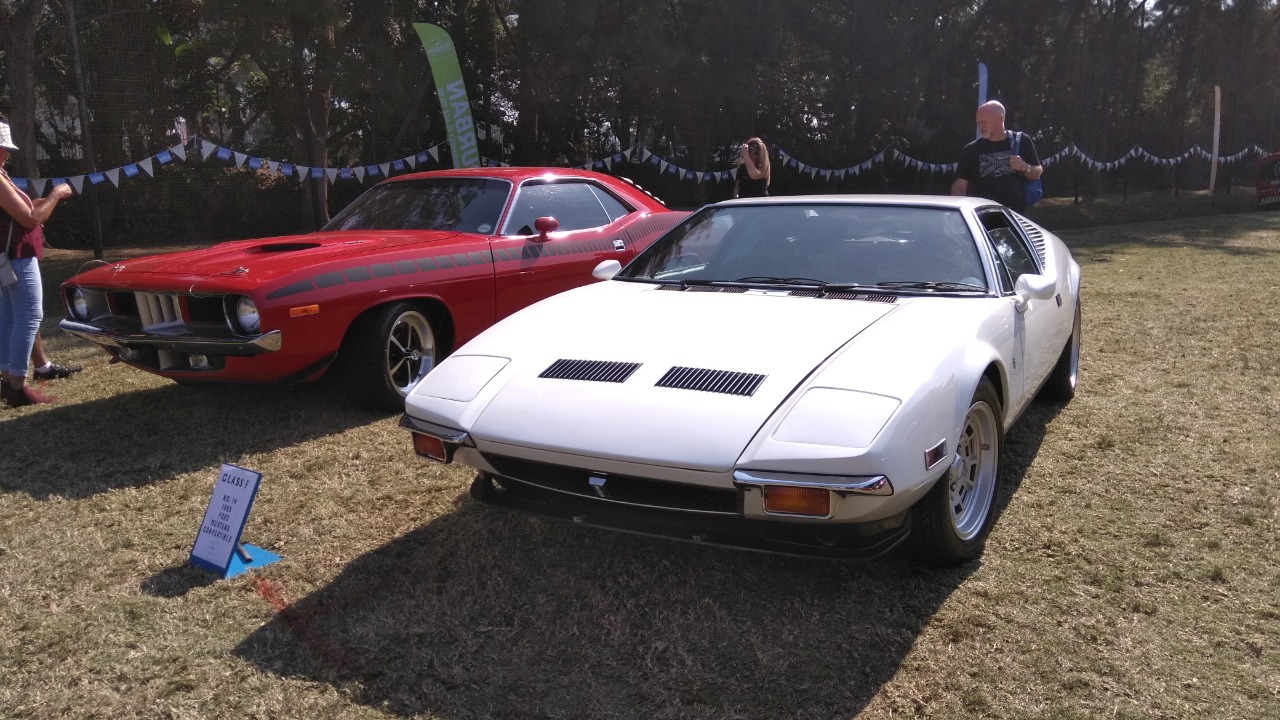
What truly defined the Pantera was the way it delivered its performance, with very little standing between the driver and the hardware. The American side of the American‑Italian formula came from a Ford 5.8L V8, an engine that produced around 330 horsepower and shared DNA with the GT40 that had humbled Ferrari at Le Mans. That big, relatively simple pushrod motor gave the car a brutal, immediate surge of torque, and it did so without the layers of electronics or refinement that would later tame supercars, a character that enthusiasts still associate with its raw American muscle.
Performance figures backed up the attitude. At $9,975, the Pantera undercut a Ferrari Daytona by roughly half while still delivering numbers that could embarrass established rivals. Period tests credited it with a sprint to 60 m in 5.5 seconds and a top speed of 159 m flat‑out, quick enough to smoke a Corvette in a straight‑line drag while looking every bit the exotic. Those figures, preserved in contemporary accounts of its showdown with the Ferrari Daytona and Corvette, explain why the car felt less like a budget alternative and more like a street‑legal race car that happened to be attainable.
The underdog that punched above its weight
For a car to become a legend, it needs more than numbers; it needs presence, power and a name that sticks in the mind. The Pantera checked all three boxes, combining its striking looks with matching performance and a badge that sounded as fierce as it looked. That combination has helped it evolve from a controversial new arrival into one of the highest cherished classic cars today, a status that reflects how its flaws and virtues have blended into a single, compelling story of an Italian underdog that refused to stay in the shadows.
Part of that underdog appeal comes from the way the Pantera never quite fit into any established box. It was not as polished as contemporary Ferraris, and it lacked the mass‑market familiarity of domestic muscle, yet it could run with both. That outsider status, combined with its mid‑engine layout and uncompromising power delivery, has turned surviving examples into conversation pieces at any gathering of enthusiasts. When I look at how collectors talk about the car today, I see less focus on its imperfections and more on the way it distilled the thrill of speed into something visceral and unfiltered.
Built for America, born in Modena
The Pantera’s split identity was baked into its production and distribution from day one. The Pantera (De Tomaso Pantera) was assembled by the De Tomaso factory in Modena, Italy, then shipped across the Atlantic to be sold through American showrooms that usually dealt in family sedans and pickup trucks. That unusual pipeline meant a buyer could walk into a local dealer and order a mid‑engine supercar created specifically for the American market, a proposition that would have been unthinkable for most European exotics of the era, as outlined in period descriptions of De Tomaso Pantera production.
That cross‑continental strategy also shaped how the car drove. Built in Modena with Italian chassis tuning but powered by an American V8 and supported by a domestic dealer network, the Pantera sat at the intersection of two very different automotive cultures. I see that tension in the way owners describe the car: Italian in its responsiveness and mid‑engine balance, American in its torque and mechanical straightforwardness. It was never as refined as its European peers, but that was precisely the point, and the result was a machine that felt more like a race car that had wandered onto Main Street than a carefully domesticated grand tourer.
A legacy that refuses to fade
Decades after the last original Pantera left Modena, the name De Tomaso still carries enough weight that multiple groups have tried to revive it. There have been several attempts to get De Tomaso (De Tomaso Automobili) up and running again in recent years, each one trading on the memory of a brand that established itself as a supercar icon with a single, unforgettable model. Those efforts, chronicled in reports on how De Tomaso is back, underline how deeply the Pantera’s image of raw, unfiltered power has seeped into enthusiast culture.
When I look at modern supercars, with their drive modes, stability systems and carefully curated exhaust notes, the Pantera feels like a snapshot from a different era. It was shaped by Italian designers like Tom Tjaarda, powered by a Ford V8 that owed as much to the GT40 as to any family sedan, and sold in American dealerships that were more accustomed to pickup trucks than mid‑engine missiles. That improbable mix created a car that did not just offer performance, it demanded respect, and in doing so it secured a legacy that continues to resonate with anyone who believes a supercar should feel a little wild every time they turn the key.


Leave a Reply