
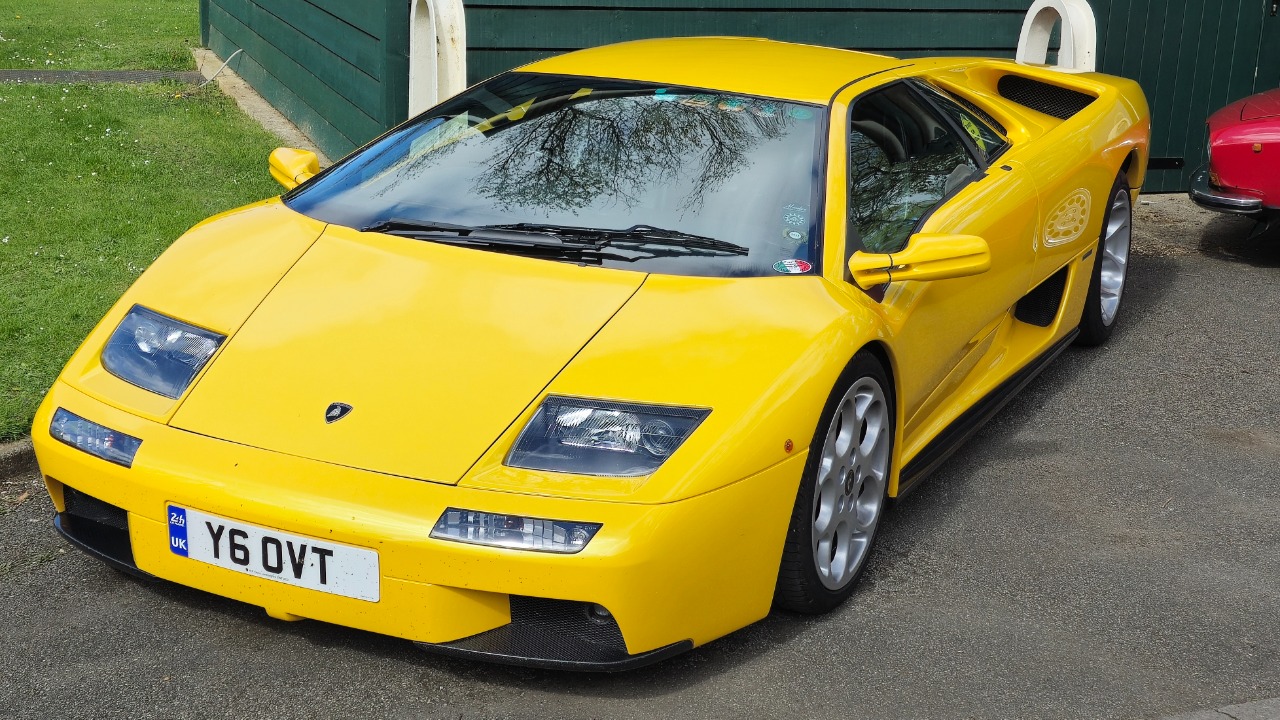
The Lamborghini Diablo VT did not just arrive in the 1990s, it crash‑landed into the decade’s ego like a V12 meteor and then parked itself in the center of every poster wall. While other cars tried to be sensible about emissions, ergonomics, and parallel parking, the Diablo VT doubled down on drama and turned everyday streets into a budget remake of an Italian action movie. It became the era’s unruly favorite because it mixed raw excess with just enough technology to keep the fireworks on the right side of a guardrail.
To understand how it became the wild child of its time, you have to look past the scissor doors and neon paint and see the strange balance underneath. The Diablo VT was outrageous, but it was not clueless; it was a car that learned just enough manners to get invited to the party, then spent the whole night doing burnouts in the driveway.
The impossible job: replacing the Countach without growing up
Every troublemaking icon starts with a terrible assignment, and the Diablo VT’s was simple: follow the Countach without becoming boring. The official Model biography makes it clear that The Diablo had the unenviable task of stepping into the shoes of the Countach in the hearts of enthusiasts, which is a bit like being told to replace your town’s favorite rock band while using the same stage and the same volume knob. The design kept the wedge profile and theatrical scissor doors, but the body was smoother and more cohesive, with a rather elegant front that hinted at maturity without actually committing to it.
That tension between refinement and rebellion is exactly where the Diablo VT found its personality. Lamborghini could have used the 1990s to pivot into something conservative and corporate, yet The Diablo (Lamborghini Diablo) instead evolved quickly, spawning numerous variants that only leaned harder into performance and spectacle. The company did not just replace the Countach, it built a rolling rebuttal to the idea that growing up meant calming down, and the VT version became the sharpest expression of that attitude.
Viscous Traction and very little restraint
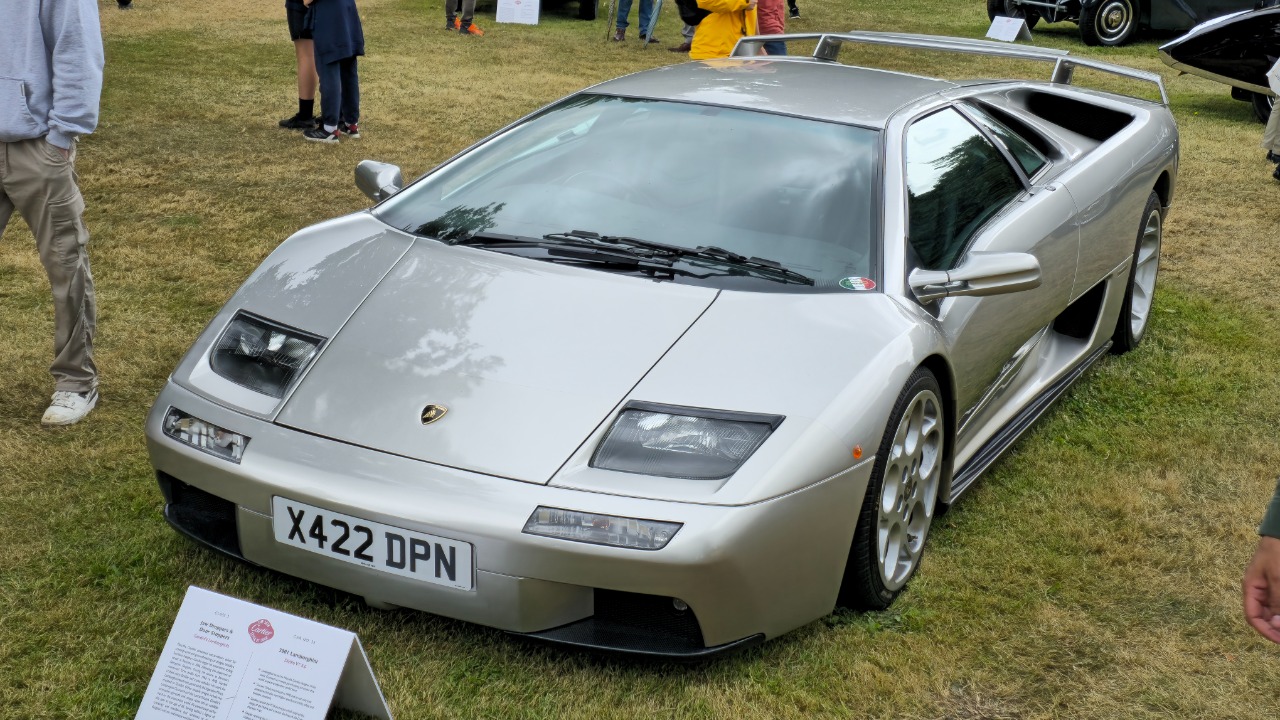
The “VT” badge sounds like a polite engineering footnote, but it is really the Diablo’s mischief license. The Lamborghini Diablo VT used a system called Viscous Traction, which routed power to all four wheels when the rear tires started to lose grip. On paper, that sounds like a responsible safety feature. In practice, it meant you could unleash the 5.7‑liter V12, with its brutal 0 to 60 mph time of 4.1 seconds, and the car would do its best to turn your questionable life choices into forward motion instead of a pirouette into the scenery.
That all‑wheel drive system made the Diablo VT the first production Lamborghini to send power to both axles, a milestone that arrived long before all‑weather supercars became a cliché. According to the detailed look at Lamborghini, the brand’s earlier experiment with four driven wheels, the FF, was still 18 years away from the Diablo era, which underlines how radical this move was for a company known for tail‑happy theatrics. The VT system did not tame the car so much as give it a broader envelope of chaos, letting drivers explore more of that V12 without instantly discovering the limits of their talent.
V12 theater in a decade of dial‑up
Context matters, and the 1990s were not exactly short on fast cars, yet the Diablo VT still managed to feel like it had wandered in from a louder dimension. While the rest of the world was learning the patience required for dial‑up internet, the Diablo VT was offering instant gratification in the form of a naturally aspirated V12 that responded to your right foot like a light switch. The engine’s 5.7 liters of displacement and its 0 to 60 mph sprint in 4.1 seconds, highlighted in that detailed breakdown, were not just numbers, they were a mission statement that subtlety was someone else’s problem.
That is why the car still hits so hard in person. In a short clip that has been making the rounds, the sight of a Lamborghini Diablo VT rolling in is described as something special, with that raw 1990s V12 energy landing differently from modern turbocharged fireworks. I know exactly what that means. The Diablo VT does not sound like a machine that has been tuned to pass a noise regulation, it sounds like a marching band of angry mechanical parts that somehow agreed to play the same song. In a decade that was just beginning to flirt with digital polish, the car’s analog violence felt gloriously out of step.
Surviving boardrooms and still misbehaving
The Diablo VT’s wild streak is even more impressive when you remember how fragile Lamborghini’s corporate situation was at the time. The company went through a series of ownership changes and boardroom dramas that could have easily produced a cautious, committee‑approved flagship. Instead, as one deep dive into the final Diablo VT 6.0 SE notes, a lesser car would not have survived such tumultuous boardroom dealings at all. The Diablo did more than survive, it thrived, and the VT variants became the proof that passion projects can slip through even the tightest corporate net.
That resilience helped cement the car’s reputation as a kind of mechanical rock star that refused to cancel the tour, no matter how many managers came and went. Each evolution of the VT, culminating in that 42 of 42 Diablo VT 6.0 SE, showed a company learning to blend sharper engineering with the same theatrical excess that defined the original The Diablo. The result was a flagship that felt improbably cohesive, as if all those corporate plot twists had somehow been harnessed and channeled into a car that still looked ready to start a fight in a parking lot.
From 1990s poster to present‑day cult hero
Decades later, the Diablo VT has settled into a second life that looks suspiciously like its first: it still steals every scene it enters. When a clip of a bright example gliding into a meet can stop a social feed in its tracks, with the caption marveling that there is just something special about seeing a Lamborghini Diablo VT and that its raw 1990s V12 energy hits different, you know the car has crossed from nostalgia into genuine cult status. I see that reaction at real‑world events too, where people who were not even alive when the Diablo launched suddenly forget every other car in the lot.
Part of that enduring pull is how quickly The Diablo evolved, spawning numerous variants that kept it in the spotlight and made the VT versions feel like the sweet spot between purity and progress. Another part is simpler: the car still looks like trouble, in the best possible way. In an era of carefully curated performance and configurable driving modes, the Diablo VT remains a reminder that sometimes the most memorable machine in the room is the one that never quite learned the meaning of restraint.


Leave a Reply