
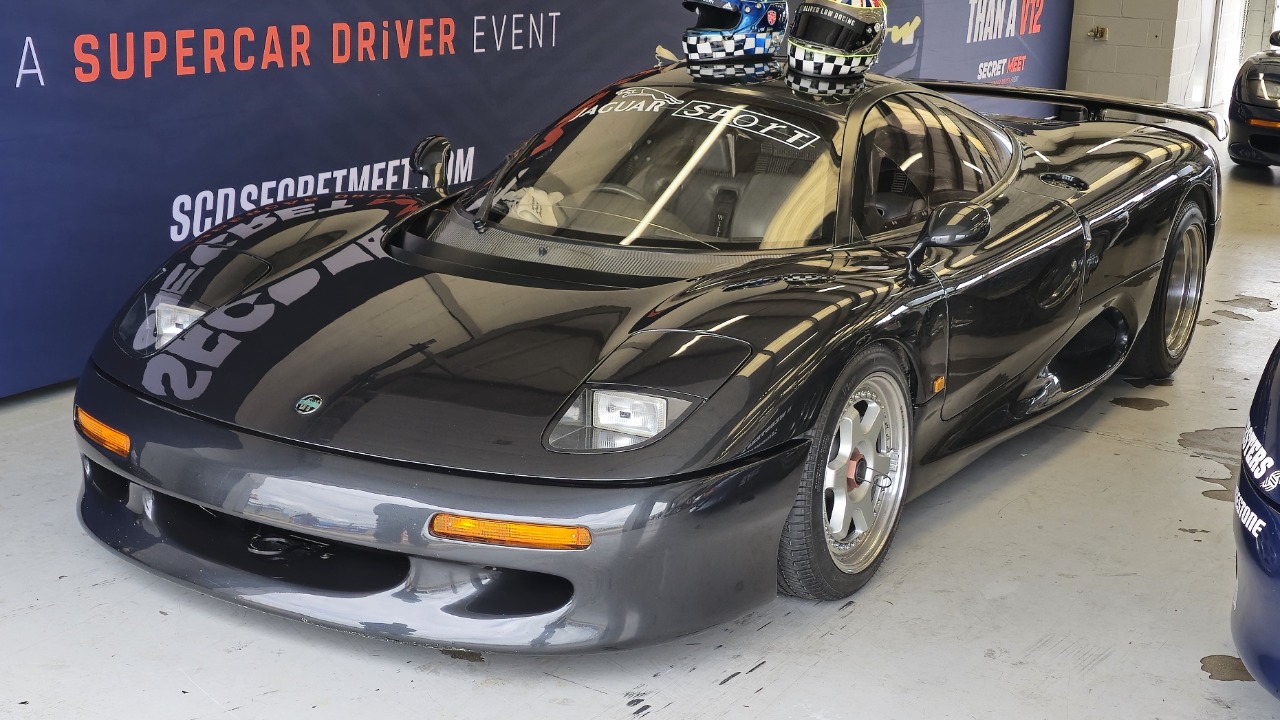
The Jaguar XJR-15 slipped out of the public eye almost as quickly as it arrived, overshadowed by louder, more commercially minded supercars. Yet the car’s blend of race-bred engineering, carbon-fibre construction, and raw V12 performance means it still feels startlingly modern whenever one surfaces. I want to trace how this limited-run experiment effectively disappeared from mainstream memory while its underlying ideas kept shaping what we now expect from the fastest road cars.
From Group C dominance to a road-going experiment
The story of the Jaguar XJR-15 begins with a racing program that was at the peak of its powers. The car was conceived as a road-usable evolution of the Jaguar XJR endurance racers that had conquered circuits like Le Mans, turning that competition pedigree into something a private owner could drive. Officially, the result was the Jaguar Sport XJR-15, a two-seater sports car built in limited numbers by JaguarSport, a joint venture that set out to translate prototype technology into a street-legal package that still felt like a racing machine.
That intent is clear in the way the Jaguar Sport XJR-15 was positioned and priced. The project was framed as an ultra-exclusive run, with the Jaguar Sport XJR described as a car for committed enthusiasts rather than a mass-market halo model. It drew directly on the architecture and spirit of the Jaguar XJR race cars, and it was built in such small numbers that it never had a chance to become a familiar sight. That scarcity, combined with its uncompromising focus, set the stage for a car that would be revered by specialists but largely unknown to casual fans.
The first carbon-fibre road car that few saw
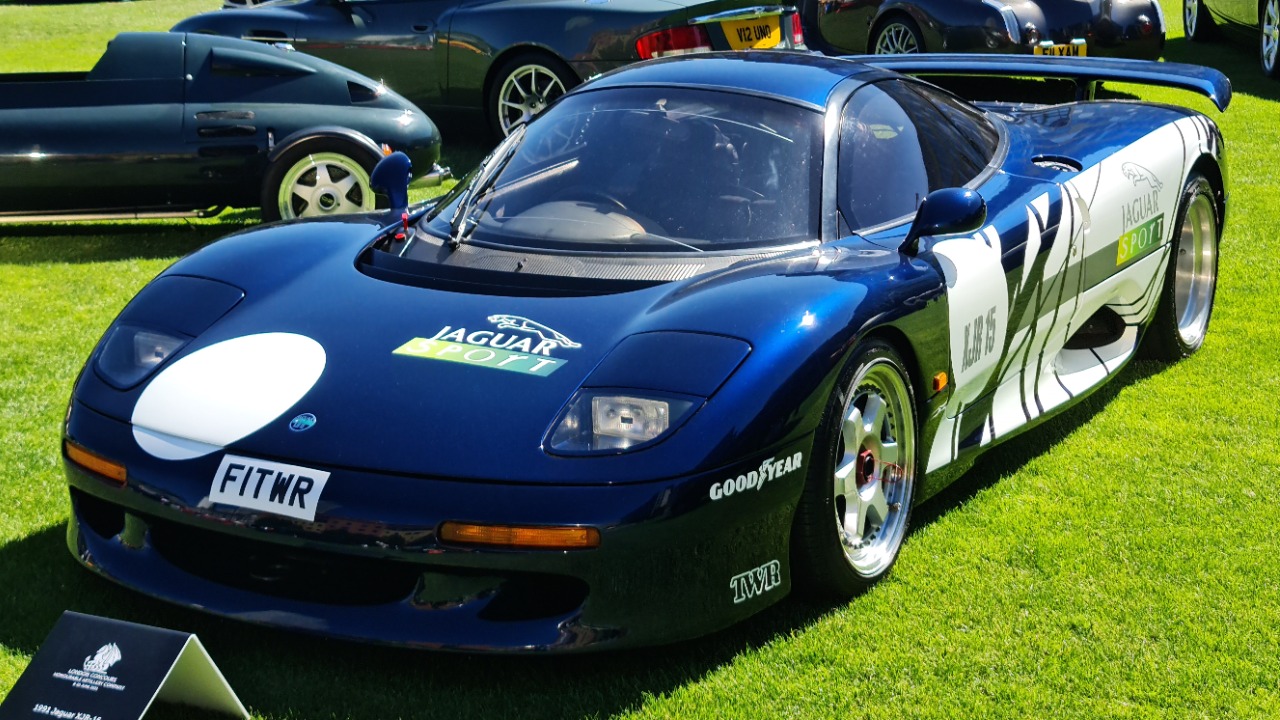
Long before carbon tubs became the default for elite supercars, the Jaguar XJR-15 was already there. The chassis was made entirely from carbon-fibre composite, a construction approach that put it years ahead of most road-going rivals and aligned it more closely with contemporary Group C machinery. In effect, the car treated the street as an extension of the pit lane, using materials and methods that were still exotic even in racing, let alone on public roads.
That ambition came with commercial risk. Early plans envisioned as many as 350 examples, but there were many cancelled orders and Jaguar did not even succeed in selling the full proposed run. Eventually fewer than that figure were completed, which meant the pioneering carbon-fibre composite chassis never had the chance to become a widely recognised calling card. Instead, the car’s structural innovation lived on more as an engineering milestone than a showroom draw, even as later brands built their reputations on similar technology.
A V12 soundtrack that still feels unfiltered
For all its structural sophistication, the Jaguar XJR-15 is remembered most vividly by those who have driven or heard it for its engine. The XJR is powered by a naturally aspirated V12 that delivers its performance with a medley of mechanical noises and a raucous rise and fall of exhaust note that feels closer to a prototype racer than a conventional grand tourer. In an era when many modern supercars rely on turbochargers and electronic sound design, that unfiltered character gives the car a timeless edge.
The powertrain was not just about drama, it was about translating racing hardware into something that could be used away from the circuit. Period accounts describe the V12 as both tractable and ferocious, with the XJR offering a level of engagement that demanded respect from its driver. Optional equipment such as more track-focused components only sharpened that impression. Even now, when I compare it with contemporary supercars, the Jaguar’s combination of displacement, noise, and minimal electronic interference feels like a benchmark for analog intensity rather than a relic of the past.
Built in tiny numbers, used as intended
Part of the reason the Jaguar XJR-15 slipped from view is brutally simple: there were hardly any of them. Only 53 cars were built, a figure that would be small even for a boutique manufacturer, let alone a brand with Jaguar’s global reach. When it comes to legendary Jaguars, few are as rare or as visually striking as the XJR, and that rarity has meant that most enthusiasts have never seen one in person, let alone heard one at full throttle.
What makes the story more intriguing is that a surprising number of those 53 cars have been driven hard rather than locked away. Reports from a dedicated track gathering describe how many examples were brought together and used as they were intended, with Jaguars circulating at serious speed instead of idling in concours lines. That same event highlighted the calibre of drivers the car attracted, with top names signed up including David Brabham, Juan Fangio II, and Derek Warwick, a roster that underlined how naturally the XJR-15 fit into a world of professional competition.
Born from racing, overshadowed by its successors
The XJR-15 was never meant to be a standalone curiosity. Originally known by the code-name R9-R, the Jaguar XJR project was the result of a joint collaboration that drew heavily on the Jaguar XJR-9 race car, effectively turning a proven endurance winner into a road-capable machine. That lineage gave the car instant credibility among motorsport insiders, who saw it as a direct bridge between the pits and the public highway rather than a styling exercise with a famous badge.
Yet that same racing DNA made the car vulnerable to being eclipsed by what came next. As the 1990s progressed, other manufacturers launched supercars that were easier to live with and more heavily marketed, while Jaguar’s own focus shifted. Later retrospectives have argued that the Jaguar XJR deserves recognition as one of the greatest sports cars of its decade, precisely because it stayed so close to the Jaguar XJR-9 race car template. In my view, that closeness to pure competition is what kept its performance edge sharp, even as more polished successors captured the spotlight.
Why it was “doomed to be forgotten”
Even at launch, some observers sensed that the Jaguar XJR-15 was destined to be a connoisseur’s car rather than a mainstream icon. Commentators have described how, unfortunately for the XJR, it was arguably a car doomed to be forgotten by most from the very beginning, in part because of its high price and uncompromising nature. It arrived into a market that was just starting to embrace more user-friendly supercars, and it made few concessions to comfort or practicality.
That perception has only deepened over time. One detailed retrospective argued that the Unfortunately for the XJR narrative misses the point, because the car demands your full attention in a way that modern, electronically cushioned supercars rarely do. I tend to agree. The very traits that limited its commercial appeal, from its heavy steering to its noisy cabin, are the same qualities that make it feel so alive today. If anything, the market has moved back toward valuing that kind of intensity, which helps explain why the XJR-15’s reputation has quietly strengthened even as its public profile remains low.
The 1990s supercar that still feels wild
Placed alongside its 1990s peers, the Jaguar XJR-15 looks less like an evolutionary step and more like a parallel branch. Analysts have called it one of the craziest supercars from the 90s, noting that the Jaguar XJR was effectively a dressed-up XJR race car with license plates. Underneath all the carbon fibre, the layout and hardware were far closer to a competition prototype than to a typical road-going coupe, which gave it a level of responsiveness and immediacy that even some modern exotics struggle to match.
Technical breakdowns of the car’s specification highlight how focused it really was. The This Is What Makes The Jaguar XJR analysis points to the balanced weight distribution, the extensive use of lightweight materials, and the way the chassis tuning prioritised feedback over comfort. When I look at current track-focused specials, from limited-run GT variants to hypercars with active aero, I see echoes of the same philosophy. The difference is that the Jaguar did it with far less electronic mediation, which is why its performance still feels raw rather than curated.
Why you almost never see one
The XJR-15’s near-invisibility in everyday car culture is not just about production numbers. Owners have tended to treat the car as a long-term keeper, and many examples have led sheltered lives. One detailed video profile notes that a particular example has never been raced and remains fully factory original, a reminder that some cars were preserved more as artifacts than as track weapons. That same report points to the high price of the XJR-15 as a factor that kept it out of reach for most enthusiasts and limited its public exposure.
Those dynamics help explain why you will almost never encounter one on the road or even at major shows. The Jun feature that dissects the ownership experience makes clear that maintenance, parts, and the sheer responsibility of driving such a rare machine all encourage cautious use. In practice, that has meant the car exists in a kind of parallel universe: intensely discussed in specialist circles, barely visible in the broader supercar conversation. Its scarcity in the wild has become part of its mystique, reinforcing the sense that it belongs to a small, highly informed community.
A cult icon in two languages
Today, the Jaguar XJR-15 occupies a curious place in automotive culture. It is both obscure and revered, a car that many enthusiasts have read about but few have seen. Reference works describe the Jaguar XJR-15 as a limited-production sports car built by JaguarSport, emphasising its role as a bridge between racing and the road. That framing has helped cement its status as a cult icon rather than a forgotten footnote.
The car’s reach extends beyond English-language coverage. Spanish-language references, including Jaguar XJR entries, catalogue its specifications and history in the same breath as more famous supercars, which suggests a quiet but global respect. When I step back and look at the full picture, from the core Jaguar XJR-15 record to the specialist analyses and owner accounts, the pattern is clear. The car may have slipped out of mainstream view, but its carbon-fibre construction, V12 ferocity, and race-bred focus have kept its performance edge as sharp as ever, preserved in the memories and garages of those who understand what it really is.


Leave a Reply