
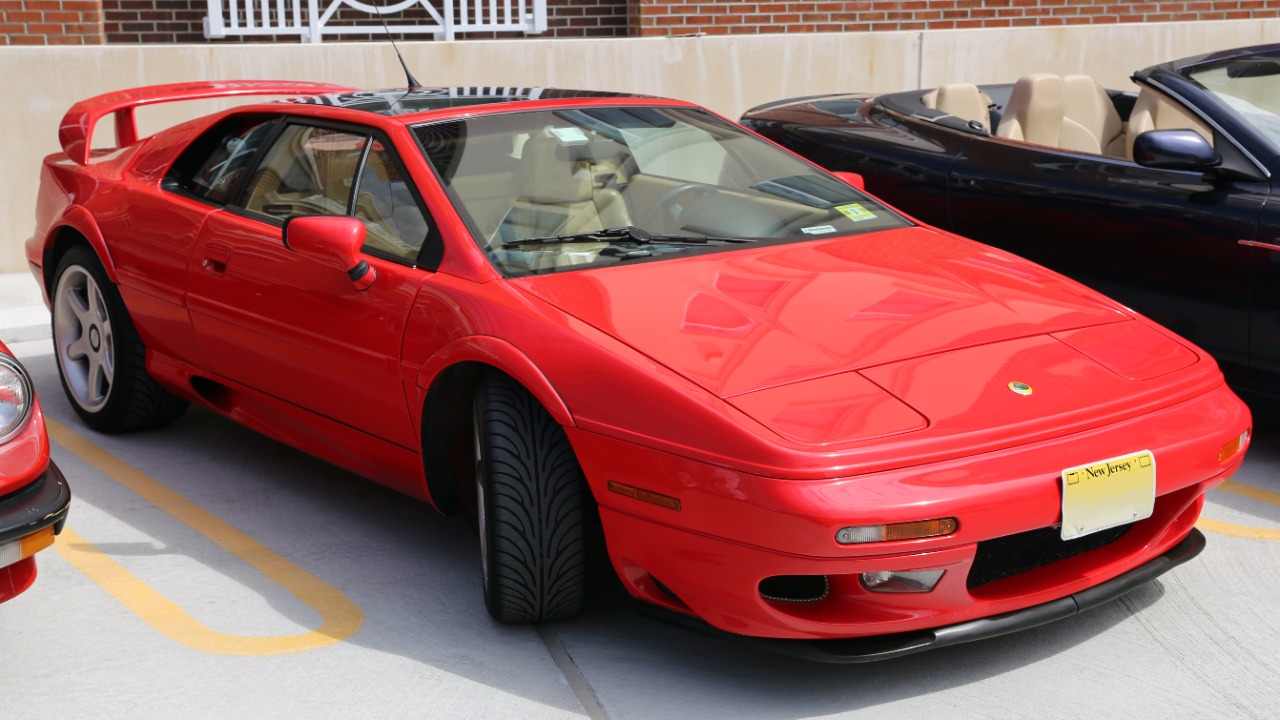
The Lotus Esprit V8 has never traded on brute numbers alone, yet it consistently delivers performance and drama that feel far beyond what its spec sheet suggests. Light weight, clever engineering and a chassis honed over decades allow it to run with far more expensive exotics while still feeling approachable and usable. That mix of raw pace and subtle sophistication is what lets the Esprit V8 punch far above expectations in the modern supercar conversation.
Look past the period styling and you find a car that anticipated many of today’s performance-car priorities: low mass, sharp aerodynamics, and a focus on driver feel rather than headline power figures. I see the Esprit V8 as the point where Lotus fused its minimalist racing philosophy with genuine long-distance speed, creating a machine that still feels relevant even as newer rivals chase ever larger outputs and more complex electronics.
From folded-paper wedge to V8 flagship
The Esprit story starts with shape and structure, not cylinder count. The Esprit was among the first road cars to fully embrace the sharp, polygonal “folded paper” look, a wedge drawn by automotive designer Giorgetto Giugiaro that still reads as purposeful rather than nostalgic. Under that dramatic body, Lotus stuck to its core recipe of a steel backbone chassis and composite panels, a layout that kept weight low and gave engineers a rigid spine to tune around.
That architecture evolved but never lost its essence. A detailed overview of the model line notes that Pure Supercar The Esprit was built around a steel backbone chassis with body panels made of Glass Fibre, and that all Esprit engines moved from the early 4-cylinder to the strong V8 that crowned the range. That continuity matters, because the V8 variant did not abandon the lightweight, glass fibre-bodied philosophy that defined the original; it simply layered more power and refinement on top of a fundamentally agile platform.
Powertrain numbers that matter more than they look
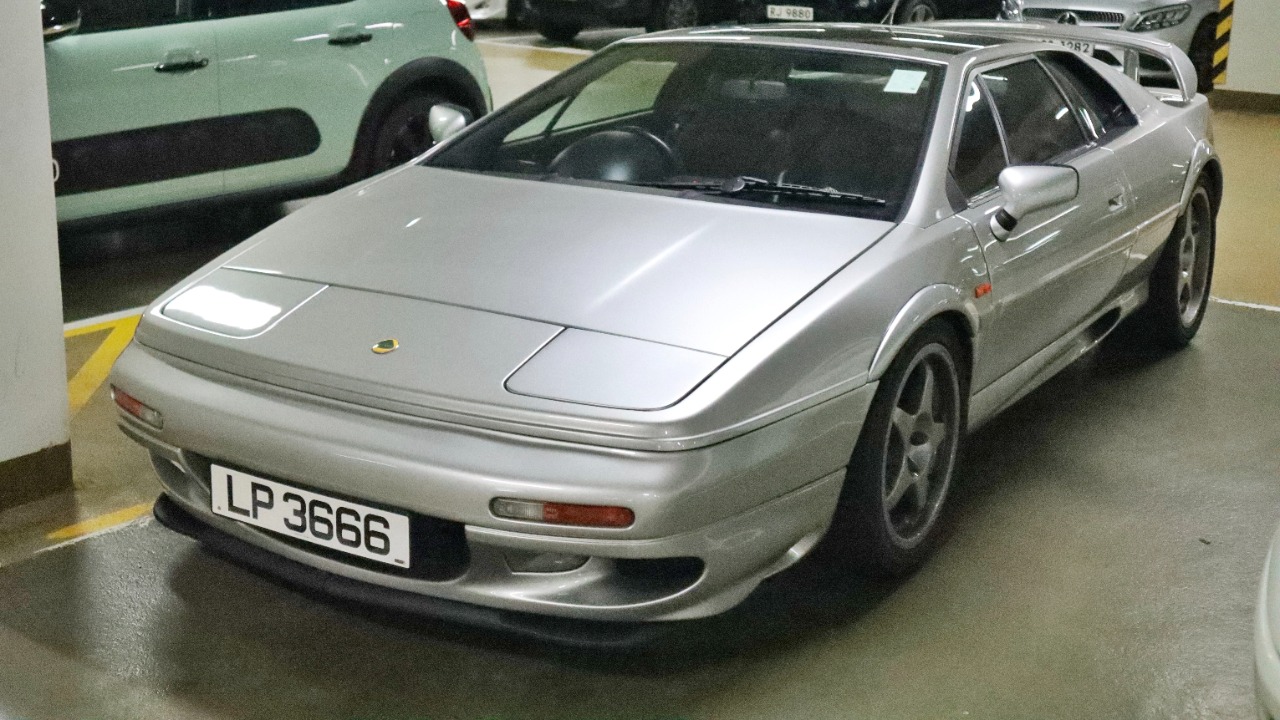
On paper, the Esprit V8’s output can seem modest next to modern supercars that chase four-figure horsepower. Yet the way Lotus combined displacement, boost and mass tells a different story. A contemporary breakdown of the car’s rebirth highlights a 400 bhp 3.5 L V8 in something that weighs less than 1,200 kg, figures that appear in a Dec recap of the Esprit concept and its philosophy. Those numbers, 400, 3.5 and 1,200 kg, are not just trivia; they explain why the car feels so urgent on the road, with a power-to-weight ratio that still embarrasses many newer machines.
Lotus then paired that compact, twin-turbocharged engine with gearing and aerodynamics aimed at serious speed rather than marketing one-upmanship. A specialist description of the model notes that the Esprit V8, Coupled with decades of legendary Lotus handling characteristics and a top speed of 175 mph, made for a superb driving experience. That 175 mph figure, combined with the relatively small 3.5 litre capacity and low mass, underlines how efficiently Lotus extracted performance without resorting to a huge, heavy powerplant.
Chassis tuning that flatters and surprises
Where the Esprit V8 really overdelivers is in the way it rides and handles. Period impressions often fixate on how unexpectedly compliant the car feels at normal speeds, a trait that runs counter to the stereotype of stiff, nervous 1990s supercars. One evocative account captures that first impression with the line “On the move, the first thing that shocks me … is the softness of the suspension,” before going on to describe how the car simply feels quite muscular rather than brittle. That softness is not sloppiness; it is deliberate tuning that lets the Esprit breathe with the road while still locking down body control when you lean on it.
From my perspective, that duality is central to why the Esprit V8 feels more sophisticated than its age suggests. The same backbone chassis and glass fibre body that kept weight low also gave Lotus engineers the freedom to run relatively supple spring rates without sacrificing precision. Combined with the mid-engine layout and carefully managed weight distribution, the result is a car that can soak up poor surfaces on a commute yet tighten its responses instantly when you commit to a fast corner, a balance that many newer, heavier supercars struggle to match.
Real-world performance and the cost of speed
Any car that mixes a twin-turbo V8 with long-legged gearing will have a thirst when driven hard, and the Esprit V8 is no exception. A detailed road test notes that fuel efficiency should be reasonable in theory, but that spirited travelling has not been achieved with economy in mind, and that Here, Lotus pays for the great performance with higher consumption. That trade-off is hardly unique, yet it stands out because the rest of the car feels so light on its feet and so compact that you almost expect hot-hatch running costs.
Price positioning added another layer to the Esprit V8’s underdog appeal. A contemporary overview of the range points out that, at the time, there was effectively just one model, the Esprit V8, costing £49,995, and that Jan commentary even suggested that “Range” might be stretching things too far for a single variant. That £49,995 sticker placed the car in a sweet spot: expensive enough to feel special, yet significantly cheaper than many rivals that could not match its combination of 175 mph top speed and Lotus-honed dynamics.
Rarity, legacy and why the V8 still matters
Part of the Esprit V8’s mystique comes from how few were built relative to its impact on car culture. A dedicated breakdown of Lotus Esprit Production Figures shows how each Model or Variant, its Engine and its Build Quantity were carefully catalogued, underlining that this was never a mass-market product. Within that data, the Esprit V8 Twin Turbo stands out as a particularly scarce entry, and a focused table that lists each Model, Variant, Engine and Build Quantity records the Model as the Esprit V8 Twin Turbo with a Build Quantity of 54. That level of rarity is more in line with boutique supercar makers than with mainstream sports-car brands.
For me, that scarcity amplifies the car’s significance rather than diminishing it. The Esprit V8 represents the final, most mature expression of a design that began with Giugiaro’s folded-paper wedge and evolved into a genuinely fast, long-legged GT without losing its core identity. Its backbone chassis, Glass Fibre bodywork and progression from 4 to the strong V8 show a clear engineering throughline, as laid out in the All Esprit overview. When you combine that heritage with 400 bhp, a 3.5 litre twin-turbo engine, sub 1,200 kg mass and a 175 mph top speed, you end up with a car that still feels like a benchmark for how much performance and character you can extract from relatively modest numbers.


Leave a Reply