
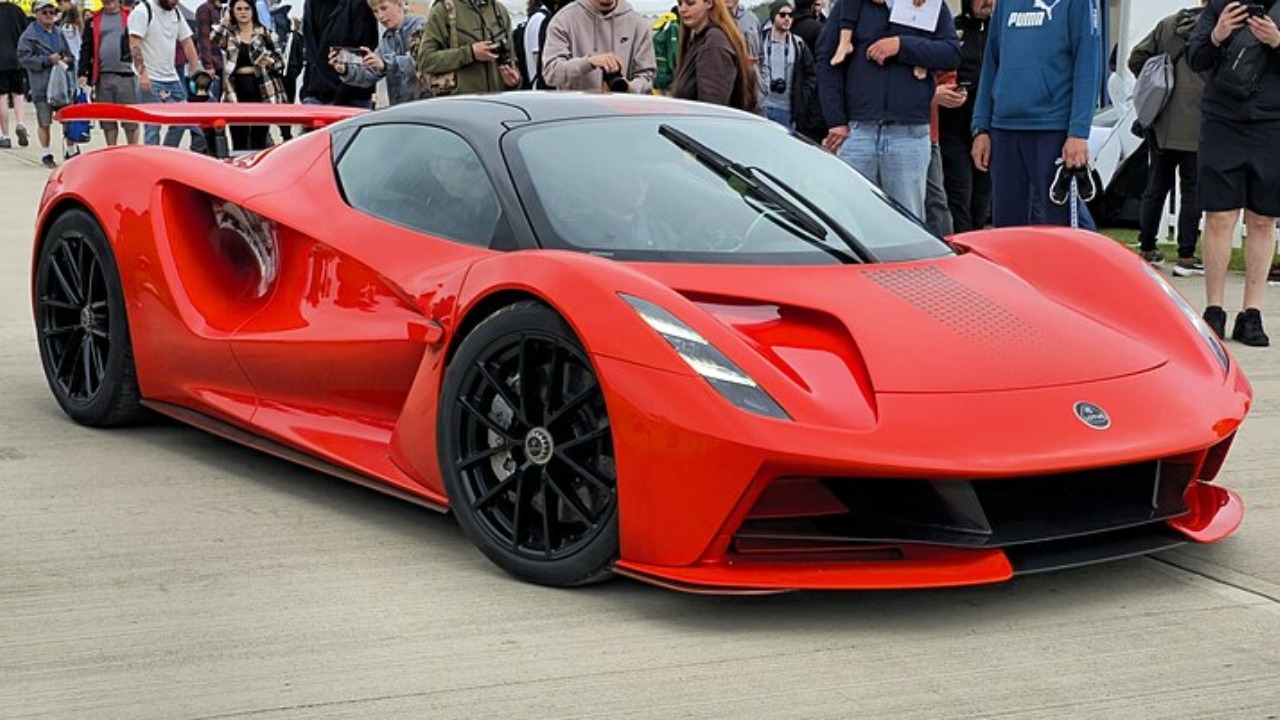
The Lotus Evija is not just another fast electric car, it is a deliberate attempt to stretch what a road‑legal EV can do until the numbers start to sound faintly ridiculous. By pairing towering power with obsessive weight saving and radical aerodynamics, it has dragged electric performance into territory that once belonged only to the wildest combustion hypercars. In the process, it has forced the rest of the industry to rethink what “too much” really means.
From McLaren F1 dreams to EV shock therapy
When I look at the Lotus Evija, I see a car built to answer a very specific childhood fantasy: what if the magic of a McLaren F1‑style hypercar could survive the switch to batteries and motors. Earlier generations grew up on the benchmark road tests from Autocar and Motor that treated the F1 as a once‑in‑a‑lifetime event, yet today we live in a world where family SUVs can match that icon to 60 mph and beyond. Against that backdrop, the Evija arrives as a kind of shock therapy, a reminder that performance can still feel outrageous rather than merely inevitable, and recent testing has shown it can reach 200 mph in 13.0 seconds, a figure that would have sounded like science fiction in the era when Autocar and Motor were first chronicling the F1’s exploits, as highlighted in a detailed road review.
That context matters because it explains why Lotus felt compelled to go so far beyond the usual EV supercar template. The company did not just want a quick electric flagship, it wanted something that would reset expectations in the way the F1 once did, only this time with instant torque and silent thrust instead of a screaming V12. The Evija’s mission is to make even jaded enthusiasts sit up and reassess what an electric drivetrain can deliver, and the numbers it posts against that goal are the clearest sign that the strategy is working.
Power figures that read like a typo
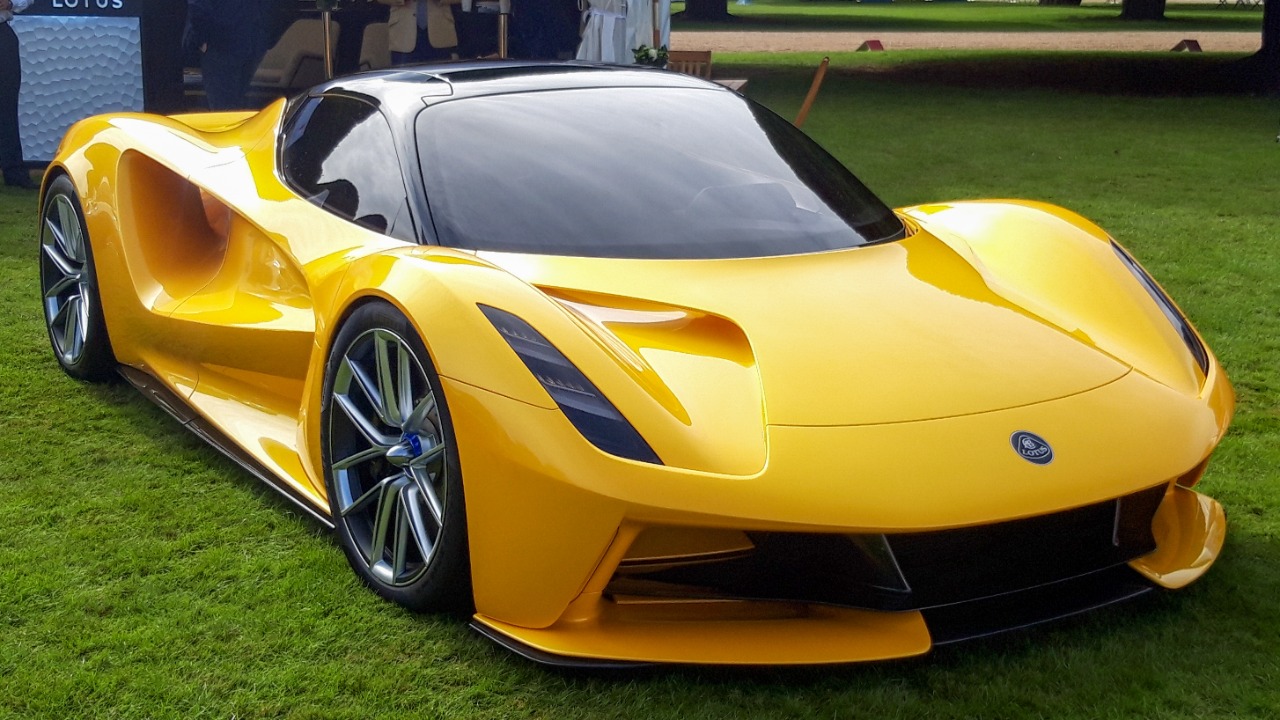
The first clue that the Lotus Evija is playing in a different league comes from its raw output, which is so extreme it almost looks like a misprint. The 2024 Lotus Evija is equipped with four electric motors that deliver 1972 horsepower and 1254 lb‑ft of torque, figures that would have been unthinkable for a road car only a decade ago and that still dwarf most combustion hypercars today, as laid out in the official specification breakdown.
That output is not just about headline bragging rights, it underpins a broader claim that the Evija is currently the most extreme expression of electric performance on sale. Let Four electric motors power the Lotus Evija, and Together they produce a level of shove that has led analysts to call it the most powerful production car, a status that reframes what buyers can expect from an EV at the very top of the market and is spelled out in a closer look at how those numbers stack up.
Acceleration that bends your sense of time
All that power would be academic if the Evija did not convert it into real‑world speed, but its acceleration figures are where the car truly crosses into the absurd. Forget 0 to 60. Lotus’s All‑Electric Evija Will Go 0‑186 MPH in an Insane 9 Seconds, a statistic that compresses the kind of speed ramp you would expect from a race car into a single, continuous surge on a public road, as detailed in a deep dive into how the Electric Evija Will Go 186 M.
Lotus has been clear that it still cares about the traditional sprint benchmarks, and Now, don’t get it twisted: Lotus is still focused on a sub‑three second 0‑60 m time for the Evija, even if the company prefers to talk about the more dramatic 0‑186 run, a balance that was underlined when Lotus test drivers explained how they chased both instant punch and sustained acceleration in early development, as recounted in a profile of how Lotus, Evija and its 60 m sprint compare with rivals.
Engineering the madness: motors, batteries and weight
Underneath those wild numbers sits a very deliberate piece of engineering that tries to reconcile massive power with Lotus’s historic obsession with lightness. At the heart of the Evija is an ultra‑advanced all‑electric powertrain developed by technical partner Williams Advance, a setup that integrates the battery and the four wheel–drive powertrain in a way that keeps mass concentrated and response immediate, a philosophy unpacked in a technical analysis of how At the core the Evija and Williams Advance pushed power delivery.
But Lotus did not stop at the motors and inverters, it rethought the battery layout to keep the car as agile as its combustion ancestors. Sep 21, 2024 reports have highlighted that But Lotus, a brand known for its obsession with lightweight engineering, refused to follow the usual EV pattern of a heavy pack in the floor, instead positioning the cells to improve handling and balance, a choice that helps the Evija remain one of the lightest EV hypercars and is explored in detail in a breakdown of how the battery pack is not in the floor.
That packaging works hand in hand with a Revolutionary Design that treats the body as both sculpture and airflow management tool. The design of the Lotus Evija is a blend of aesthetics and aerodynamics, with surfaces carved to feed air through the car as much as around it, and the same philosophy extends to an Advanced Battery System: The state of the art pack is tuned for different driving conditions and preferences, a combination that lets the car deliver its towering performance repeatedly rather than as a one‑shot party trick, as outlined in a comprehensive overview of the Revolutionary Design of the Lotus Evija.
Aerodynamics that treat air like a second chassis
Lotus has always cared about how a car moves through the air, but with the Evija it treats airflow almost like a second chassis that can be tuned as precisely as the suspension. Most cars have to punch a hole in the air, to get through using brute force, but the Evija is unique because of its porous bodywork that channels air through dramatic tunnels in the rear, a concept that reduces drag while generating downforce and is explained through the company’s own description of how Most cars punch air while the Evija shapes it.
That focus on airflow is not just about top speed, it is about making the car feel stable and predictable when you are exploiting its extreme acceleration. Unlike other Lotus‑badged EVs, which are heavier than equivalent models from other brands, going against the brand’s lightness, Lotus insists the Evija isn’t overweight, and that confidence rests partly on how the aero package works with the chassis to keep the car composed at the kind of speeds where small instabilities can become big problems, a point underscored in reporting on how Unlike other Lotus EVs, this one stays true to the brand’s core values.
On‑road results that rewrite the record book
All of this engineering effort would ring hollow if the Evija did not deliver when independent testers got hold of it, but the timing sheets suggest it has more than lived up to the hype. From 100‑150mph, the Evija is nearly three seconds faster than any hypercar previously tested by Autocar, and from 150‑200mph the gap grows even larger, a margin that shows just how far its electric drivetrain has leapt ahead of combustion rivals and that has been documented in detail in coverage of how the Evija set new performance records.
Those numbers are backed up by broader road test impressions that place the car among the fastest machines ever to wear a number plate. Jul reports on the Evija’s early testing noted that the result was record‑breaking acceleration times and earning the title of one of the fastest production cars ever tested, with the car able to hit extreme speeds within just a kilometre, a verdict that underlines how thoroughly it has reset expectations for what an electric hypercar can do, as captured in a summary of how it breaks records in an Autocar road test.
How it stacks up against other electric exotics
In a market that now includes a growing list of battery‑powered supercars, the Evija’s trick is to feel more focused and more driver‑centric than its spec sheet alone might suggest. Unmatched Power and Performance has become a marketing phrase attached to the car, but the more interesting claim is that The Lotus Evija is Equipped with four individual motors that allow precise torque vectoring, and that unlike many electric supercars that lean on software to mask their weight, it aims to deliver an engaging and immersive driving experience that feels closer to a traditional lightweight sports car, a positioning explored in a comparison of how The Lotus Evija is Equipped to stand apart.
On paper, rivals can match some of its metrics, but few combine them with the same single‑minded brief. The goal behind the Lotus Evija was to build a powerful performance car “for the drivers”, illustrating world‑class engineering at Lotus ( Lotus cars ), a mission statement that explains why the company was willing to chase such extreme outputs while still sweating details like steering feel and chassis balance, as set out in the official account of how the Lotus Evija was readied for launch.
The absurd future it points toward
For all its drama, the Evija is not a one‑off stunt, it is a preview of where electric performance is heading. Lotus Evija: 0‑300 km/h (0‑186 m) in 9,1s is a figure that will not stay unique forever, and Further performance figures include acceleration from 100‑200 km/h in less than three seconds and 200‑300 km/h in less than four seconds, benchmarks that will inevitably tempt other manufacturers to chase similar territory, as catalogued in a technical summary of the Lotus Evija and its 300 km/h sprint.
That escalation raises real questions about how much performance is usable on public roads, but it also shows how quickly EV technology is maturing. Sep 14, 2021 analysis of the Evija’s development made clear that its powertrain architecture, from the Williams Advance hardware to the bespoke battery layout, is a template that can be scaled and adapted, and as more brands study what Lotus has achieved, the absurd numbers that define this car today may soon feel like the starting point rather than the ceiling, a shift that will trace its roots back to the moment the Evija first pushed the limits of weight and power delivery.

Leave a Reply