

The McLaren 720S arrived with the spec sheet of a traditional supercar but quickly started humiliating machines that cost more, weighed more and wore the coveted “hypercar” label. Its mix of raw speed, clever engineering and everyday usability turned it into the car that owners of million‑dollar exotics quietly feared lining up against. I want to unpack how that happened, and why the 720S still feels like the moment McLaren cracked the code for punching far above its weight.
From spec sheet to “hypercar killer”
On paper, the 720S looks like a very fast but fairly conventional mid‑engined coupe, yet the numbers only hint at what it can do. McLaren’s own description of the car as a force of nature is not marketing fluff when you consider that its 4.0‑litre twin‑turbocharged V8 delivers UNLEASH THE ELEMENTS and 710bhp Power, all sent to the rear wheels through a rapid dual‑clutch gearbox. That output, combined with a slippery body and obsessive weight control, gives the 720S the sort of power‑to‑weight ratio that usually lives in the realm of limited‑run exotics.
The car’s “giant killer” reputation was forged not in brochures but at drag strips and track days where it repeatedly embarrassed more expensive machinery. At ATCO Raceway in New Jersey, one owner took a stock 720S and laid down a quarter‑mile time that put it squarely in hypercar territory, a run so quick it helped cement the car as a hypercar killer in enthusiast circles. When a series‑production supercar can match or beat the acceleration of far rarer, more powerful flagships, the hierarchy starts to look less like a pyramid and more like a flat line with the 720S sitting awkwardly close to the top.
The science behind the speed
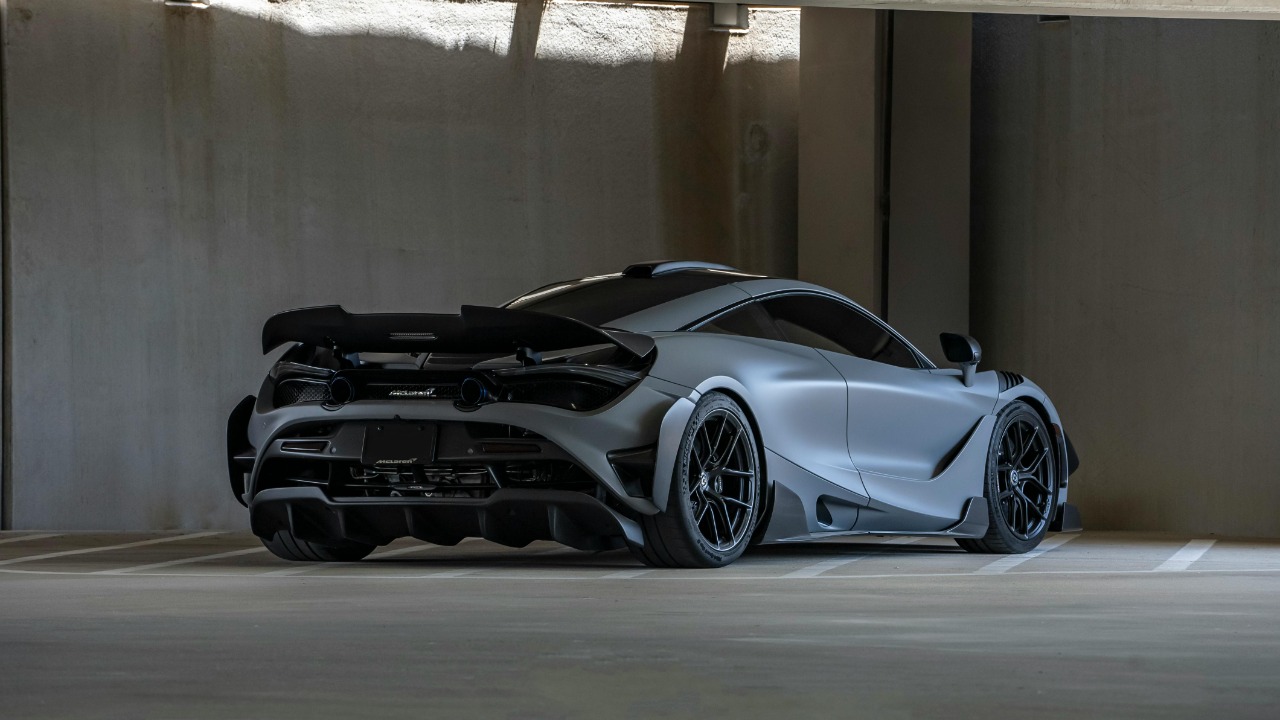
Raw horsepower is only part of the story, and in the 720S it is the way the car uses its power that makes it feel almost unfair. A rocket scientist who analysed the car’s performance pointed out that, beyond the headline figure of 700 horsepower ready to light up its rear tires, the key is how efficiently the chassis and aerodynamics translate that output into forward motion. The 720S combines a very low drag coefficient with carefully managed downforce, so it slices through the air at speed yet still feels planted as the numbers on the digital speedometer climb toward a claimed 212 mph top speed.
That stability is not accidental. In a separate breakdown of the car’s behaviour at high velocity, Don Conversano, the rocket scientist in question, turned his attention to how the 720S manages airflow over and under its body to stay extremely stable at high speeds, treating the car almost like a road‑going spacecraft. His explanation of how the active aero elements trim the car’s attitude in real time shows why the 720S feels so composed when you lean on it, and why a detailed analysis by Conversano resonated with engineers and owners alike. The result is a car that does not just accelerate brutally, it does so with a calm, almost clinical precision that encourages you to explore more of its capability.
Light weight, heavy punches
What really tilts the fight in the 720S’s favour is how little mass it has to move. Built around a carbon‑fibre tub and clothed in thin, aerodynamically sculpted panels, the car undercuts many rivals on the scales, which is why its power‑to‑weight ratio feels so outrageous from behind the wheel. Later coverage of the closely related 750S highlighted that the 720S tipped the scales at just 1,277 kilograms, giving it a serious class‑leading edge in power‑to‑weight ratio even before McLaren started shaving grams for the newer model. That figure helps explain why the 720S can run with, and often outrun, cars that boast more absolute power but also carry hundreds of extra kilograms.
The company’s relentless focus on trimming fat became even clearer when engineers developing the 750S went hunting for improvements and, as one track review put it, Somehow found 30kg of unnecessary weight in the 720S. That detail retroactively underlines how aggressively McLaren was already chasing lightness with the earlier car, and how much performance headroom was baked into the original design. When you combine that diet with a twin‑turbo V8 that some independent testing has suggested may be closer to 800 horsepower in the real world, you start to see why the 720S behaves like a cheat code on wheels.
Chassis genius that flatters and frightens
Speed is meaningless if you cannot use it, and this is where the 720S’s chassis turns it from a numbers car into something genuinely transformative. The active suspension can be stiff and composed on track, then soften off to be dazzling fun on public roads, which is why one detailed look at the car’s dynamics described how the system lets it flow over bumps without losing its edge. That ability to shape‑shift between compliant and razor sharp is a big part of what made it one of the best supercars of its era, and it is the reason I think of the 720S as a car that shrinks around you rather than one you have to wrestle. The way the active suspension constantly adapts means you can carry speed over imperfect tarmac that would unsettle more traditional setups.
That dual personality extends to the steering and brakes, which give the 720S a level of feedback that encourages you to lean harder and brake later, even as the car’s acceleration keeps reminding you how quickly things can go wrong. One assessment of the 720S captured this tension by noting that its you‑will‑never‑be‑able‑to‑go‑full‑throttle power‑to‑weight ratio keeps its operator on the edge, making the car more stimulating than caffeine. It is a vivid way of saying that the 720S is both addictively engaging and slightly intimidating, and it is why I see it as a machine that flatters skilled drivers while demanding respect from everyone else. That sense of barely contained energy is central to the car’s legend, and it is summed up neatly in the description of that power‑to‑weight that so many owners recognise.
Everyday usability and the “Complete Supercar” effect
What separates the 720S from many of the giants it topples is that it is not a fragile track toy, it is a car you can actually live with. The cabin is airy, visibility is unusually good for something this fast and the controls are intuitive enough that you do not need a race engineer riding shotgun to make sense of them. That usability is why some observers have called it The Complete Supercar, a label that reflects not just its performance but also the way the Spider version adds open‑air drama without sacrificing a 205 mph top speed. In my view, that breadth of ability is what turns the 720S from a fast car into a benchmark.
Even small details reinforce that sense of everyday friendliness. Owners who want sharper throttle response can fit a controller and still be reminded that, While it ( McLaren 720S ) has enough power to jump to hyperspace, the car will respond well on every occasion, a line that captures both its sci‑fi acceleration and its approachable manners. That balance between outrageous speed and real‑world usability is why a product aimed at tuning the car’s response can confidently tell you that you will want to know all these traits as you own one, and why I think of the 720S as a car that invites you to use its performance rather than hide it away. The fact that a While description can talk about hyperspace and daily response in the same breath tells you everything about its dual character.
How the 720S reshaped its rivals
The shockwaves from the 720S’s performance have been felt well beyond McLaren’s own showroom. When a dealership that lives and breathes Stuttgart’s finest compares a 2023 Porsche 911 to the 720S and concedes that the McLaren is more of an engineering marvel than anything else, it is a sign of how far the British car has shifted expectations. That comparison highlights how the 720S’s incredible performance numbers and technology, including features like active aerodynamics and hybrid drivetrain integration in the broader McLaren family, set a new bar for what a modern supercar should offer. Reading that comparison with the 2023 911, I am struck by how naturally the 720S is treated as the reference point rather than the upstart.
The car also forced McLaren itself to evolve. When the company introduced the 765LT, it did so in the shadow of a model that nobody would ever accuse of being slow, a 710-horsepower supercar that already punched far above its weight. The 765LT had to be meaner, lighter and more focused precisely because the 720S had blurred the line between supercar and hypercar so effectively. That context is clear in the way the Nobody description of the 765LT frames the 720S as the starting point for something even more extreme, rather than a car that needed rescuing from mediocrity. In other words, the 720S did not just slay giants, it forced them, and its own successors, to get stronger.
A legacy that still looms large
Even as newer models like the 750S arrive, the 720S’s influence is hard to miss. The newer car is pitched as the ultimate purebred supercar, yet its creators openly acknowledge that they are building on a platform that already had a serious class‑leading edge in power‑to‑weight ratio and everyday usability. When I look at how the 750S refines the formula, trimming weight and sharpening responses, I see a quiet admission that the original recipe was so effective it only needed seasoning, not reinvention. The way Plus and All this makes it one of the most complete supercars ever created could just as easily be read as a tribute to the groundwork laid by the 720S.
For McLaren, that groundwork translated into a straight dash to the finish while everyone else battled for second place in the supercar market, a dynamic that was especially clear when commentators looked back on the 720S’s dominance. Jan assessments that opened with the phrase For Mclaren, it is a straight dash captured how decisively the car reset expectations, and how rivals were left scrambling to respond. When I think about the 720S today, I do not just see a fast McLaren, I see the moment a “mere” supercar started routinely humbling the giants that were supposed to sit above it, and in doing so quietly rewrote the rules of the performance car game. That is how a sleek, carbon‑tubbed coupe from Woking became the giant killer no one saw coming, and why its shadow still stretches across every new supercar that dares to claim the crown.

Leave a Reply