
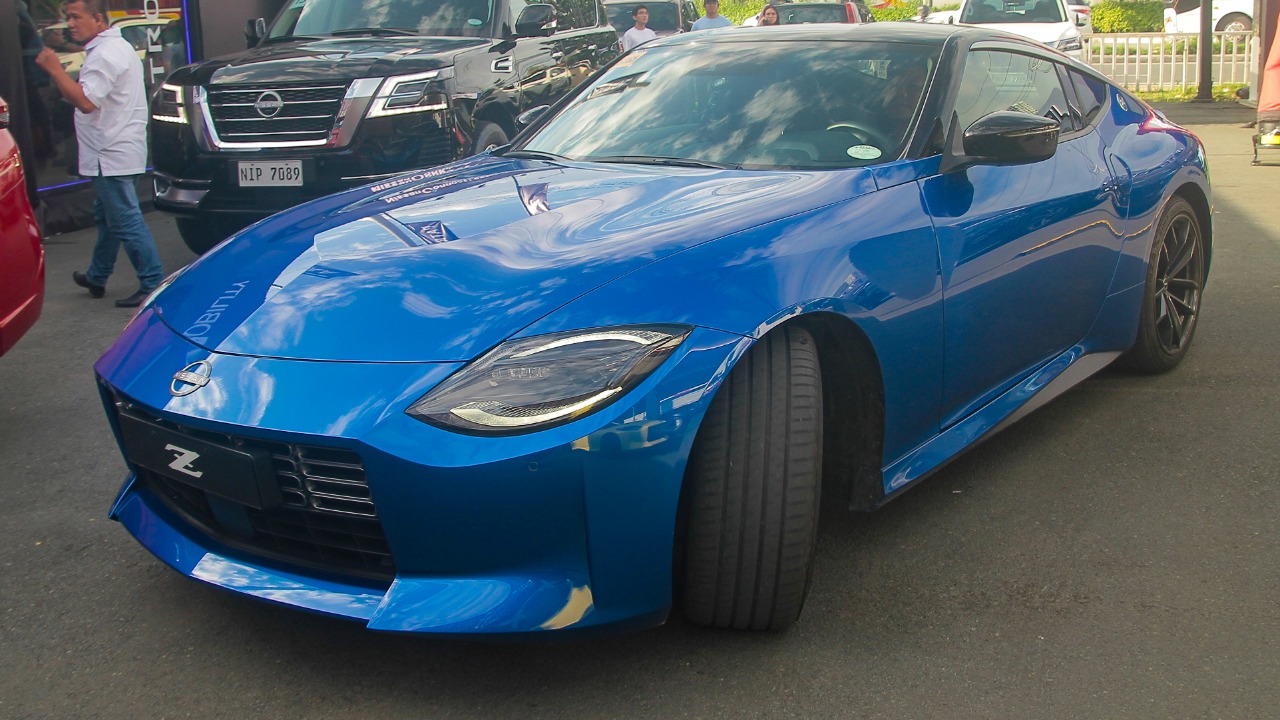
The Nissan 400Z arrived at a moment when performance cars were supposed to be getting quieter, cleaner and, above all, electric. Instead, it doubled down on a twin-turbo V6, rear-wheel drive and a manual gearbox, and in doing so it brought back the kind of boosty drama that defined an earlier era of Japanese sports cars. I see it as a car that does not just reference the past in its styling, it revives the whole ritual of waiting for the turbos to light and feeling the chassis come alive under you.
That is why the 400Z feels less like a new model and more like a reset button for enthusiasts who grew up on analog gauges, mechanical grip and the hiss of wastegates. It is a modern tribute to a performance icon, but the real story is how it reconnects drivers with the raw, slightly unruly character that made the Z name matter in the first place.
Old-school boost in a modern package
When I look at the 400Z, the first thing that jumps out is how unapologetically it leans into classic sports-car hardware. The car is twin-turbocharged, rear-wheel drive and built for pure driving fun, a combination that The Nissan itself highlights as a modern tribute to its own history. That layout instantly recalls the heyday of Japanese performance coupes, when a small-displacement engine with big boost was the recipe of choice. Instead of chasing hybrid complexity or all-wheel-drive trickery, the 400Z sticks to a front-engine, rear-drive format that invites you to steer with the throttle and feel every surge of torque as the turbos come on song.
Underneath the retro bodywork, the fundamentals have been sharpened to make that power usable without sanding off all the character. Engineers reworked the front double-wishbone suspension and the rear multilink aluminum setup to improve both ride comfort and handling, pairing that with a fresh powertrain that keeps the car the same width and height as its predecessor while feeling far more alert. The result is a coupe that looks like a throwback but drives like a contemporary performance car, with a chassis tuned to let you feel the turbos working rather than smothering them in electronic filters.
From Z Proto promise to 400 hp reality

The revival of this kind of turbocharged excitement did not happen by accident, it was telegraphed early in the development story. When the Z Proto concept appeared, it was already clear that Nissan wanted to channel the spirit of its legendary sports cars rather than chase futuristic experiments. Dynamic testing of that prototype was well underway, and the cockpit swapped analog driver gauges for a digital display while still keeping the driver-focused layout that made earlier Z cars so engaging, a balance captured in the way While many concepts stay as fantasy, this one was clearly headed for production. I read that as a signal that Nissan was serious about bringing back a proper driver’s car, not just a styling exercise.
Under the hood, the intent was even clearer. Power output was said to increase to around 400 horsepower thanks to a twin-turbocharged 3.0-liter V-6 borrowed from the Infiniti Q50 and Q60 400 Red Sport, an engine known for its strong midrange punch. That figure is not just a spec-sheet brag, it is the kind of number that makes a rear-drive coupe feel alive on a back road while still being approachable on the street. By pairing that engine with a manual gearbox option and a relatively compact footprint, Nissan effectively recreated the formula that made earlier Z cars cult favorites, only now with the kind of turbo response and torque curve that modern engineering can deliver.
Heritage styling, JDM soul
What really ties the 400Z to old-school turbo culture for me is how openly it wears its heritage. The car is already defined by its retro style, and Nissan doubled down with a Heritage Edition that evokes not one but two legendary Z models, complete with classic graphics running down the sides to match the period-inspired details, a treatment that Nissan uses to connect the modern coupe directly to its predecessors. Even the debate over what to call it, with enthusiasts arguing over Z or 400Z and pointing out how the name once climbed from 240 upward through the generations, shows how deeply the badge is tied to a specific lineage in car culture.
That lineage is inseparable from the broader story of Japanese domestic market performance. The Z sits in the same mental garage as Skylines, Supras and RX-7s, cars that helped build a global tuning scene long before social media. Today, there are countless websites dedicated to sharing information about these cars, along with aftermarket parts and products specifically designed for modified machines, and the 400Z slots neatly into that ecosystem. Its styling nods to the past while its turbocharged heart invites the same kind of tinkering and personalization that defined JDM culture in the first place.
Boost culture, from drag strips to daily life
The clearest sign that the 400Z has reignited old-school turbo excitement is what tuners are already doing with it. One heavily modified example ran the quarter mile in 9.23 seconds while still using a stock engine block, after Basically, AMS threw its catalog of parts at the VR30 engine and paired it with upgraded turbochargers and the stock nine-speed automatic. That kind of performance is deep into supercar territory, and it shows how much headroom the factory turbo setup offers for anyone willing to chase big boost numbers.
The same spirit shows up on the street, where owners are already experimenting with hardware and tunes. Clips of a Nissan Z with upgraded turbos hitting public roads capture the sound and urgency that defined earlier turbo legends, only now wrapped in a modern safety shell. Even in more everyday use, the car is sprinkled with thoughtful touches that make it easier to live with while still feeling special. You get this hidden power outlet at the passenger’s feet and the ability to program up to three garage door openers, details highlighted in a walkaround of the You can see at the 2024 Nissan Z, which shows how the car blends daily usability with its performance focus.
Analog feel in a digital era
For all its power and tuning potential, what keeps drawing me back to the 400Z is how it feels from behind the wheel. Drivers who have sampled it back-to-back with rivals talk about how it feels newer, with a better power-to-weight ratio and a more raw character, exactly the qualities enthusiasts chase in this segment, a comparison captured in a discussion of whether to choose a manual Supra or a manual Z where It feels newer and more visceral. That rawness is not about being crude, it is about letting the driver sense what the car is doing, from the way the turbos spool to the way the rear axle loads up on corner exit.
Nissan’s own messaging around the car underscores that connection. The company describes how the Z has always been a strong dynamic performer that makes it easy for customers to enjoy its capabilities and feel as connected as possible to the car, a philosophy spelled out when the Z has always been positioned as a driver’s machine. Enthusiast commentary has also pointed out how ironic it is that the current model’s V6 traces its roots back to a Renault-related design, yet in this application it has become a serious force to be reckoned with in its segment. That mix of global engineering and classic rear-drive dynamics gives the 400Z a personality that feels refreshingly analog in a market dominated by software-driven experiences.
Unabashedly not electric, and proud of it
In an era when every new performance car seems to arrive with a plug or at least a mild-hybrid badge, the 400Z stands out by refusing to follow the script. It is unabashedly not electric, and that choice is backed up by a chassis and powertrain package that has been carefully refined rather than reinvented. The same report that details the suspension work by Engineers also notes how the car keeps its retro-styled exterior while packaging a thoroughly updated drivetrain, a combination that lets it feel familiar without being dated. For drivers who still want the immediacy of a combustion engine and the character of turbo lag turning into a rush of torque, that stance is a feature, not a flaw.
At the same time, the 400Z does not pretend the world around it has not changed. Its cabin tech, safety systems and everyday conveniences are fully modern, and the car slots into a landscape where digital communities and online tuning shops are as important as local meetups. The same JDM ecosystem that now lives across forums, social feeds and specialist retailers is ready to support this new Z with parts, tunes and shared knowledge, just as it has for earlier generations. In that sense, the 400Z is not just reviving old-school turbo excitement, it is giving a new generation of enthusiasts a fresh canvas to write the next chapter of boost culture on their own terms.



Leave a Reply