
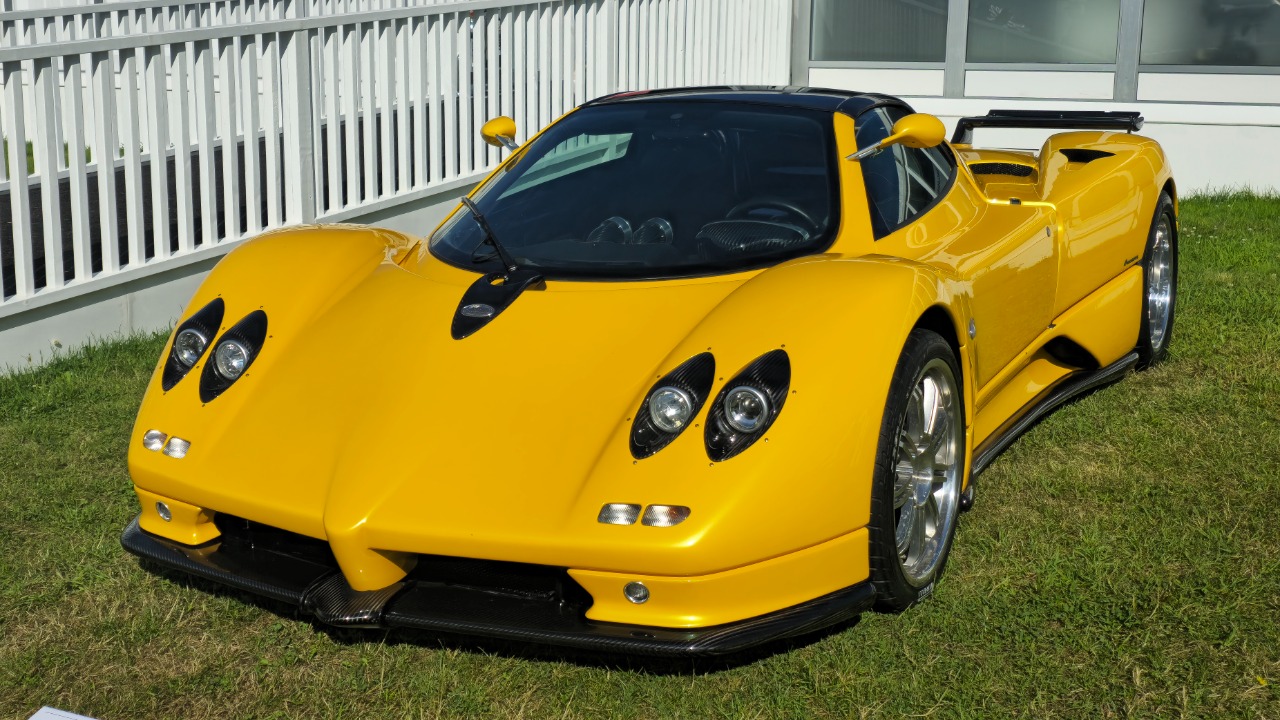
The Pagani Zonda began life as a niche Italian supercar and ended up as the ultimate status object, a machine treated less like transport and more like a blue-chip sculpture. Its journey from obscure debut to coveted art piece runs through design philosophy, obsessive craftsmanship, and a market that now values it like a masterpiece on wheels. To understand why everyone wants one, I need to trace how the car’s creator framed it as art from day one and how collectors, investors, and fans have since reinforced that idea.
The origin story: art, science and a seven‑year obsession
The Zonda did not appear out of nowhere, it was the product of a long, almost stubborn pursuit of a very specific vision. A self-taught car designer, Pagani took seven years to develop the Zonda, combining emotion and functionality in a way that was deliberately closer to sculpture than to mass-produced engineering. From the outset, the project was framed around the Renaissance idea that art and science should not be separated, a theme that would later become central to the car’s myth. That long gestation, with one man’s name on the nose and his fingerprints on every decision, gave the Zonda a narrative more like a studio artist’s body of work than a typical model line.
Inside the company’s own telling, The Zonda embodied the essence of Leonardo Da Vinci’s vision of art and science. The same account notes that Thus Horacio succeeded in combining aesthetic appeal with advanced engineering, treating carbon fiber and titanium as creative media rather than just structural materials. That framing matters, because it positioned the car less as a rival to other supercars and more as a rolling expression of a philosophy. When a creator explicitly invokes Leonardo and spends seven years refining a single idea, the result is primed to be judged as art.
Coachbuilding in the hypercar era
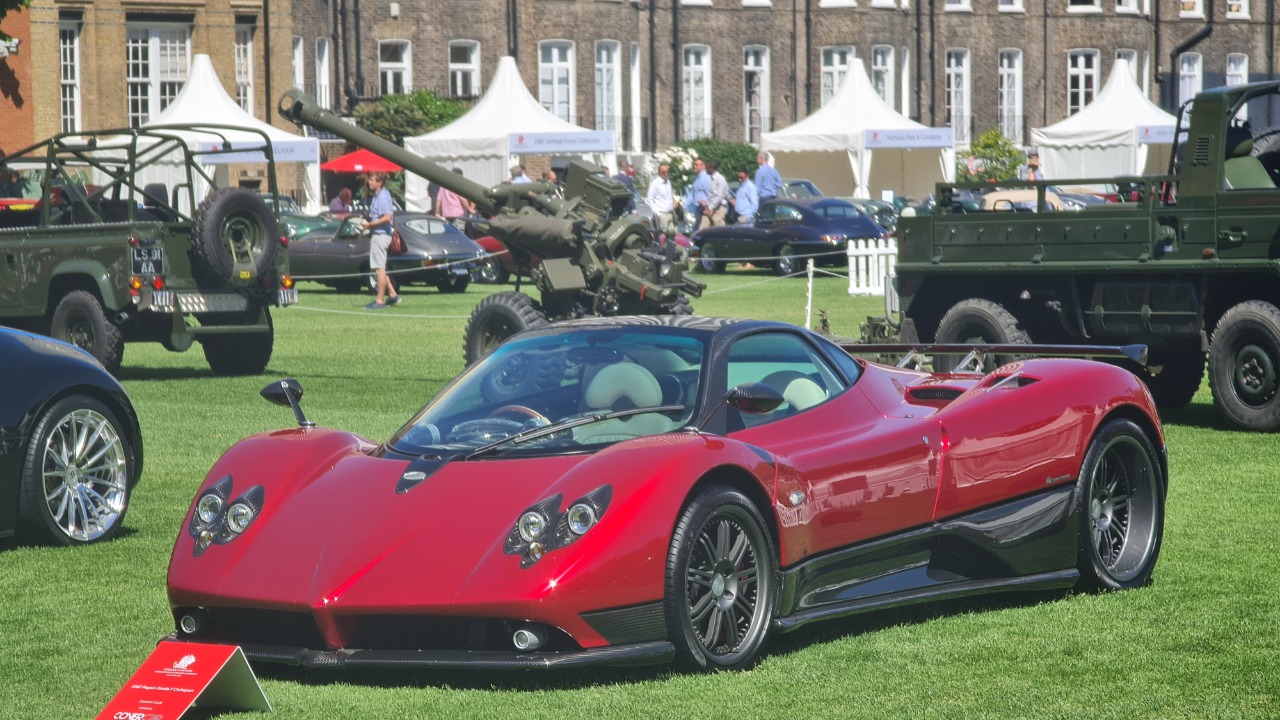
What separates the Zonda from other fast, expensive cars is how closely it hews to old-world coachbuilding in a modern context. The Pagani Zonda is a mid-engine sports car produced by Italian sports car manufacturer Pagani, and it debuted at the Geneva Moto show as a hand-built alternative to industrial supercars. Instead of chasing volume, the company leaned into a workshop mentality, where each car could be treated as a one-off commission. That approach immediately set the Zonda apart from rivals that shared platforms and parts across entire corporate groups.
The scale of the operation underlines that artisanal identity. Pagani hand builds each vehicle in its workshop of just 55 people, and There are no assembly lines at the factory, just stations where craftspeople work directly on each chassis. Enthusiasts have noted that They have pretty much taken classic coach-building and bespoke car manufacturing and applied it to modern hypercars, even if They do not make their own engines. That blend of traditional methods and outsourced powertrains reinforces the idea that the real artistry lies in the body, the cabin, and the way the car is put together.
Design as gallery-grade sculpture
The Zonda’s visual drama is not accidental, it is the product of a designer who treats inspiration like a curator selecting pieces for a show. Company insiders describe how Horacio has certain intuitions, and that he is inspired by a detail that strikes him that often others do not even notice. Those small obsessions, whether a curve in a fender or the texture of a switch, accumulate into a car that feels curated rather than merely designed. The result is a cabin and exterior that invite the kind of close inspection usually reserved for industrial design exhibitions.
That attention to detail reaches its peak in the most extreme variants. The expensive and rare materials utilized to make the Pagani Zonda HP Barchetta’s components are a major factor contributing to the scandalous price of the car, with exposed carbon, bespoke wheels, and intricate metalwork turning it into a limited-run objet. The way the Sep analysis describes those materials makes clear that the car is being judged on the same terms as high-end jewelry or furniture, where rarity and craftsmanship justify extraordinary valuations. In that context, the Zonda’s design language functions like a signature style, instantly recognizable and fiercely collected.
From driver’s car to financial instrument
Over time, the market has caught up with the narrative that the Zonda is more than a machine, and prices have responded accordingly. Loud, fun, and extremely profitable, the Pagani Zonda has made its investors millions of dollars, turning early buyers into beneficiaries of a supercar that behaves like a high-yield asset. Analysts now point out that these jaw-dropping sales have created a schism, drivers versus investors, as some owners treat their cars as track toys while others keep them sealed away as appreciating stock. That tension is a hallmark of art markets, where the joy of living with a piece often collides with the urge to protect its value.
Specialists tracking the car’s trajectory see clear reasons for the surge. Squire notes two key drivers behind the rapid increase in Zonda values, and one of them is Pagani continuing to be relevant with newer models while the original cars become historically important. Officially declaring an end to production made the Officially retired Zonda eligible for the show-and-display import exception to the US market, which in turn expanded the pool of wealthy collectors able to chase the few cars built. Scarcity, regulatory access, and a strong brand story have combined to push the Zonda into the realm of financial instruments.
Influence, culture and the “handmade machine” myth
Beyond prices, the Zonda’s cultural footprint has grown to match its financial clout. The Pagani Zonda is not just a supercar, it is one of the most influential handmade machines ever built, and that reputation has only grown as newer hypercars borrow its cues. When it debuted, the car signaled that a tiny Italian workshop could compete with global giants by focusing on craft and emotion rather than sheer numbers. That influence now stretches across social media, gaming, and enthusiast culture, where the Zonda is treated as a benchmark for how personal a modern performance car can feel.
The company’s own narrative reinforces that myth-making. But Horacio Pagani was and remains passionate about the renaissance concept of art and science working together, in particular the idea that technology should serve beauty rather than overwhelm it. Commentators have likened his storytelling to the way H.G. Wells does Le Mans, blending imagination with racing heritage to create a compelling universe around the brand. That mix of philosophy and performance has helped the Zonda transcend its spec sheet and become a character in the broader story of car culture.
Why the Zonda feels different from other legends
In the pantheon of iconic performance cars, the Zonda often gets mentioned alongside machines like the McLaren F1, but it occupies a distinct niche. The F1 is frequently described with the mantra Form follows function, everything for a reason, with engineers questioning every part of the design, every component and every curve to chase pure performance. That approach, captured in a Form-focused breakdown of the car, treats aesthetics as a byproduct of engineering. The Zonda, by contrast, starts from the premise that beauty and emotion are goals in themselves, even as it delivers extreme speed.
That difference in priorities helps explain why the Zonda is so often described as an art piece everyone wants, rather than simply a benchmark lap-time machine. Where the F1’s legend rests on numbers and racing pedigree, the Zonda’s story leans on its Italian roots, its tiny workshop, and its creator’s almost romantic fixation on details. The result is a car that collectors pursue not only for what it can do on a circuit, but for what it represents about human creativity in an age of automation.
From workshop floor to global pedestal
The Zonda’s elevation to art status is also a story about how a small team can shape global taste. Over the years, company profiles have emphasized that Pagani hand builds each vehicle in that workshop of 55 people, and that there are no assembly lines, only craftspeople moving around a car as if it were a sculpture on a plinth. That image has seeped into the way owners talk about their cars, often describing them as if they were paintings or watches rather than tools. It is a narrative that flatters both the maker and the buyer, suggesting that owning a Zonda is a form of patronage.
Inside the firm, the culture appears to be built around that same idea of personal expression. Mar is used in internal timelines to mark key anniversaries, and the company’s own retrospectives highlight how Horacio has certain intuitions that guide not just individual models but his life and work. When a brand repeatedly tells the world that its founder is an artist guided by instinct, and then backs that up with cars that look and feel unlike anything else, it is not surprising that the market responds by treating those cars like art. The Pagani Zonda’s journey from a corner of the Loud supercar world to a global pedestal shows how design philosophy, craftsmanship, and scarcity can combine to turn a vehicle into a coveted cultural artifact.

Leave a Reply