
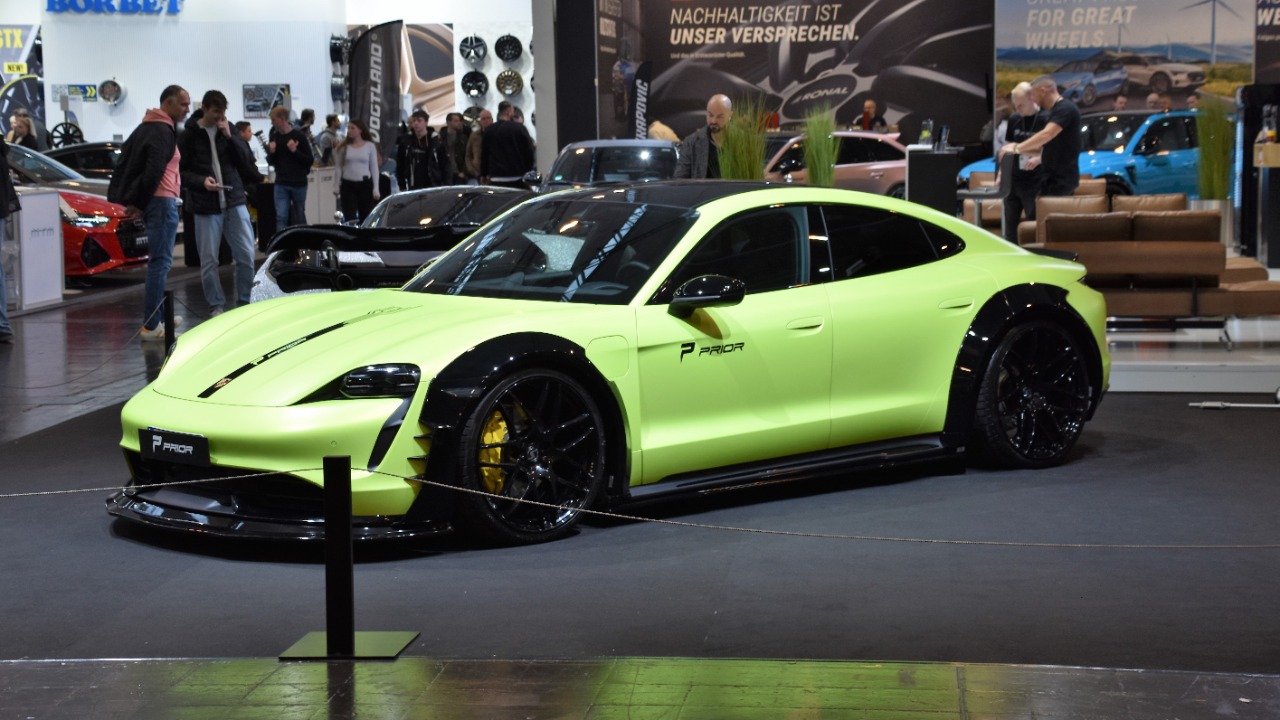
The Porsche Taycan Turbo S did not just make electric cars quick, it reset expectations for what “fast” means when instant torque, race-bred chassis tuning and ultra-high-voltage hardware all pull in the same direction. By treating electrons with the same seriousness it once reserved for flat-six engines, Porsche turned its flagship EV into a benchmark that forces both legacy rivals and startups to rethink how they define performance.
As I look at how this car evolved, from its radical electrical architecture to its obsessive focus on repeatable acceleration and control, it is clear that the Taycan Turbo S did more than chase numbers. It reframed electric speed as something sustainable, controllable and deeply engaging, rather than a one-shot party trick.
From concept to benchmark: how The Taycan changed the rules
The Taycan arrived as a statement that high performance and high voltage could coexist in a daily driver, and the Turbo S sits at the sharpest end of that vision. The car’s defining move was to adopt an 800-volt electrical system, something no previous production road car had done. The Taycan effectively doubled the system voltage compared with typical EVs, which allowed thinner cabling, lower heat losses and, crucially, much higher charging and power delivery without turning the battery pack into a thermal liability.
That architecture was not a science project, it was the foundation for a car that could launch hard, lap quickly and then drive home in comfort. Technical documents on The Taycan underline how the 800-volt system voltage is paired with a battery of 93.4 kWh (cited as 93.4 k) and a system designed around 800 ampere currents, a combination that lets the Turbo S deliver huge bursts of power while still supporting rapid DC Charging. By making this hardware standard rather than exotic, Porsche turned high-voltage tech into a new baseline for electric performance sedans.
Launch control, traction and the new feel of electric acceleration
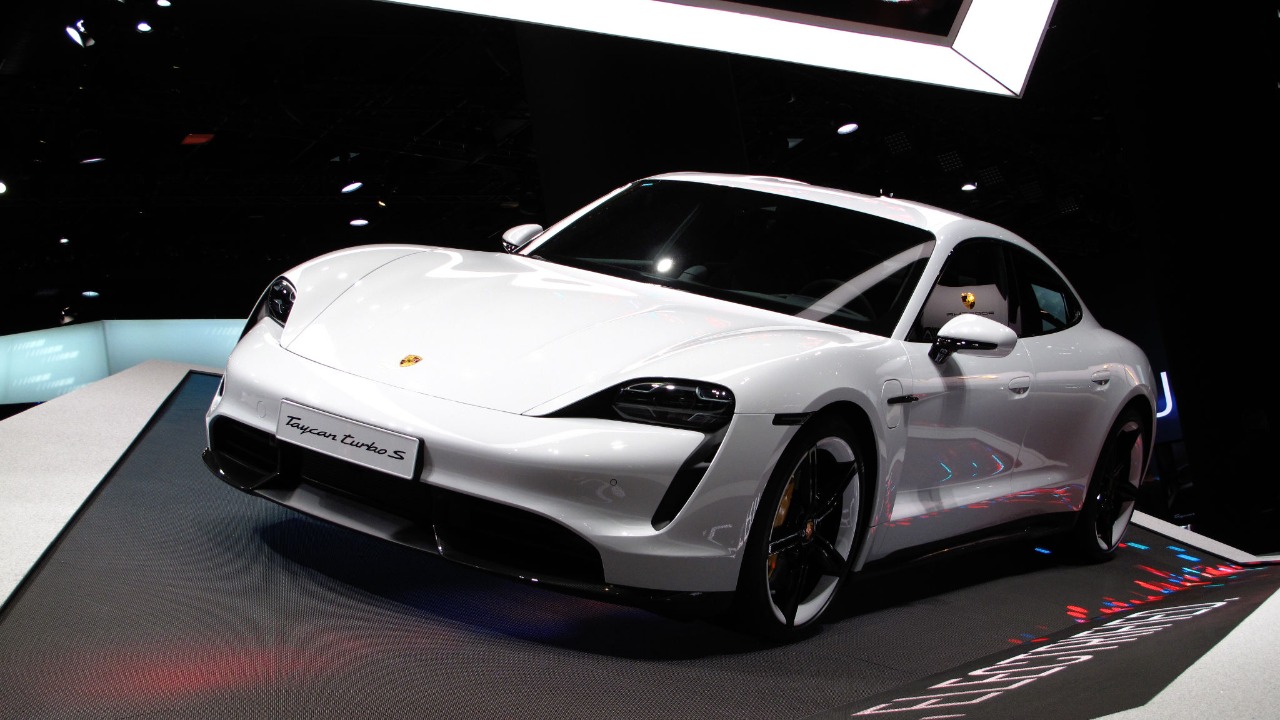
What truly redefined electric fast in the Taycan Turbo S is how controllable its violence feels from behind the wheel. With Launch Control engaged, the car delivers a shove that rivals traditional supercars, yet it does so with a level of repeatability and composure that is rare even among combustion flagships. Guidance on how to Take Launch Control in the Taycan makes clear that Several Porsche models have used similar systems before, but the all-electric sports saloon pushes it to a jaw-dropping 761 PS in overboost, translating that power into a clean, drama-free surge rather than a traction-limited scramble.
Independent testing of the latest Porsche Taycan Turbo variants reinforces how extreme that experience has become. In a detailed Cross Turismo Test from Sep, the Taycan Turbo S Cross Turismo is described as The Ultimate Longroof and a New Kind of Roadside Attraction, with What the testers call mind-bending 2.3-second acceleration that turns a practical wagon into the quickest family hauler they have ever driven. That kind of performance, delivered in a car with real luggage space and four doors, shifts the conversation from “EVs can be quick” to “EVs can be the quickest thing in almost any segment.”
Powertrain engineering: Pure performance without the drama
Underneath the headline numbers, the Taycan Turbo S powertrain is engineered to make extreme acceleration feel natural rather than intimidating. Official technical material describes the setup as Pure performance, with Breathtaking acceleration figures, typical sports car traction and superior, continuously available power that does not fade after a single hard run. Dual electric motors, a sophisticated all-wheel-drive strategy and a two-speed rear transmission work together so the car can leap off the line yet still pull hard at autobahn speeds, something many single-speed EVs struggle to match.
The battery itself is not just a big box of cells, it is tuned for both energy density and repeatable power. The core Taycan lineup uses a Performance battery with optimized cell chemistry across 28 modules, which increases energy density for better range while still supporting the high discharge rates the Turbo S demands. Academic work on the platform notes that Porsche additionally also developed on a new derivative by combining an even more powerful battery, a new electric motor and revised power electronics to create Taycan Turbo GT level performance, underscoring how the original Turbo S architecture left headroom for even more extreme variants.
Chassis, Porsche Active Ride and the art of staying fast
Speed in a straight line is only half the story, and the Taycan Turbo S leans heavily on its chassis to turn electric thrust into real-world pace. Available as an option is Available Porsche Active Ride, a fully active suspension system that continuously levels the car and actively counters pitch and roll to enhance driving dynamics and performance. Paired with a permanently excited synchronous electric motor layout and sophisticated torque vectoring, this setup lets the Turbo S stay remarkably flat through sweeping curves while still absorbing rough surfaces that would unsettle a stiffer, more traditional sports sedan.
The result is a car that can carry immense speed across real roads, not just on a drag strip. Official descriptions of the Taycan emphasize how The Taycan is tuned for negotiating sweeping curves and maintaining stability at high speed, rather than simply chasing peak acceleration figures. That balance is what makes the Turbo S feel like a true Porsche on a challenging back road, with steering, body control and braking that invite the driver to lean on the car’s abilities instead of backing off after a few hard corners.
Charging, range and the reality of living with electric speed
Redefining electric fast would mean little if the Taycan Turbo S were a chore to live with, so Porsche put as much effort into Charging and range as it did into acceleration. The official Turbo S specification notes that the Dealer sets actual selling price, but the technical highlight is an 18 min. Charging time for direct current (DC) with maximum charging power from 10 to up to 80%, a figure that makes high-speed road trips realistic rather than aspirational. That 80% window is where most EV drivers operate on long journeys, and the Taycan’s 800-volt hardware lets it hit those numbers consistently when paired with compatible infrastructure.
Range, meanwhile, is treated as part of the performance equation rather than a separate metric. Commentary on the broader Taycan family notes that Today, Porsche is synonymous with excellence, craftsmanship and a relentless pursuit of perfection, and that ethos extends to how the Taycan balances silent speed with usable distance between stops. By combining a high energy density Performance battery with efficient motors and intelligent thermal management, the Turbo S can deliver its headline acceleration without forcing owners to treat every commute like a range-anxiety experiment.
Design, updates and the evolving idea of “Turbo”
Visually, the Taycan Turbo S had to communicate its intent without resorting to the exaggerated aero of a track special, and the latest refresh sharpens that message. Official product material describes how Porsche’s all-electric Taycan sports saloon has been given a significant update, with the Listicle highlighting new design details, lighting signatures and a Turbonite SportDesign Package that visually separates the most powerful models from the rest of the range. These cues signal that the Turbo S is not just another EV sedan, it is the flagship expression of what the Taycan platform can do.
The “Turbo” badge itself has evolved from a literal reference to forced induction into a shorthand for the top tier of Porsche performance. Dealer-focused commentary on the Top Features That Set the Porsche Taycan Turbo Apart emphasizes Powerful acceleration that rivals traditional supercars, bold design and cutting-edge technology as the pillars that justify the name. In the Turbo S, those traits are amplified to the point where “Turbo” no longer describes a mechanical component, it describes an experience: instant, repeatable and integrated into a car that can handle school runs, cross-country drives and track days with equal confidence.
Why the Taycan Turbo S still defines electric fast
Several years into its life cycle, the Taycan Turbo S remains the reference point for how an electric car can be both brutally quick and deeply refined. The combination of an 800-volt backbone, a 93.4 k battery, sophisticated all-wheel drive and systems like Porsche Active Ride means the car can deliver Breathtaking acceleration while still feeling composed on a wet highway or a tight mountain pass. That breadth of ability is what separates it from EVs that chase a single headline figure but wilt when asked to perform repeatedly or in less-than-ideal conditions.
At the same time, the Taycan Turbo S shows how a heritage brand can reinvent itself without abandoning its core values. The way Porsche has translated decades of chassis tuning, motorsport experience and design discipline into an electric package proves that speed in the battery age is about more than kilowatts. It is about how confidently a car can deploy its technology, how naturally it fits into daily life and how eagerly it invites its driver to explore the upper reaches of its capability, again and again.

Leave a Reply