
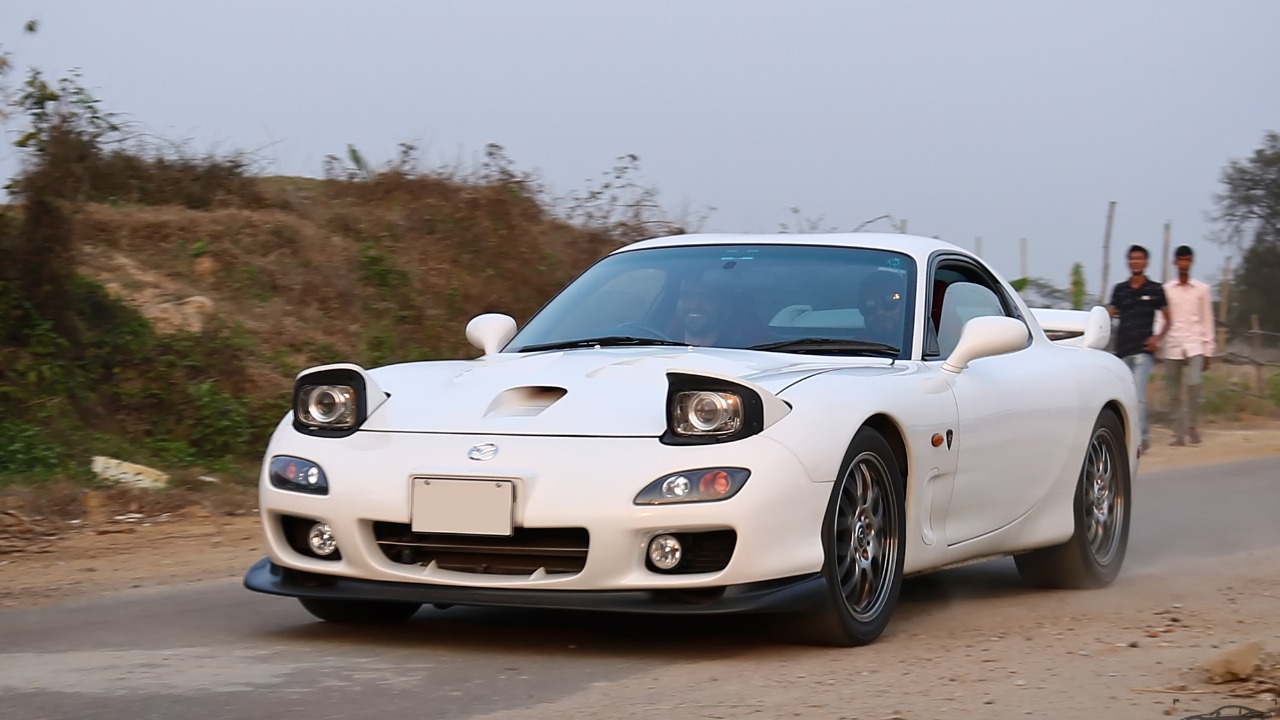
The Mazda RX-7 Spirit R arrived as a carefully judged farewell, the final and most focused expression of Mazda’s rotary sports car philosophy. Rather than chasing headline power figures, it distilled three generations of experimentation into a lightweight, balanced coupe that rewarded precision and commitment. In the process, it turned a niche rotary layout into a cult object that still shapes how enthusiasts talk about Japanese performance cars.
When I look at how the Spirit R is remembered today, what stands out is not just its rarity but the way it sharpened everything the RX-7 already did well. From chassis tuning to cabin details, it was engineered as a last word on the FD3S platform, and that clarity of purpose is why it now sits at the top of Mazda’s rotary hierarchy in the eyes of drivers, collectors, and even model makers.
The FD3S foundation that made a legend possible
The Spirit R could only exist because the third-generation Mazda RX-7, internally coded FD3S, was already a benchmark for lightness and agility. The FD3S combined a compact rotary engine with a low-slung body and rear-drive layout, giving it the kind of proportions that made it a poster car for a generation of enthusiasts. That shape was not just pretty, it was functional, wrapping tightly around the drivetrain to keep weight down and the center of gravity close to the road.
Underneath, the RX-7’s optimal weight distribution and low center of gravity were backed by an advanced double wishbone suspension that allowed engineers to chase both grip and compliance without resorting to brute stiffness. This balance helped the third-generation Mazda RX become a long-running reference point among rotary-powered sports cars, and it laid the groundwork for the more focused Spirit R variants that would follow.
How the Spirit R sharpened Mazda’s rotary formula
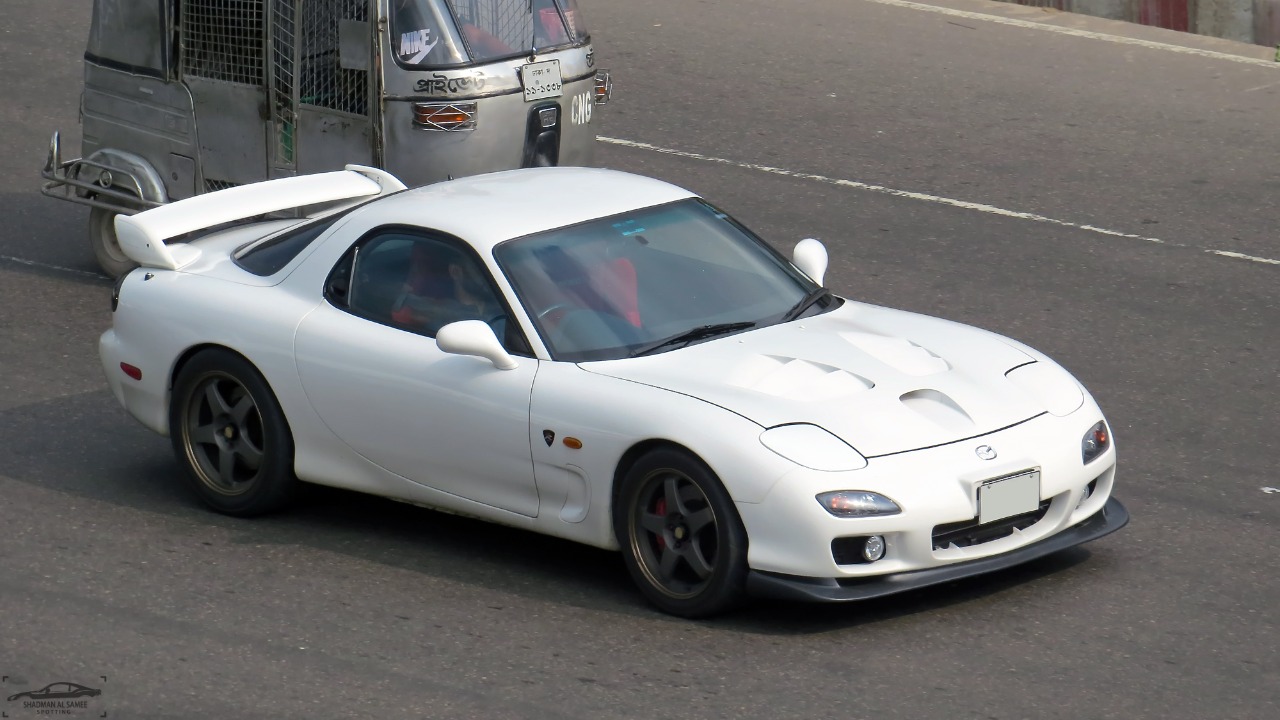
By the time the Spirit R arrived, Mazda had spent years refining the FD3S, and this final edition was conceived as a concentrated tribute to the car that expressed the brand’s athletic character most clearly. The Spirit R was not a radical redesign, it was a curated package that combined the most desirable mechanical and cosmetic upgrades into a single, limited-run specification. That approach turned the car into a kind of factory-sanctioned greatest hits album for the RX-7 line.
Mazda treated the Spirit R as a last chance to showcase what its rotary sports car could be at full maturity, and the result was widely regarded as the apex of three generations of RX-7 development. The company framed this final, special-edition tribute as a high point for both drivers and collectors, a status that has only grown as surviving cars age and change hands. Events celebrating the model have highlighted how this final, special-edition tribute crystallized Mazda’s rotary ambitions into a single, highly coveted package.
Performance, rivals, and the Spirit R’s real-world edge
On paper, the RX-7 Spirit R lived in the same performance neighborhood as other Japanese icons of its era, and Mazda knew it had to stand up to that comparison. The car’s features and tuning put it in direct contention with heavy hitters like the Toyota Supra and Nissan Skyline, which were already legends in their own right. Where those rivals leaned on straight-line power and all-out tuning potential, the Spirit R doubled down on lightness, steering feel, and the unique character of its rotary engine.
That difference in emphasis gave the Spirit R a distinct real-world edge for drivers who valued connection over brute force. The car’s compact rotary layout kept mass off the nose, so turn-in felt immediate and the chassis could be steered as much with the throttle as with the wheel. In an era when performance cars were getting heavier and more complex, the Spirit R’s relatively simple, driver-centric setup made it feel like a purist’s alternative to its turbocharged contemporaries, even as it shared the same broad performance envelope.
From showroom hero to cult collectible
As production ended, the Spirit R’s status shifted quickly from showroom flagship to cult collectible, helped by the broader reputation of the FD3S. The third-generation Mazda RX-7, internally known as the FD3S, had already earned a cult following for its lightweight construction and distinctive rotary power, and the Spirit R was the final and most desirable iteration of that series. Auction listings and specialist sales now routinely highlight how the Spirit R sits at the top of the FD3S hierarchy, with its limited numbers and focused specification driving demand among enthusiasts who want the definitive version of the car.
That desirability is reflected in how sellers describe the model, often emphasizing that the Spirit R was the final and most desirable iteration of the FD3S series to underline its place in the rotary story. One detailed sales highlight described how the third-generation Mazda RX became a JDM icon, with the Spirit R at the top of that pyramid. In practice, that means buyers now treat Spirit R chassis numbers as blue-chip assets within the broader RX-7 market, and even non-running or modified examples attract attention simply because of the badge on the rear hatch.
Miniature tributes and the Spirit R’s lasting aura
The Spirit R’s influence extends beyond full-size cars into the world of scale models and collectibles, which often serve as a barometer of a car’s cultural impact. One of the most detailed tributes is a 1/8 scale die-cast kit that invites builders to experience the legendary Mazda RX-7 Spirit R in miniature form. The kit is explicitly based on the final production version of the car, and its creators emphasize how the model revives the iconic coupe in stunning accuracy, from bodywork to interior details.
That level of attention shows how deeply the Spirit R has embedded itself in enthusiast culture, to the point where recreating its details at large scale is a selling point in its own right. The description for the DeAgostini kit highlights how fans can Experience the final Mazda RX-7 Spirit R as a display piece, reinforcing the idea that the car has moved from contemporary performance benchmark to cherished design object. In that shift from road to shelf, the Spirit R completes its journey from engineering project to rotary masterpiece, preserved in metal and memory long after the last real example left Mazda’s factories.

Leave a Reply