

The Jaguar XJ220 arrived as a moonshot, a car built to chase a 220 mph dream and to prove that a sleepy British luxury brand could still shock the supercar world. It then stumbled into controversy, lawsuits, and a market crash that left unsold cars gathering dust in showrooms. Today, I see it standing in a very different light, its wild origin story and bruised reputation helping to turn it into one of the most fascinating cult machines of the 1990s.
To understand how the XJ220 went from secret skunkworks fantasy to misunderstood failure and finally to coveted icon, you have to trace the arc from its after-hours birth to its current life as a blue-chip collectible. The same decisions that once made it a lightning rod for criticism now read like the ingredients of a legend in slow motion.
The midnight project that aimed at 220 mph
The XJ220 did not begin in a boardroom, and that is part of why I find it so compelling. The initial concept was created by an informal group of Jaguar employees who worked on it in their spare time, effectively a guerrilla engineering effort inside a major manufacturer. That spirit carried into the 1988 concept, a collaborative show car that a small team turned into a fully realized prototype, described as a masterpiece involving roughly a dozen specialists who shaped a dramatic body and advanced chassis for the era, according to Jan. The concept car’s specification, with a V12 and all-wheel drive, was deliberately extreme, a statement that Jaguar could still build something as outrageous as anything from Italy.
From the start, the car was meant to be both a technological showcase and a purist’s machine. The early vision, as later histories of The Jaguar XJ220 explain, revolved around a huge naturally aspirated engine and sophisticated four-wheel drive, wrapped in a body that looked like a Le Mans prototype for the road. That concept car was never meant to be a mass-market product, but its presence on the show stand triggered a wave of interest that even the engineers had not anticipated. The media was eager to celebrate the audacity of the project, and the car’s creators suddenly found themselves under pressure to turn their after-hours dream into a real production program.
From concept purity to production compromise
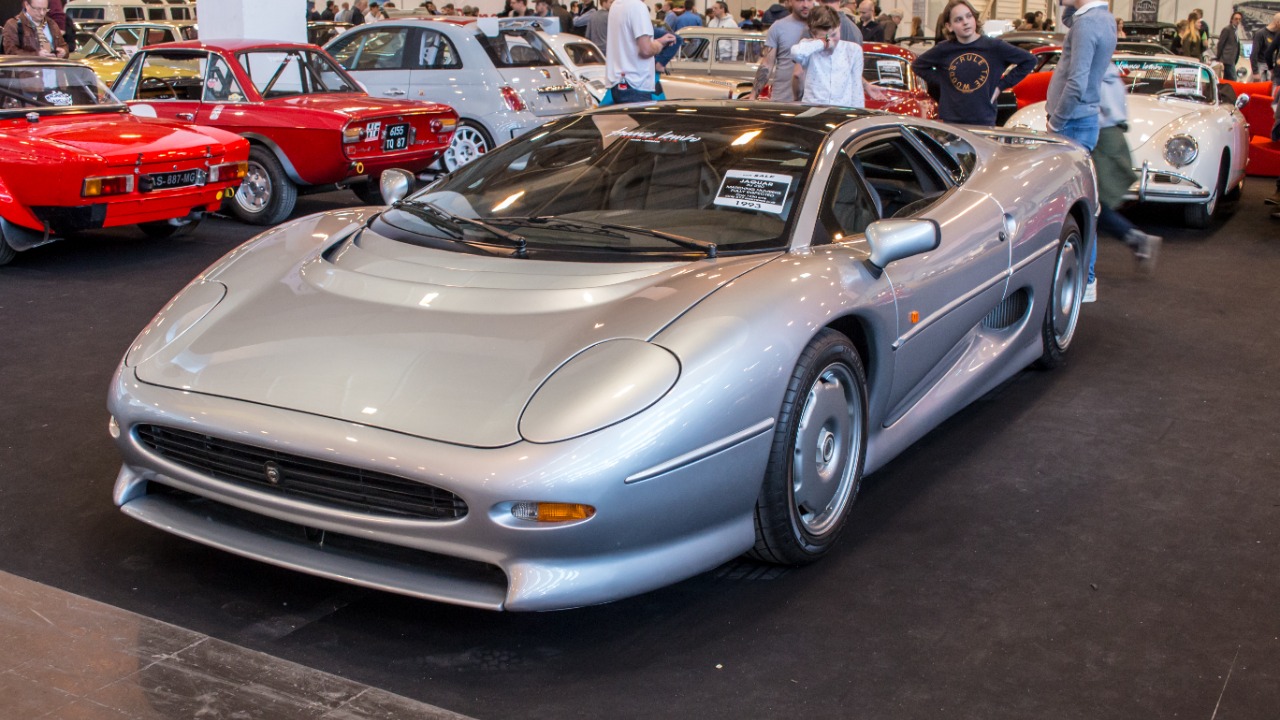
Once Jaguar committed to building customer cars, the XJ220 had to survive the brutal transition from fantasy to feasibility. The first production XJ220 was significantly different from the concept, and it did not take long before some fundamental changes in specification were required, as Aug notes. Most notably, the normally aspirated V12 and four-wheel drive system were dropped in favor of a twin turbo V6 engine and rear-wheel drive, a move that made the car lighter and more compact but also angered buyers who had placed deposits based on the original promise. However, those changes were driven by packaging, emissions, and cost realities that any low-volume supercar program eventually has to confront.
Underneath, the engineering remained deeply ambitious. The production car’s body used an aluminum honeycomb structure that gave it a lightweight yet robust core, a detail highlighted in The XJ220’s body account of the project. That construction helped the car deliver the kind of stability and rigidity needed for the 220 mph mark initially envisioned, even if the final production specification did not quite match the concept’s mechanical layout. At the same time, the interior stayed true to traditional Jaguar qualities, with a superb leather cabin and a beautifully shaped aluminium body that still looked like nothing else on the road, as the At the heritage record of the 1992 production car makes clear.
The fastest car in the world that buyers walked away from
On paper and on track, the XJ220 delivered the kind of performance its name implied. The Jaguar XJ220 is described as a two-seat supercar produced by The Jaguar company in Britain, and period tests showed that its twin turbo V6 could push it beyond 200 mph, making it one of the fastest production cars of its time. Contemporary comparisons often bracket it with other early 1990s exotics, and one detailed history notes that, like the Bugatti EB110, the Like the Bugatti Jaguar XJ220 was an enigmatic supercar that briefly held the spotlight before fading from mainstream memory. Despite the car’s incredible performance and mind boggling 200 mph top speed, it never quite received the sustained acclaim its numbers suggested it deserved.
Instead, the story turned sour as the early 1990s recession bit into the market for ultra expensive toys. From 1992 to 1994, a limited run of cars was built, and the heritage record notes that the XJ220 was among the most expensive cars in the world at that time, a fact that became a liability when values of other supercars began to slide, as documented in the Jaguar development history. Some early investors refused to take delivery, arguing that the change from V12 to V6 and the shifting market had undermined the deal they thought they were getting. The dispute escalated into a lawsuit, and Jaguar eventually accepted a 200 car settlement structure that involved a $150,000 kill fee for XJ220 orders, a remarkable moment when a manufacturer effectively paid to unwind commitments on its own halo product.
From “worst car” lists to cult obsession
In the years that followed, the XJ220’s reputation took a beating that I still find wildly out of step with its abilities. One list of the 20th century’s worst cars singles out the Jaguar XJ220 with the damning line that, But inside, it ( Jaguar XJ220 ) is a heartbreaker, arguing that between the concept car and the first one to be sold, designers made ruthless economic decisions that created a group of hardcore Jaguar haters, as the But critique puts it. That kind of judgment, focused on broken promises and financial disappointment, overshadowed the fact that the car still offered towering performance, a luxurious cabin, and a design that looked like a spaceship compared with most 1990s traffic.
Yet even as mainstream opinion cooled, a quieter cult began to form. Enthusiast communities and games kept the flame alive, with figures like Chris in Gran Turismo lore describing The Jaguar XJ220 as a supercar that is like no other, celebrating its unique blend of speed and drama. The car’s story as a passion project, built by engineers who pushed ahead at night and then saw their work reshaped by corporate reality, only added to its mystique. Over time, the narrative shifted from “failed flagship” to “underdog hero,” especially among younger enthusiasts who encountered it first in digital form rather than through 1990s headlines.
The collector market finally catches up
As the broader supercar market matured, the XJ220’s scarcity and backstory started to look less like liabilities and more like assets. Once overlooked, Jaguar’s XJ220 has transformed from a 1990s curiosity into a serious collector’s investment, attracting the attention of investors and enthusiasts alike, as the market analysis in Once makes clear. Auction results underline that shift: a rare 1993 Jaguar XJ220 sold for a record breaking £460,000 after what was described as unprecedented media attention and strong client demand, even with some adjustments to Randle’s original vision baked into the production specification, as detailed in the record breaking sale report. Those numbers would have seemed fanciful when unsold cars sat unloved in showrooms, but they now feel like a correction to decades of undervaluation.
Part of that reappraisal comes from a deeper appreciation of what the engineers actually achieved. The XJ220’s body, made of aluminum honeycomb, contributed to its lightweight yet robust structure, a sleek powerhouse that blended cutting edge engineering with a passion project mentality, as The media account of its birth emphasizes. Earlier coverage of the car’s development notes how the media was eager to celebrate the blend of Aug era design flair and serious engineering with this passion project, and that enthusiasm has resurfaced as collectors look for stories that go beyond simple horsepower figures, as seen in the Aug narrative of its creation. In a world where many modern supercars feel like carefully managed brand exercises, the XJ220’s messy, human journey from midnight sketch to cult legend is exactly what makes it irresistible.


Leave a Reply