
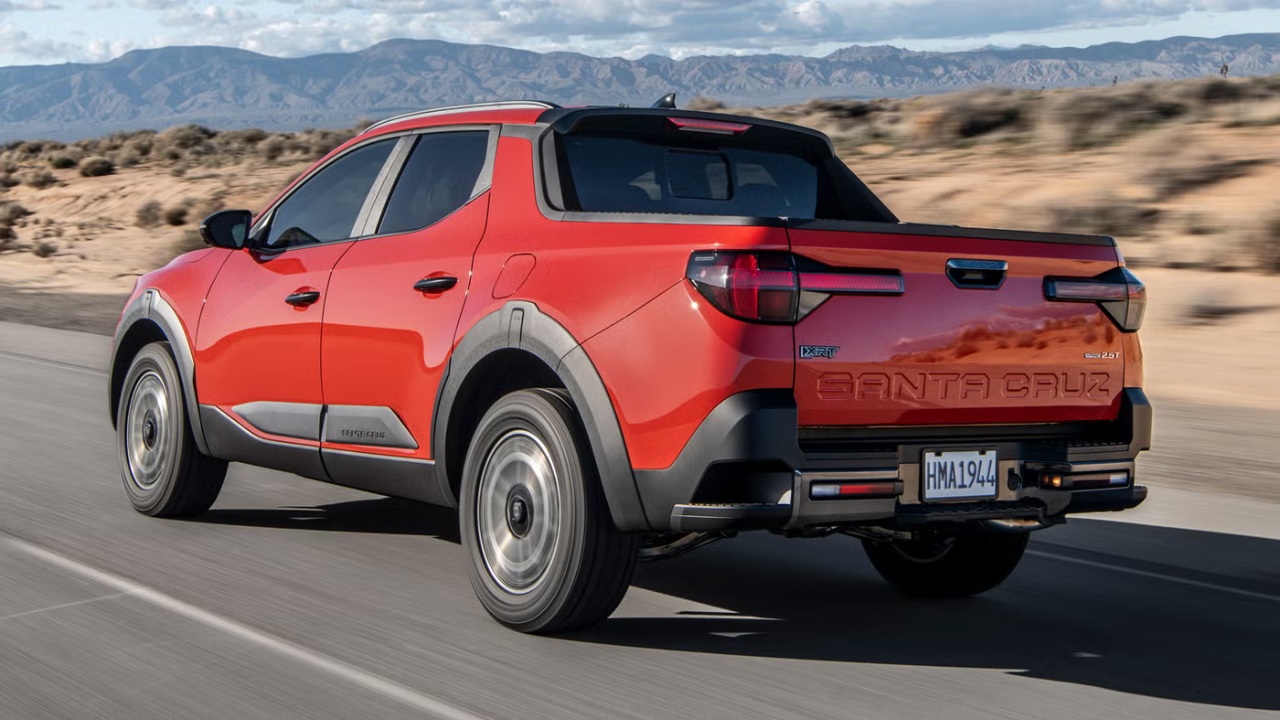
Hyundai bet that a stylish, crossover-based pickup could tempt Americans who wanted truck utility without truck bulk. Instead, the Santa Cruz has become a case study in how unforgiving the United States truck market can be when a product misses core expectations on price, capability, and image. As Hyundai winds down its compact pickup and pivots to a larger truck, the company is effectively conceding that U.S. buyers still define a “real” truck in very traditional terms.
A bold experiment that never broke through
From the outset, Hyundai positioned the Santa Cruz as something different, a “Sport Adventure Vehicle” that blended a unibody crossover platform with an open bed and urban friendly dimensions. The South Korean automaker launched the Santa Cruz as a compact pickup intended to expand its presence in the United States truck market without going head to head with full size incumbents. Internally, Hyundai framed the project as a bold move into a niche that sat between lifestyle crossovers and work oriented pickups, hoping to attract buyers who wanted versatility but did not need the bulk of a traditional truck.
Sales never matched that ambition. Even in its best year, 2023, Hyundai sold just 36,675 Santa Cruz models in the United States, a modest figure in a segment where successful trucks routinely clear far higher volumes. Reporting on the decision to end production has consistently tied the move to weak demand and high inventory, with dealers left holding stock that moved slowly despite incentives. Hyundai has publicly maintained that the Santa Cruz remains a “valued ongoing member” of its portfolio and has described the program as a valuable learning experience, but the company is now preparing to discontinue the compact pickup by early 2027 as part of a broader shift in truck strategy.
Outsold six to one by the Ford Maverick
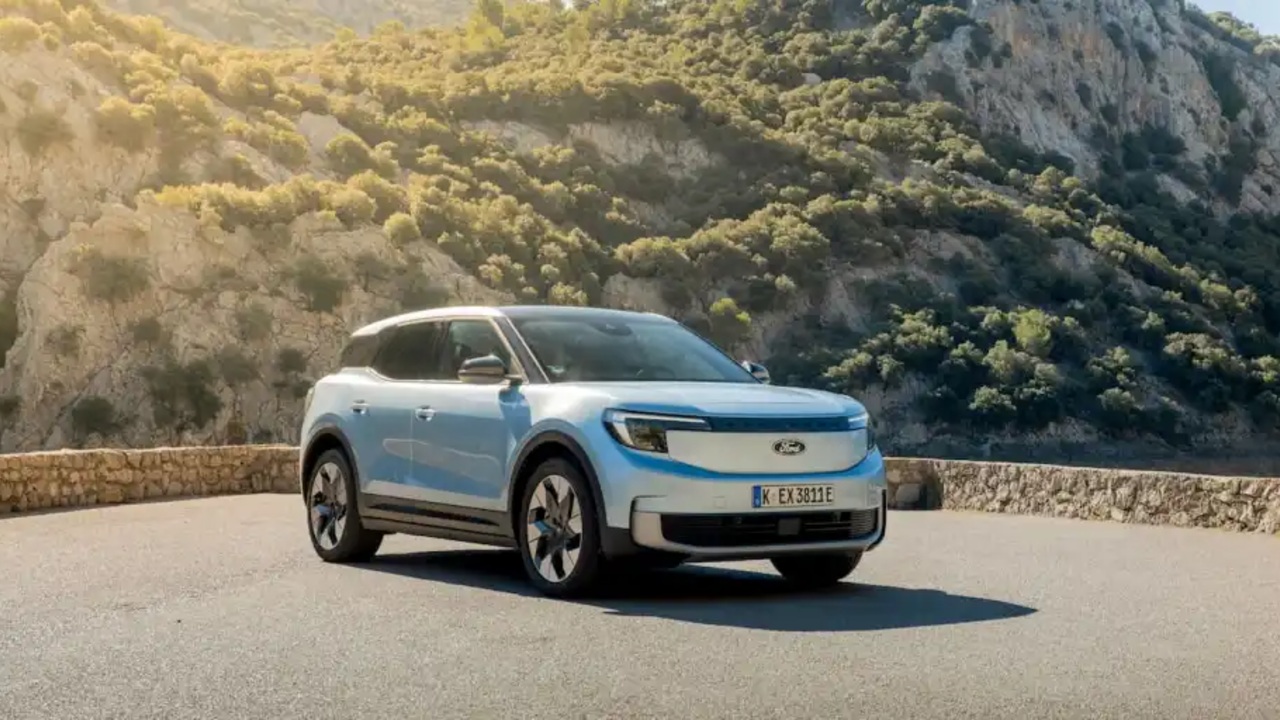
The Santa Cruz did not just struggle in abstract terms, it was decisively outperformed by its closest direct rival, the Ford Maverick. For the 2025 calendar year, The Santa Cruz was outsold by its only direct competitor, the Ford Maverick, by more than six to one, turning what Hyundai had hoped would be a two way contest into what other observers have called a one horse race. That imbalance is especially striking because both trucks targeted similar buyers with compact footprints, four doors, and beds sized for weekend projects rather than heavy commercial work.
Several concrete advantages helped the Maverick dominate. Analysts have highlighted that Maverick Still Cheaper And Has An Efficient Hybrid, a combination that resonated with cost conscious commuters and families facing high fuel prices. Although the Ford Maverick has become more expensive than it was at launch, it has remained aggressively priced relative to its capabilities, particularly in hybrid form, and that value equation has been central to its appeal. Sales data underline the strength of that formula, with one Competitive Sales Comparison for the USA noting that Ford Maverick sales jumped 26 percent year over year to 48,04 units in a single quarter, reinforcing that demand for the compact Ford has been robust even as the broader market cooled.
Price, powertrain, and practicality: what buyers actually chose
When U.S. shoppers compared the two compact pickups side by side, the Maverick’s fundamentals aligned more closely with what truck buyers still prioritize. In real world use, the Ford has been praised for better fuel economy, especially in hybrid trim, while still offering payload and towing figures that meet the needs of many light duty truck owners. Comparative reviews have consistently found that While both trucks bring innovative features to the compact segment, the Maverick delivers Better efficiency and practicality for families and daily drivers. That combination of usable capability and low running costs made it easier for buyers to justify choosing a truck over a compact SUV.
The Santa Cruz, by contrast, leaned harder into style and premium features, with a cabin and design language closely related to the Tucson crossover. That approach produced a distinctive product, but it also pushed pricing into territory where shoppers expected more capability or better efficiency than the Hyundai could offer. Edmunds data from late last year showed that 36 percent of Santa Cruz shoppers also considered the Maverick, while just 15 percent of Maverick shoppers cross shopped the Hyundai, a telling asymmetry that suggests many buyers who looked at the Santa Cruz ultimately defected to Ford’s truck. Since the Ford Maverick arrived, Santa Cruz has been playing second fiddle in a compact pickup segment that, in practice, has revolved around the Maverick’s formula of low entry price, hybrid efficiency, and straightforward utility.
Hyundai’s pivot to a bigger, more conventional truck
Faced with those realities, Hyundai is not retreating from trucks so much as recalibrating its approach to match entrenched U.S. preferences. Multiple reports indicate that Hyundai Planning to Drop Santa Cruz Pickup and Make a Bigger Truck, effectively replacing the compact unibody model with a midsize pickup that aligns more closely with mainstream expectations. Automotive reporting has described the upcoming vehicle as a larger, body on frame style truck that would sit in the same general space as established midsize models, signaling that Hyundai now believes it must compete directly in the heart of the market rather than on the fringes.
Executives and insiders have framed this shift as part of a broader truck strategy that recognizes where the volume and profit still reside. Key Points from internal planning suggest that Hyundai will discontinue the Santa Cruz compact pickup by early 2027 due to weak sales and shifting consumer preferences, then channel those resources into a more conventional truck that can share components and development costs with other models. Some comparisons have been drawn to the relationship between the Toyota Tacoma and 4Runner, hinting that Hyundai may pursue a similar pairing of a rugged midsize pickup and a related SUV. In that context, the Santa Cruz looks less like a failure and more like a prototype for understanding American truck buyers before committing to a full scale entry.
What the Santa Cruz saga reveals about U.S. truck culture
The rise of the Maverick and the retreat of the Santa Cruz underscore how conservative U.S. truck tastes remain, even in a supposedly disruptive compact segment. Buyers responded most strongly to a product that looked and behaved like a traditional pickup, only smaller and cheaper, rather than to a crossover styled experiment that blurred categories. Since its launch, the Santa Cruz has struggled to gain traction in a segment that has effectively become a one horse race, and Its long term viability was always in question once the Maverick established itself as the default choice. The fact that The Santa Cruz was outsold by the Ford Maverick by more than six to one in 2025, For the full calendar year, is a numerical expression of that cultural verdict.
For Hyundai, the lesson is that design flair and crossover comfort are not enough to win over U.S. truck buyers if the fundamentals of price, powertrain, and perceived toughness are not equally compelling. Not only does Santa Cruz continue to be described internally as a valued member of the product portfolio from a sales perspective, the model has helped Hyundai learn how Americans use and shop for trucks, from the importance of hybrid options to the weight buyers place on bed size and towing numbers. As the company prepares to sunset the Santa Cruz and introduce a larger pickup, it is effectively acknowledging that the United States truck market still rewards familiar formulas. Any automaker hoping to break in must respect those expectations, then innovate around the edges, rather than assuming that buyers will abandon long held definitions of what a truck should be.
More from Fast Lane Only


Leave a Reply