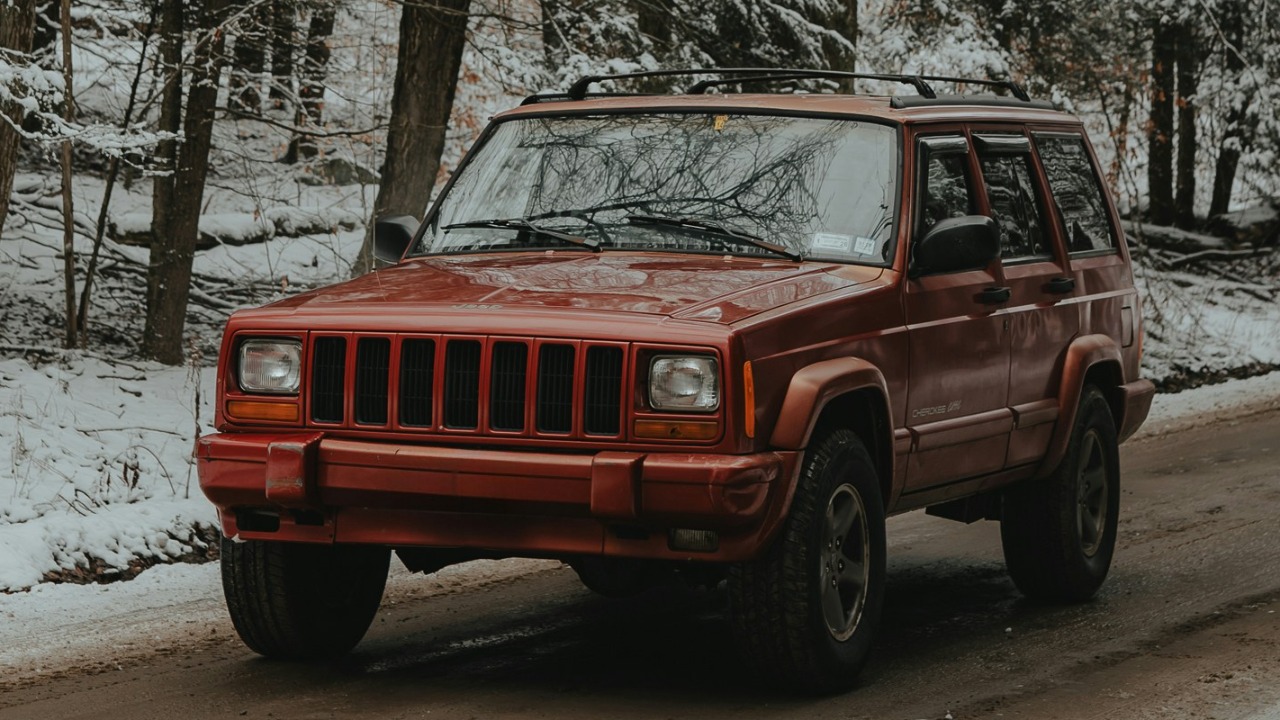
The Jeep Cherokee XJ arrived as a compact, boxy utility vehicle and quietly rewrote the rules for family transport and off-road adventure. Decades later, its design language still shapes how sport utility vehicles look, feel, and function, from their silhouettes to their packaging. The XJ’s blend of unibody construction, upright styling, and everyday usability continues to echo through modern showrooms and online fan communities alike.
Automakers now market crossovers and SUVs as daily drivers, but many expected traits were first proven on the Cherokee XJ. Its influence stretches from the latest boxy hybrids to the way enthusiasts evaluate off-road geometry and cargo space, a legacy that keeps the original design relevant long after production ended.
The XJ formula that changed SUVs
At the heart of the Jeep Cherokee XJ story is a simple but radical formula: a compact footprint wrapped around a roomy cabin, combined with genuine four-wheel-drive capability. It arrived as an SUV that could commute, haul gear, and still tackle rough trails, a balance that later vehicles would try to replicate rather than replace. Commentators rank the Cherokee XJ as one of the most influential classic designs, noting it eclipsed the Wrangler and helped normalize the SUV as a family vehicle from 1984 through the mid-1990s.
The engineering choice that made this possible was unibody construction. Instead of a traditional body-on-frame layout, the Cherokee XJ relied on a single integrated structure that reduced weight and improved efficiency without abandoning Jeep’s off-road reputation. Dealers describe the Cherokee XJ’s unibody as a turning point that changed SUV construction, with later crossovers extending this template. That structural decision, combined with the XJ’s squared-off body and generous glass, delivered the packaging that modern buyers now take for granted.
From cult classic to benchmark for influence
Over time, the Cherokee XJ became a cult classic, recognized as one of the most important vehicles in automotive history. Commenters in enthusiast videos argue that the XJ is partially responsible for drivers who only feel satisfied behind the wheel of an SUV, describing it as one of the most influential vehicles ever built. That sentiment is echoed in written retrospectives that list “10 Reasons Why The Classic Jeep Cherokee XJ Was Cooler Than” many remember, which praise its boxy stance, simple interior, and everyday toughness as qualities that modern crossovers struggle to replicate.
The XJ’s reputation as Jeep’s most influential SUV is not confined to nostalgia. Fans on forums describe Reasons the XJ Most Influential SUV Ever, citing its ability to haul a family, crawl over rocks, and still maneuver easily around in a parking lot. Other analyses of the Jeep Cherokee XJ argue that the model has been more influential than it usually receives credit for, pointing to its role in popularizing the idea that an SUV could be both cool and practical. Taken together, these perspectives have turned the XJ into a benchmark against which later Jeep products are measured, not just a fondly remembered old truck.
Modern Cherokees chasing a classic silhouette
That benchmark is visible in the way Jeep presents its current products. The official description of the latest model highlights a Boxy, bold, rugged-on-sight profile for the All New Jeep Cherokee Turbo Hybrid, language that directly recalls the upright stance of the original XJ. Marketing material emphasizes a daring design inside and out, but the exterior proportions lean heavily on the squared-off greenhouse and relatively short overhangs that made the earlier SUV so practical. The Cherokee name, now paired with a modern turbo hybrid drivetrain, reflects Jeep’s continued reliance on its design heritage.
Independent comparisons reinforce that connection. A detailed look at the 2026 model notes that the XJ delivered a compact footprint, ample cargo capacity, and solid off-road geometry that made it a do-it-all SUV, equally at home in city traffic and on rocky trails. Commenters on social media have observed that Jeep is channeling the vibe of the boxy 1984 to 2001 Cherokee that originally got America hooked on unibody SUVs, with one post titled out with the capturing the debate over how closely the new model should resemble its ancestor. Even when criticizing details, fans view the Cherokee through the lens of the original XJ design.
A template echoed across the SUV market
The Cherokee XJ’s influence extends well beyond Jeep showrooms. Analysts who track classic designs that still shape current vehicles rank the discovered Jeeps blueprint alongside other icons, arguing that its unibody packaging and upright posture effectively created the modern crossover template. Another retrospective on classic cars and SUVs that still influence current styling places the Jeep Cherokee ahead of rivals, noting that, with all due respect to the Wrangler, the XJ is the most influential Jeep made. That assessment credits the model with helping to start the SUV craze that now sees roughly half of global vehicle production devoted to high-riding shapes.
Historical overviews note the Cherokee XJ’s unibody made it lighter and more fuel-efficient while maintaining off-road capability, setting the segment standard for ruggedness and practicality. Commentators who revisit the model’s history explain how it achieved its impact by pioneering unibody construction for an SUV, then trace a straight line from that decision to the crossovers on sale today. Even social media clips that open by noting that half of cars produced globally are SUVs, such as one SUV commentary, implicitly reference the world the Cherokee XJ helped create. From online fan groups to corporate marketing, the same conclusion emerges: the XJ did not simply participate in the rise of the SUV, it provided the design script that modern vehicles continue to follow.
More from Fast Lane Only