
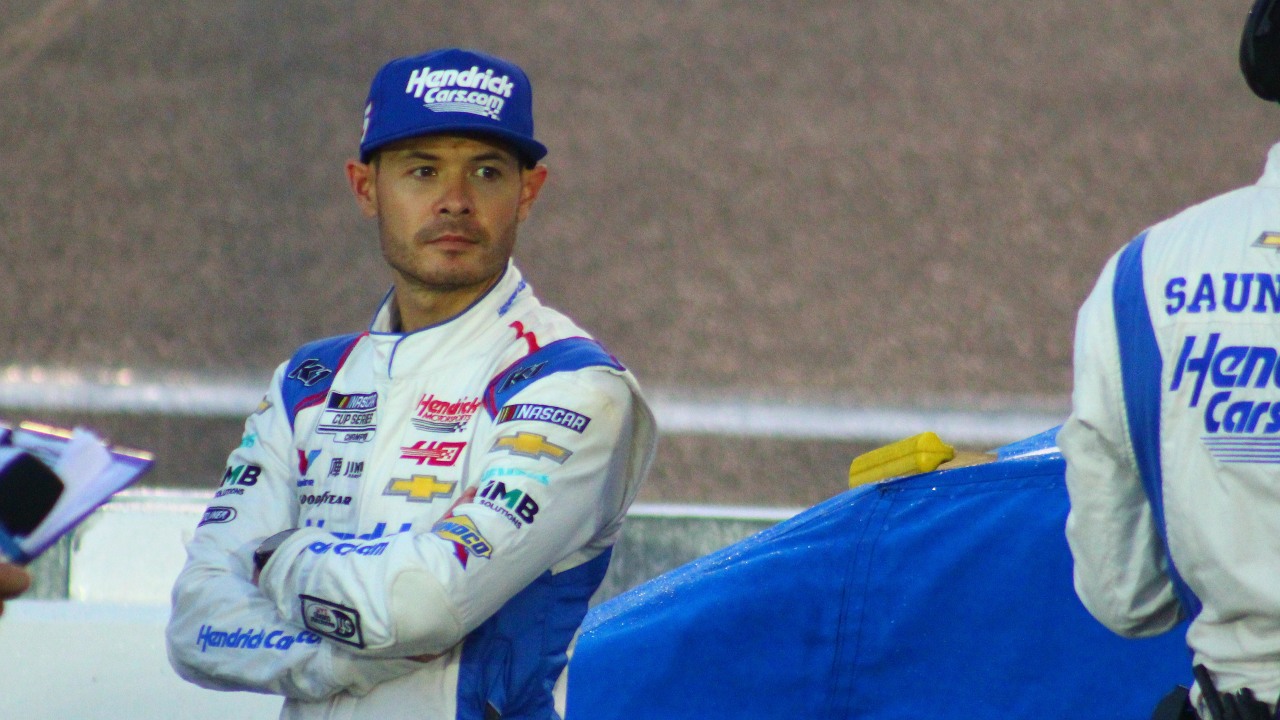
Kyle Larson has become the shorthand answer whenever fans debate who might be the most complete driver in the world, a racer who can jump from stock cars to sprint cars and still look like the favorite. The hype has grown to the point that some corners of motorsport talk about him as if he is virtually untouchable. Yet when I look at how Larson talks about himself, what stands out is not a claim of invincibility, but a careful balance between confidence in his versatility and a refusal to crown himself as unbeatable.
Instead of leaning into the mythology, Larson keeps steering the conversation back to context, competition and the realities of modern racing. He acknowledges his talent and range, but he also pushes back on the idea that any one driver, including himself, can dominate every discipline at the highest level all the time.
Larson’s measured answer to “greatest driver” hype
The modern Larson legend is built on the idea that he can win in almost anything, from NASCAR stock cars to dirt sprint cars and late models, and that versatility has fueled talk that he might be the greatest driver on the planet. When he has been asked about that label, he has not tried to duck the conversation, but he has framed it in a way that undercuts the notion of being untouchable. He has acknowledged that people see him near the top of that conversation while also pointing out that his biggest rival for that kind of status is four-time Formula 1 world champion Max Verstappen, a reminder that greatness in motorsport is shared territory, not a solo act.
Larson has also been clear that he never literally declared himself the best driver alive. He has said he believes he is one of the most versatile racers in the world, which is a narrower and more defensible claim than the sweeping “greatest ever” tag that often gets attached to him. In one clarification, he stressed that he did not say he was better than Max Verstappen outright, but that he viewed himself as a better all-around driver, a nuance that was quickly flattened into a more inflammatory soundbite. That distinction shows how he tries to keep the conversation grounded in specific skills and disciplines rather than in absolute, unbeatable status.
Clarifying the Max Verstappen comparison
The Larson versus Max Verstappen debate has become a shorthand for the broader question of who sits at the top of global motorsport. When Larson explained his earlier comments, he emphasized that he never claimed to be superior in every sense, only that he rated himself as a more complete driver across different types of cars. He pointed out that his remark about being a better all-around driver than Max Verstappen was turned into a claim that he said he was simply better, which he insisted he did not say. That misinterpretation has fueled a narrative that he is walking around declaring himself the undisputed king, when his own words are more careful and specific.
By drawing that line, Larson implicitly acknowledges what Max Verstappen has achieved in Formula 1 while still defending his own strengths in disciplines that Verstappen does not contest. He is not backing away from self-belief, but he is also not pretending that success in NASCAR, dirt racing and other series automatically translates into being superior to a four-time Formula 1 champion in every context. The way he revisits that infamous statement shows that he is more interested in an honest comparison of skill sets than in a headline-friendly claim that he is unbeatable.
How he talks about his own talent and limits
When Larson breaks down his own performance, he does not hide from the fact that he is gifted. He has said he has always been sure he has talent and that he can often carry a car, which is the kind of self-assessment you expect from someone who wins as often as he does. At the same time, he has been quick to add that equipment and circumstances still matter, and that on certain tracks or in certain series, anybody can be fast if the car is right. That mix of pride and realism cuts against the idea that he sees himself as some kind of unstoppable force who can win regardless of machinery or conditions.
Larson’s comments about his own success also show that he understands how thin the margins are at the top. He has talked about being able to extract speed and adapt quickly, but he has not framed that as a guarantee of victory in every race or every series. Instead, he tends to describe his edge as the ability to be competitive in many different environments, not as a promise that he will dominate them all. That is a subtle but important difference, and it is one reason I read his public comments as a response to the hype rather than an attempt to inflate it.
Pushing back on “built-in advantage” narratives in NASCAR
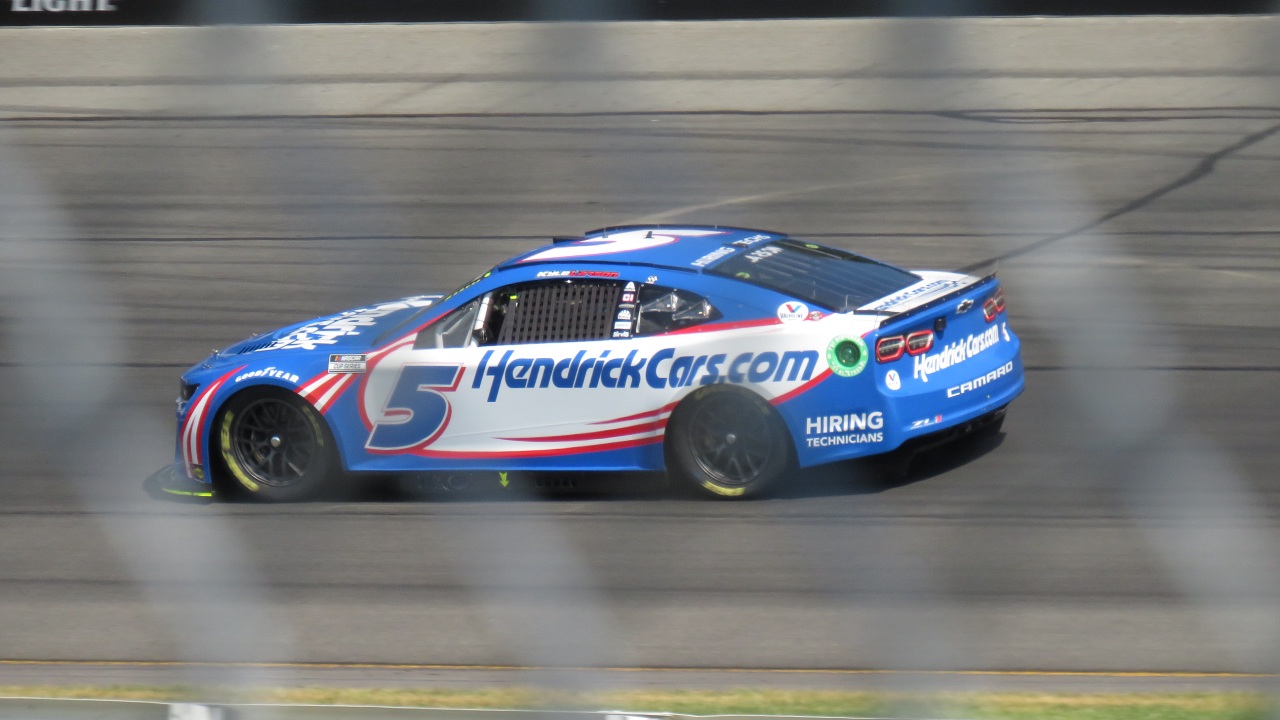
The same pattern shows up when Larson is asked about his position inside the NASCAR Cup Series. With his record of wins and consistent top finishes, it would be easy for him to lean into the idea that he has a built-in edge over the rest of the field. Instead, he has given what he has described as an honest verdict on any supposed title advantage, saying he does not buy into the notion that he is automatically favored just because of his reputation or past results. Even in a season where he has stacked up 21 top finishes, he has pointed out that he is not always the betting favorite and that the competition is too deep for anyone to assume they have the championship under control.
By downplaying the idea of a structural advantage, Larson is again chipping away at the myth of being unbeatable. He acknowledges that he is often in the mix, but he also notes that the format, the parity of the cars and the unpredictability of the schedule mean that no one driver can simply roll into the season expecting to walk away with the title. His refusal to embrace the “favorite no matter what” label in NASCAR mirrors the way he resists the global “best in the world” tag, even as his results keep him in those conversations.
Addressing critics and the cross-Atlantic debate
Larson’s comments have not just been aimed at American fans. He has also responded, directly and indirectly, to critics in Europe and among Formula 1 supporters who bristled at his remarks about being a better all-around driver than Max Verstappen. In one pointed response, he highlighted how some Europeans and Formula 1 fans seemed to miss the nuance of what he actually said, arguing that they lacked reading comprehension because he never claimed to be outright better in every way. That frustration underscores how quickly a nuanced statement about versatility can be turned into a perceived insult toward a Formula 1 champion.
By reiterating that he is not calling himself the best driver in the world, Larson is trying to reset the terms of the debate. He wants the conversation to be about different skill sets and disciplines rather than a simple hierarchy that places one driver above all others. His willingness to push back on misquotes and misreadings shows that he is aware of how his words travel across series and continents, and that he is intent on keeping his own position clear even as the noise around him grows.
Why he is not chasing the “unbeatable” label with more doubles
One of the clearest windows into how Larson views his own limits is his stance on the grueling Indy 500 and Coca-Cola 600 double. After attempting that high-profile challenge, he has said he does not have any desire to do the Double again. That decision runs counter to the narrative that a driver chasing an unbeatable legacy would keep stacking up extreme feats to prove a point. Instead, Larson is signaling that there are boundaries he is not interested in crossing repeatedly, even if they might add to his legend.
Fans sometimes interpret that choice as a sign that he is backing away from the biggest stages, but his own explanation suggests something different. Larson has indicated that he is not obsessed with proving he can conquer every marquee challenge over and over, and that he is comfortable focusing on the series and events that make the most sense for his career and life. That perspective fits with his broader message: he believes he is one of the most versatile drivers in the world, yet he does not feel compelled to chase every possible accolade just to satisfy those who want to see him as invincible.
How Larson’s own words reshape the “unbeatable” myth
When I put all of Larson’s comments together, a consistent picture emerges. He accepts that he belongs in the conversation about the most talented and adaptable drivers on the planet, and he is willing to say he can carry a car and excel in multiple disciplines. At the same time, he repeatedly stops short of declaring himself the greatest or claiming that he has an inherent advantage that guarantees success. He points to rivals like Max Verstappen, acknowledges the role of equipment and circumstances, and even turns down repeat attempts at headline-grabbing challenges like the Indy 500 and Coca-Cola 600 Double.
In that sense, Larson’s response to the hype is less about false modesty and more about precision. He is comfortable owning his strengths, including his versatility and his ability to adapt quickly, but he resists the lazy shorthand that paints him as unbeatable across all of motorsport. By clarifying his remarks, pushing back on misquotes and setting his own boundaries on what he wants to attempt, he is quietly rewriting the story around him. The legend of Kyle Larson may keep growing, but it is being shaped as much by his insistence on nuance as by the trophies he keeps adding to his name.


Leave a Reply