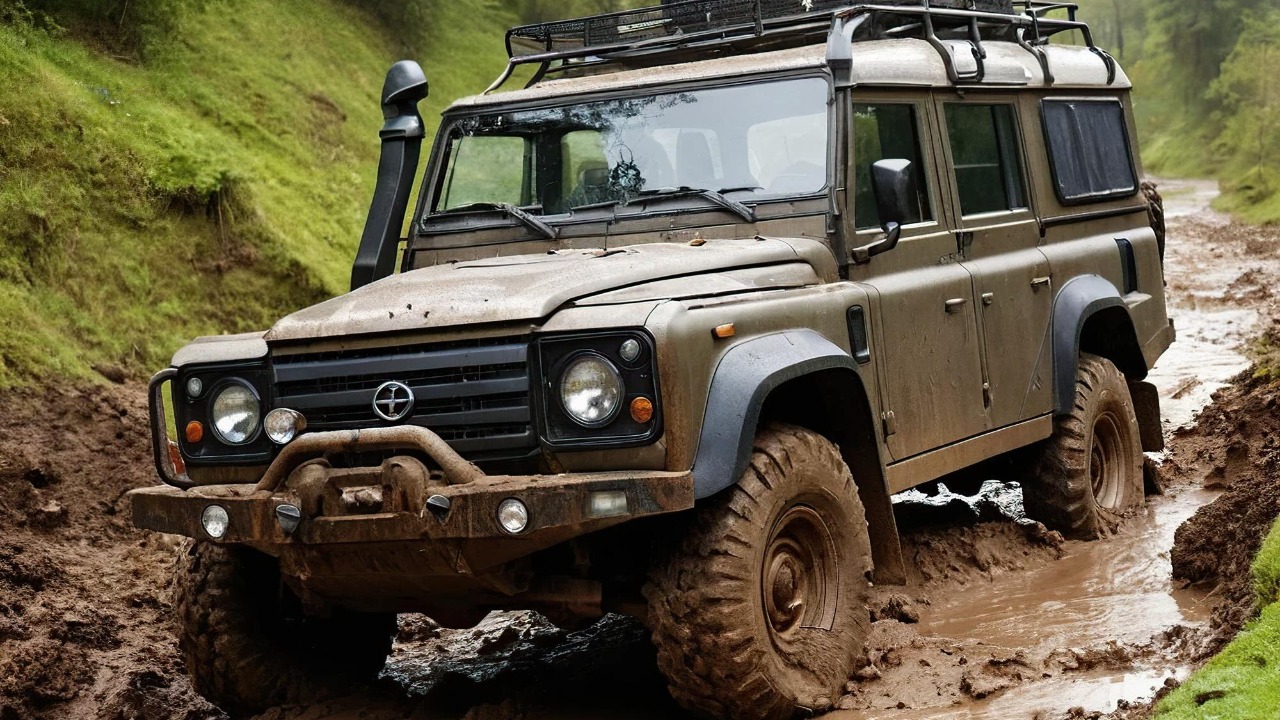
The Land Rover Defender has spent decades carving out an identity as a machine that treats rough country as routine rather than exceptional. Its combination of heritage and modern engineering has established an off-road benchmark that rivals still measure themselves against.
From early workhorse origins to contemporary luxury-leaning variants, the Defender’s story is one of continuous refinement around a single idea: going where others hesitate. This continuity, more than any single specification, explains why competitors continue to benchmark their vehicles against the Defender.
From postwar tool to global icon
The roots of the Land Rover Defender reach back to the original Land Rover Series vehicles, which were conceived as simple agricultural tools and gradually evolved into a distinct identity. Over time, the Series models and their successors became known collectively as Land Rover Defender predecessors, valued for versatility and durability more than comfort. That workhorse DNA shaped how owners used them, from farms and construction sites to remote expeditions, and it created expectations that any vehicle wearing the Defender name had to be able to endure serious punishment.
As the platform matured, it gained the Defender name and a clearer character as a specialist off-road SUV rather than a generic utility wagon. Heritage materials show how early utilitarian models connect to the current Defender, forming a continuous lineage focused on go-anywhere capability. That history is also cataloged in a Comprehensive History of, which traces how the Defender shifted from a purely functional tool into one of the most recognizable off-road shapes in the world while still prioritizing capability.
Mechanical grit behind the myth
The old Land Rover Defender did not earn its reputation through marketing language but through hardware that favored traction and toughness over comfort. Reports on a brief history emphasize how the Land Rover Defender relied on a ladder-frame chassis, solid axles and simple drivetrains that could be repaired far from a dealer network. Enthusiasts on forums echo that view, with one solid axle supporter pointing out that they provided excellent articulation while the relatively small, lightweight body helped the vehicle float over obstacles rather than sink into them.
Those fundamentals translated into real-world feats that shaped the brand’s image. Accounts of Land Rover Defenders on legendary expeditions describe convoys crossing deserts, jungles and polar regions where recovery support was limited and failure had serious consequences. Heritage commentary notes that today the Defender is presented as a world-class expert on and off-road, but that modern positioning rests heavily on decades when the vehicle’s survival in such conditions was taken for granted rather than celebrated as marketing material.
Modern Defender: technology without abandoning the brief
The current Defender generation marks a clear shift in philosophy, trading the classic truck-like ride for a more refined, SUV-style experience while trying to protect the core mission. Analysts describing a Look at the Land Rover Defender Timeline note how the Land Rover Defender moved from bare-bones interiors to cabins that now compete with premium road SUVs of all time. At the same time, comparisons such as on the road versus trail behavior explain that the classic version offered a more traditional truck-like experience, with steering that felt direct but unfiltered, while the modern Defender uses independent suspension and electronic aids to make long distances more comfortable without giving up serious off-road ability.
Those electronic systems are central to how the new model maintains its standing among experts. Technical analyses note that the classic Defender used mechanical locking differentials, while the latest model adds terrain response software, configurable drive modes, and advanced traction control. A separate Frequently Asked Questions section on what makes the Land Rover Defender good for off-roading stresses that the Land Rover Defender excels off-road thanks to this blend of heritage geometry, strong drivetrains and modern driver assistance, which together allow both experienced and novice drivers to tackle steep climbs, deep ruts and slippery surfaces with confidence.
Rivals chasing a moving target
The Defender’s status has inevitably attracted challengers that try to match or exceed its capability, often by borrowing from its formula. One direct competitor is the Ineos Grenadier, designed as a rugged rival that mirrors the first-generation Defender. Industry reporting from London describes how the Ineos Grenadier funded by British billionaire Jim Ratcliffe adopts a boxy profile that is very close to that of the original Defender, a visual admission that the older Land Rover template still defines what many buyers imagine when they think of a serious off-roader. Comparisons that pit the Ineos Grenadier against a Mercedes AMG SUV and a Land Rover Defender 110 ask what’s best for off-roading, highlighting how the Defender 110 must now argue its case not only against traditional rivals but also against vehicles built in its own image.
More mainstream competitors have also framed their offerings in relation to the Defender. A detailed New Land Rover Competitor Comparison sets the 2025 Land Rover Defender against the 2024 Ford Bronco Raptor and the 2025 Lexus GX 550, arguing that the Defender offers an unmatched spectrum of configurations that neither the Ford Bronco Raptor nor the Lexus GX 550 can match in versatility. Another Land Rover Defender breakdown describes an off-road SUV market full of contenders that claim to offer the perfect blend of performance, capability and comfort, yet still concludes that the Land Rover Defender excels when trails get rougher than a typical crossover can handle. Independent rankings praise the Ford Bronco Raptor for 13.1 inches of ground clearance, but still compare it to benchmarks like the Defender, showing how the Land Rover legacy defines off-road SUV expectations.
More from Fast Lane Only