
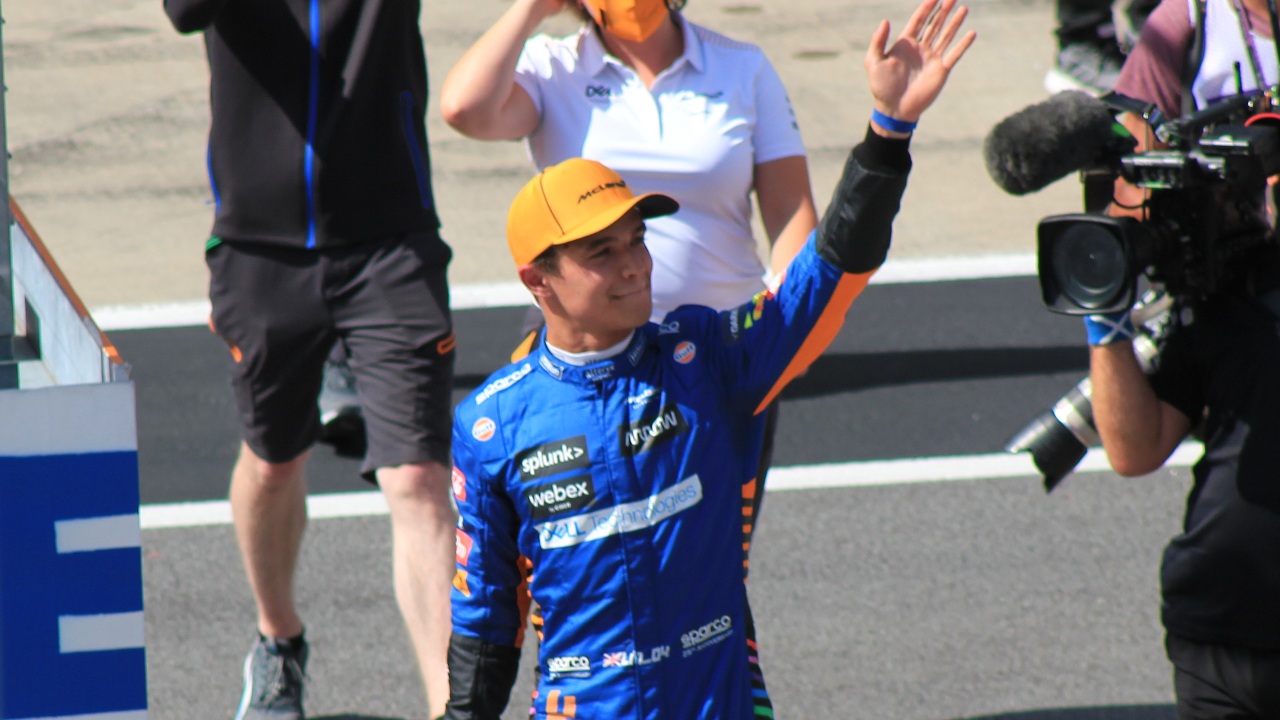
Lando Norris spent most of 2025 looking like the calm center of Formula 1’s storm, yet behind the visor he was wrestling with doubts that could have cost him the championship. His eventual title was not just a story of raw speed and a quick McLaren, but of a driver who had to confront his own belief, rebuild his mental approach and prove to himself that he truly belonged at the top.
By the time he lifted the world championship trophy, Norris had already admitted that he started the year unsure he could actually finish the job. The journey from that uncertainty to the podium in Tashkent, Uzbekistan, where he collected the Formula 1 world championship silverware, reveals how close his season came to being defined by hesitation instead of resolve.
The favourite who did not fully believe
Norris entered 2025 as the clear benchmark of McLaren’s project, with a car and a team that many in the paddock expected to fight for the title from the opening round. Yet he has since acknowledged that, even as the odds tilted in his favor, he did not entirely trust that he could convert that opportunity into a championship. He spoke of having his early-season doubts “proved wrong” once the title was secured, a telling admission that the biggest obstacle at the start of the campaign was not Max Verstappen or Oscar Piastri, but his own conviction that he could close out a long, high-pressure fight.
That tension between external expectation and internal hesitation shaped the first phase of his year. While the McLaren package and his own consistency quickly put him in a strong points position, Norris has been open about the fact that he needed results to convince himself he truly belonged as the driver everyone else was chasing. Only after he had weathered the mid-season swings and still held the upper hand did he feel those doubts recede, a shift he later framed as having his lack of belief decisively overturned by the way the championship unfolded.
Pressure from within McLaren and the Verstappen-Piastri squeeze
The competitive context around Norris made those doubts more dangerous. McLaren’s internal dynamics were intense, with Oscar Piastri emerging as a genuine threat in equal machinery and forcing the team to manage a delicate balance between letting them race and protecting a title bid. At the same time, Max Verstappen remained the reference point for relentless execution, turning every small mistake or strategy misstep into a potential 18-point swing in the standings. Norris’s margin for error was thin, and the season featured key moments when dropped points could have opened the door for either rival to seize control.
Over the course of the 24-race calendar, that pressure crystallized into a handful of pivotal weekends. Norris had to defend track position against Verstappen at the start of races, absorb the psychological hit of days when Piastri had the upper hand and still find a way to bank solid finishes rather than chase lost causes. The title narrative became a three-way fight in which McLaren’s internal conflict and Verstappen’s presence combined to test Norris’s temperament as much as his outright speed, and it was in that crucible that his early doubts risked becoming self-fulfilling.
The Abu Dhabi flashpoints that haunted his mindset
As the championship battle tightened heading into Abu Dhabi, Norris himself pointed to specific mistakes that had chipped away at his cushion and weighed on his mind. He reflected on races where he lost “a good amount of points,” replaying moments when a misjudged move, a scruffy qualifying lap or a strategy call he did not fully trust left him vulnerable. Those flashpoints became mental baggage, the kind of episodes that can linger in a driver’s subconscious and resurface when the stakes are highest.
In Abu Dhabi, with the title on the line, those earlier errors were not just historical footnotes, they were part of the psychological equation. Norris admitted that he carried those memories into the finale, aware that a repeat could undo an entire season’s work. The fact that he was willing to talk publicly about the points he had squandered, and how they shaped his thinking, underlined how central his mental reset was to closing out the championship rather than letting the narrative slip away in the final act.
How a psychologist helped turn doubt into a title edge
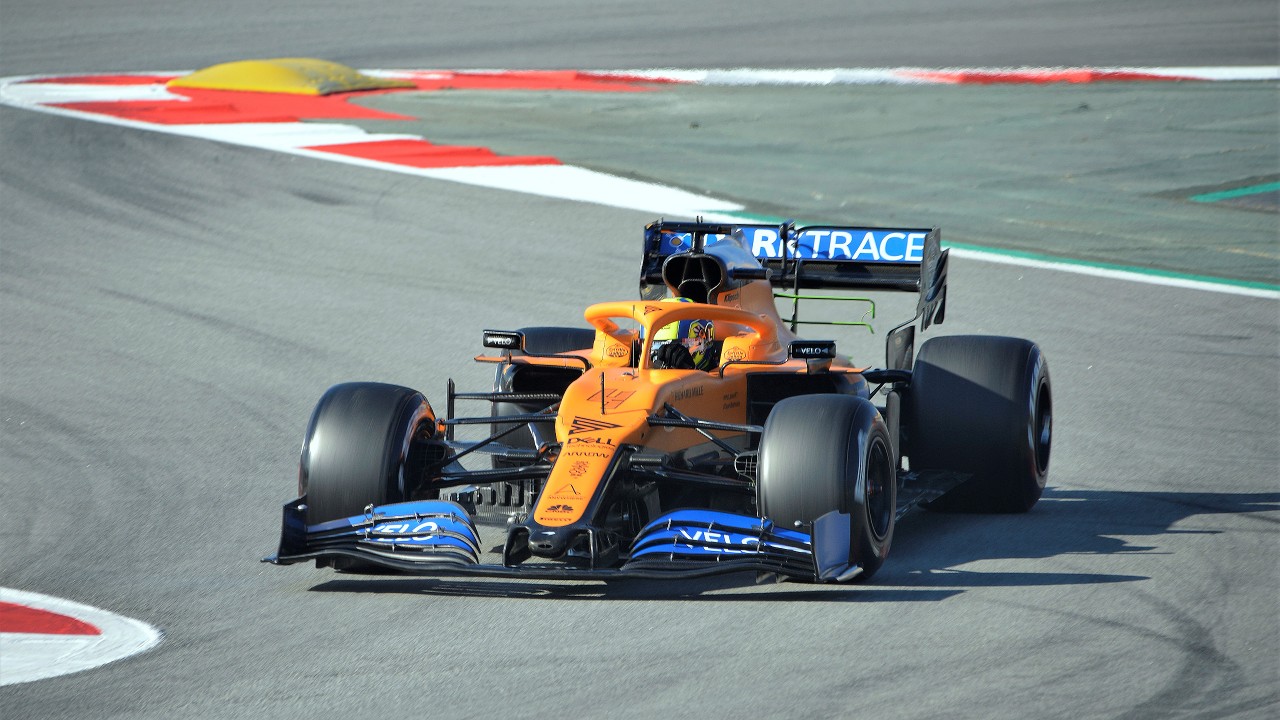
The most revealing window into Norris’s transformation came when he described his work with a psychologist as a decisive factor in his narrow title margin. He credited those sessions with helping him manage the emotional swings of a 24-race season, process setbacks more quickly and avoid spiraling when a weekend went wrong. In his own assessment, that support was crucial to the small but vital gap that separated him from his closest rivals by the end of the year.
Rather than treating mental coaching as a last resort, Norris integrated it into his preparation, using it to sharpen his focus under pressure and to rebuild the self-belief that had been missing at the start of the campaign. He framed the psychologist’s role as helping him stay present in the car, trust his instincts and keep perspective when the title fight tightened. In a sport where margins are measured in tenths and strategy calls, he argued that this psychological work was as important to his maiden world championship as any aerodynamic upgrade or pit stop drill.
Booed, scrutinized, and still a “deserving” champion
Even after securing the championship, Norris discovered that success did not insulate him from criticism. At certain events he was met with boos from sections of the crowd, a reaction that Jacques Villeneuve later described as “embarrassing” for Formula 1 fans. Villeneuve argued that Norris was a deserving world champion, pushing back on the idea that fan hostility reflected any lack of legitimacy in his title and instead suggesting it said more about the mood in the grandstands than the quality of the driver on the podium.
For Norris, that reaction added another layer to the mental challenge of 2025. He had already spent the year proving to himself that he could win a title, then had to process a public reception that did not always match the scale of his achievement. Yet the defense from figures like Villeneuve, who emphasized that the Briton had earned his status on merit, reinforced the notion that the doubts which nearly derailed his season were internal rather than grounded in the paddock’s assessment of his talent.
From Tashkent podium to a new standard of self-belief
The culmination of this journey came when Norris stood in Tashkent, Uzbekistan, collecting his first Formula 1 world championship trophy at the FIA gala. The setting was symbolic, a formal confirmation that the driver who had once questioned whether he could finish the job was now officially the benchmark for the rest of the grid. The ceremony also highlighted how the 2025 season had evolved into a three-way fight, with Norris emerging from that group as the one holding the silverware.
By the time he left Tashkent, the narrative around Norris had shifted. He was no longer the quick young driver still searching for his first crown, but a champion who had confronted his own uncertainty, leaned on psychological support and navigated the scrutiny that comes with leading a title race. The doubts that once threatened to derail his campaign had been replaced by a more robust self-belief, one forged in the pressure of holding off Max Verstappen and Oscar Piastri across a long, unforgiving season and validated in front of the sport’s governing body and his peers.




Leave a Reply